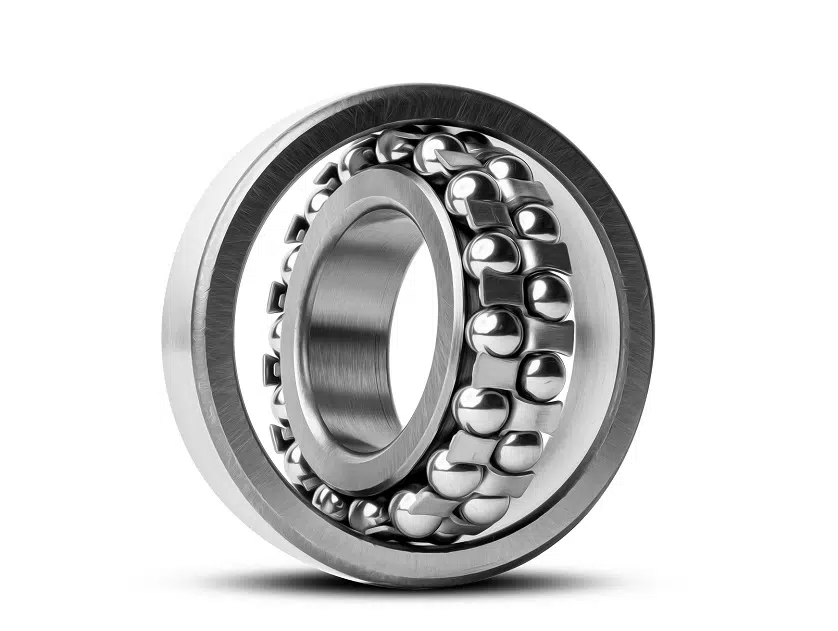
How do self-aligning bearings enhance the overall efficiency and functionality of machinery and equipment?
Self-aligning bearings play a crucial role in enhancing the overall efficiency and functionality of machinery and equipment. Here’s a detailed explanation:
- Compensation for Misalignment:
One of the key benefits of self-aligning bearings is their ability to compensate for misalignment between the shaft and the housing. Misalignment can occur due to various factors such as shaft deflection, thermal expansion, or mounting errors. Self-aligning bearings have the capability to accommodate angular misalignment, axial displacement, and shaft deflection, ensuring smooth operation even in challenging conditions. By accommodating misalignment, self-aligning bearings minimize stress and wear on other components, reducing the risk of premature failure and improving overall machinery efficiency.
- Reduced Friction and Energy Consumption:
Self-aligning bearings are designed to operate with low friction, which helps to reduce energy consumption within the machinery or equipment. The rolling elements and raceways of self-aligning bearings are precisely engineered to minimize contact friction. This reduced friction results in lower power losses, allowing the machinery to operate more efficiently and potentially leading to energy savings.
- Increased Reliability and Service Life:
Self-aligning bearings contribute to the overall reliability and service life of machinery and equipment. By accommodating misalignment and reducing friction, they help to distribute loads evenly, minimize stress concentrations, and prevent premature wear and failures. This improved load distribution and reduced friction can extend the service life of other critical components, such as gears, shafts, and seals. Additionally, self-aligning bearings often feature robust designs and high-quality materials, further enhancing their durability and reliability in demanding operating conditions.
- Enhanced Performance in Challenging Environments:
Self-aligning bearings are well-suited for applications in challenging environments. They can withstand conditions such as high temperatures, extreme speeds, or contaminated operating conditions. The ability to accommodate misalignment and the use of specialized bearing materials and lubricants enable self-aligning bearings to maintain their performance and functionality in adverse conditions. This enhances the overall efficiency and reliability of machinery and equipment in industries such as mining, steel, paper, and food processing.
- Ease of Installation and Maintenance:
Self-aligning bearings are designed for ease of installation and maintenance. Their self-aligning capability simplifies the alignment process during installation, reducing the time and effort required. Additionally, self-aligning bearings often feature integrated seals or shields that help to protect against contamination and retain lubrication, resulting in reduced maintenance requirements. The ease of installation and maintenance of self-aligning bearings contributes to the overall efficiency of machinery and equipment by minimizing downtime and improving overall operational productivity.
Overall, self-aligning bearings enhance the efficiency and functionality of machinery and equipment by accommodating misalignment, reducing friction and energy consumption, increasing reliability and service life, performing well in challenging environments, and enabling easier installation and maintenance. By incorporating self-aligning bearings into their designs, engineers and equipment manufacturers can optimize performance, reduce downtime, and improve the overall efficiency of their machinery and equipment.

How do self-aligning bearings perform in applications with varying loads and misalignment challenges?
Self-aligning bearings are specifically designed to perform exceptionally well in applications with varying loads and misalignment challenges. Here’s an in-depth explanation of their performance characteristics:
- Misalignment Compensation:
Self-aligning bearings are capable of accommodating various types of misalignment, including angular misalignment and shaft deflection. They feature a design that incorporates two rows of rolling elements, such as balls or rollers, and a spherical outer ring raceway. This design allows the bearing to self-align, adapting to misalignment caused by factors such as shaft deflection, mounting errors, thermal expansion, and vibrations. Self-aligning bearings can handle misalignment within certain limits, maintaining proper alignment between the mating components and minimizing additional stresses on the bearing.
- Load-Carrying Capacity:
Self-aligning bearings are engineered to handle high loads, both radial and axial. They have a robust construction with larger rolling elements and increased contact area, enabling them to distribute the load more effectively. This enhanced load-carrying capacity makes self-aligning bearings suitable for applications where varying loads are encountered. Whether it’s fluctuating radial loads, axial loads, or a combination of both, self-aligning bearings can handle the dynamic forces and provide reliable performance.
- Flexibility and Versatility:
Self-aligning bearings offer flexibility and versatility in applications with varying loads and misalignment challenges. They can operate in conditions where shafts are not perfectly aligned or where there are slight shaft movements. This flexibility allows for easier installation and alignment adjustments, reducing the time and effort required for precise positioning of the bearing. Additionally, self-aligning bearings are available in different designs and configurations, including ball bearings and roller bearings, providing options to match specific application requirements.
- Reduced Friction and Heat Generation:
Self-aligning bearings are designed to minimize friction and heat generation during operation. The rolling elements and raceways are precisely engineered to reduce contact stresses and optimize the distribution of forces. This results in lower friction levels and reduced heat buildup, enhancing the overall efficiency and reliability of the bearing in applications where varying loads and misalignment challenges are present.
- Extended Service Life:
Due to their ability to accommodate misalignment and handle varying loads, self-aligning bearings contribute to an extended service life of the machinery. By reducing the stresses and excessive forces on the bearing and its surrounding components, self-aligning bearings help minimize wear, prevent premature failure, and increase the overall durability of the equipment.
In summary, self-aligning bearings excel in applications with varying loads and misalignment challenges. Their ability to compensate for misalignment, handle high loads, provide flexibility in installation, and reduce friction and heat generation makes them well-suited for industries such as mining, construction, paper manufacturing, steel production, and many others where these challenges are prevalent.
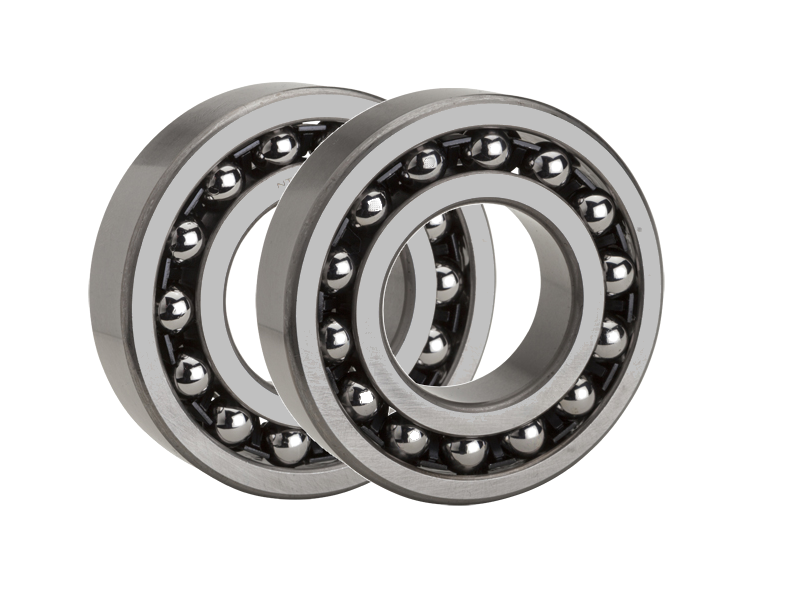
Can you describe the load-carrying capacity and load ratings of self-aligning bearings?
Self-aligning bearings are designed to carry both radial and axial loads, and their load-carrying capacity is an essential consideration for their proper selection and application. Here’s a detailed description of the load-carrying capacity and load ratings of self-aligning bearings:
- Radial Load Capacity:
The radial load capacity of a self-aligning bearing refers to its ability to carry loads that act perpendicular to the axis of rotation. It is influenced by factors such as bearing geometry, material properties, and internal design. Self-aligning bearings, particularly spherical roller bearings, are known for their high radial load-carrying capacity. This is due to their construction that includes multiple rows of robust rolling elements and optimized raceway profiles. The larger contact area between the rolling elements and raceways allows for efficient load distribution, enabling the bearing to handle substantial radial loads.
- Axial Load Capacity:
The axial load capacity of a self-aligning bearing refers to its ability to carry loads that act parallel to the axis of rotation. The axial load-carrying capacity depends on the bearing type and design, as well as the arrangement of rolling elements. Self-aligning thrust roller bearings, for example, are specifically designed to handle significant axial loads. They utilize cylindrical or tapered rolling elements arranged in a specific orientation to withstand axial forces. Self-aligning ball bearings can also carry moderate axial loads in addition to their primary radial load-carrying capacity.
- Dynamic Load Rating:
The dynamic load rating of a self-aligning bearing is a standardized value that indicates the maximum load that the bearing can sustain for a specified number of rotations or operating hours without experiencing premature fatigue failure. It is expressed in terms of the calculated dynamic equivalent radial or axial load, which takes into account the actual load distribution within the bearing. The dynamic load rating is typically provided by the manufacturer and allows engineers to compare and select bearings based on their expected performance under dynamic operating conditions.
- Static Load Rating:
The static load rating of a self-aligning bearing represents the maximum load that the bearing can sustain without permanent deformation or excessive stress when the bearing is stationary or subjected to very slow rotations. It is typically higher than the dynamic load rating. The static load rating is an important consideration for applications where the bearing may be subjected to prolonged static or slow-speed conditions, such as in machinery that operates with intermittent or intermittent rotational motion.
It is important to note that the load-carrying capacity and load ratings provided by manufacturers are based on standardized testing methods and assumptions about operating conditions. Actual load capacity can be influenced by factors such as temperature, lubrication, misalignment, and operating speed. Therefore, it is crucial to consider the specific application requirements and consult the manufacturer’s technical data and guidelines when selecting a self-aligning bearing to ensure its suitability and optimal performance.


editor by lmc 2024-11-27