Product Description
Product Description
Detailed Photos
Product Parameters
| Product Name | self-aligning ball bearing |
| Bearing Materials | GCr15 |
| Cage | Steel Cage,nylon cage,brass cage |
| Feature | Low Noise, Low Vibration, High Precision, Long Life |
| Precision Grade | P0,P6,p5 |
| Application | Precision instrument, low noise motor, car, motorcycle, metallurgy, rolling machine, mine, petroleum, paper, cement, sugar and other industries and general machinery. |
| main bearing models | |||||||
| 1018 | 1210 | 105718H | 1302 | 1317 | 2207 | 2222 | 2311 |
| 1026 | 1211 | 1230 | 1303 | 1318 | 2208 | 2224 | 2312 |
| 1571 | 1212 | 11204 | 1304 | 1319 | 2209 | 2226 | 2313 |
| 1571 | 1213 | 11205 | 1305 | 1320 | 2210 | 2228 | 2314 |
| 1096 | 1214 | 11206 | 1306 | 1321 | 2211 | 2300 | 2315 |
| 1200 | 1215 | 11207 | 1307 | 1322 | 2212 | 2301 | 2316 |
| 1201 | 1216 | 11208 | 1308 | 1324 | 2213 | 2302 | 2317 |
| 1202 | 1217 | 11209 | 1309 | 1326 | 2214 | 2303 | 2318 |
| 1203 | 1218 | 11210 | 1310 | 2200 | 2215 | 2304 | 2319 |
| 1204 | 1219 | 11211 | 1311 | 2201 | 2216 | 2305 | 2320 |
| 1205 | 1220 | 11212 | 1312 | 2202 | 2217 | 2306 | 2321 |
| 1206 | 1221 | 11213 | 1313 | 2203 | 2218 | 2307 | 2322 |
| 1207 | 1222 | 1035 | 1314 | 2204 | 2219 | 2308 | 2324 |
| 1208 | 1224 | 1300 | 1315 | 2205 | 2220 | 2309 | 2326 |
| 1209 | 1226 | 1301 | 1316 | 2206 | 2221 | 2310 |
Company Profile
FAQ
Q1 : Why choose us?
A1 : We have more than 30 years of professional experience in bearing industry, and serve many leader companies in bike industry with guarantee quality product. We sell variety of bearing brands and can also do OEM and ODM.
Q2: How about the quality of products in your company?
A2: We implement strict inspection on all bearing parts before the production and during the production process, all bearing meet ISO international standard.
Q3: How to choose a bearing?
A3: We have a professional engineer team to help you choose bearing and find appropriate solutions, contact us now!
Q4: How long is your delivery term?
A4: Our standard product delivery term is 3 to 7 days. A new product development cycle is between 20 to 30 days.
There are standing stock for regular types.
Q5: Do you provide samples?
A5: Yes, we provide samples, but shipping cost and tax pay by buyer.
other bearing
advantage:
Long service life
High load carrying capacity
Compact arrangements
Accommodate misalignment
Minimum maintenance
Reduced operating costs
Fewer unplanned stops
Environmental sustainability
High availability
Technical support
/* January 22, 2571 19:08:37 */!function(){function s(e,r){var a,o={};try{e&&e.split(“,”).forEach(function(e,t){e&&(a=e.match(/(.*?):(.*)$/))&&1
| Type: | Ball |
|---|---|
| Structure: | Self-Aligning |
| Applicatione: | Machinery |
| Packing: | Single Box |
| Chrome Steel: | Gcr15 |
| Aligning: | Aligning Bearing |
| Customization: |
Available
| Customized Request |
|---|
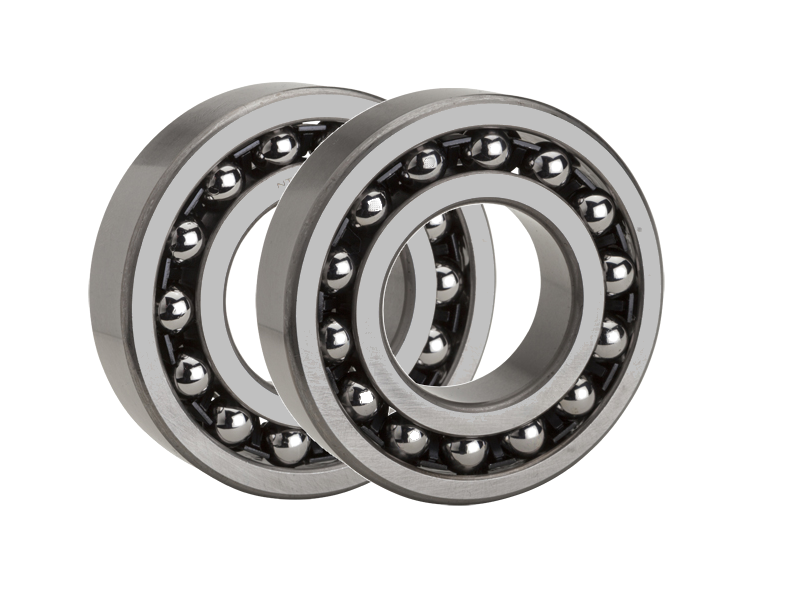
What are the eco-friendly or sustainable aspects of self-aligning bearing materials?
Self-aligning bearings can incorporate eco-friendly or sustainable aspects in their material composition. Here’s a detailed explanation:
- Recyclable Materials:
Many self-aligning bearings are made from materials that are recyclable. Steel, which is commonly used for bearing rings and rolling elements, is highly recyclable and can be processed and reused multiple times without significant loss of properties. By choosing self-aligning bearings made from recyclable materials, the environmental impact associated with the disposal and production of bearings can be reduced.
- Low Environmental Footprint:
The production of self-aligning bearings involves various manufacturing processes. Manufacturers often strive to optimize these processes to minimize energy consumption, reduce waste generation, and lower greenhouse gas emissions. By improving energy efficiency and reducing environmental footprint during production, self-aligning bearing manufacturers contribute to sustainable practices.
- Reduced Material Consumption:
The design and development of self-aligning bearings focus on optimizing their performance while minimizing material consumption. Through advanced engineering techniques, including material selection, design optimization, and improved manufacturing processes, manufacturers can reduce the amount of material required to produce self-aligning bearings. This not only helps to conserve natural resources but also reduces the overall weight of the bearing, leading to lower energy consumption during operation.
- Alternative Materials:
In recent years, there have been advancements in the development of alternative bearing materials that offer improved sustainability characteristics. For example:
- Ceramic Bearings: Ceramic materials, such as silicon nitride or zirconia, are increasingly used in self-aligning bearings due to their excellent wear resistance, corrosion resistance, and high-temperature capabilities. Ceramic bearings can contribute to sustainability by reducing the need for lubrication, extending maintenance intervals, and minimizing the use of lubricants that may have environmental impacts.
- Polymer Bearings: Self-aligning bearings made from polymer materials, such as reinforced plastics or engineered polymers, offer advantages such as self-lubrication, resistance to corrosion and chemicals, and reduced weight. Polymer bearings can provide sustainability benefits by eliminating the need for external lubrication, reducing friction and energy consumption, and offering potential for longer service life.
- Extended Service Life:
Self-aligning bearings with extended service life contribute to sustainability by reducing the frequency of bearing replacements and associated waste generation. Advancements in bearing materials, surface treatments, and lubrication technologies have led to improved durability and longer operating life, resulting in reduced environmental impact and lower maintenance requirements.
It’s important to note that while self-aligning bearing materials can have eco-friendly or sustainable aspects, the overall sustainability of an application or system also depends on other factors, such as energy efficiency, proper maintenance practices, and end-of-life disposal considerations. Therefore, a holistic approach considering the entire lifecycle of the equipment and its components is essential for achieving sustainable practices.
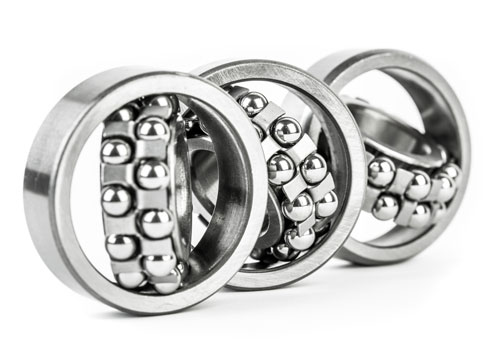
Can self-aligning bearings be customized or modified for unique industrial needs?
Yes, self-aligning bearings can be customized or modified to meet unique industrial needs. Here’s a detailed explanation:
- Customized Designs:
Manufacturers of self-aligning bearings often offer customization options to accommodate specific industrial requirements. These customization options can include:
- Size and Dimensions: Self-aligning bearings can be customized to different sizes and dimensions, allowing them to fit specific equipment or space constraints within an industrial setting.
- Load Capacity: Manufacturers can modify self-aligning bearings to handle higher or lower load capacities based on the unique demands of an application. This can involve altering the bearing’s internal geometry, material selection, or heat treatment processes.
- Operating Conditions: Customizations can be madeto enhance the performance of self-aligning bearings in specific operating conditions. For example, the bearing’s materials, lubrication, or sealing arrangements can be tailored to withstand extreme temperatures, corrosive environments, or high levels of contamination.
- Mounting Configurations: Self-aligning bearings can be customized to meet specific mounting requirements. This may involve modifying the bearing’s outer ring, inner ring, or flange configurations to ensure proper fit and alignment within a particular industrial setup.
- Sealing and Protection: Manufacturers can provide customized sealing arrangements to prevent the ingress of contaminants or protect the bearing from harsh external conditions. This can include adding specialized seals, shields, or coatings to enhance the bearing’s durability and longevity.
- Lubrication: The lubrication requirements of self-aligning bearings can be customized based on the application’s specific needs. Manufacturers can offer different lubrication options, such as solid lubricants or specialized greases, to optimize performance and minimize maintenance requirements.
- Collaboration with Manufacturers:
When unique industrial needs arise, it is advisable to collaborate closely with the bearing manufacturer or consult with bearing experts. They can provide technical expertise and guidance to assess the specific requirements and propose suitable customizations or modifications to the self-aligning bearings.
It is important to note that customization or modification of self-aligning bearings may involve additional costs and lead time for manufacturing. Therefore, a thorough evaluation of the application’s needs, cost-benefit analysis, and discussions with the manufacturer are essential to determine the feasibility and effectiveness of the customization process.
By leveraging the customization options offered by bearing manufacturers and working in collaboration with experts, self-aligning bearings can be tailored to meet the unique demands of various industries, ensuring optimal performance, reliability, and longevity in specific industrial applications.
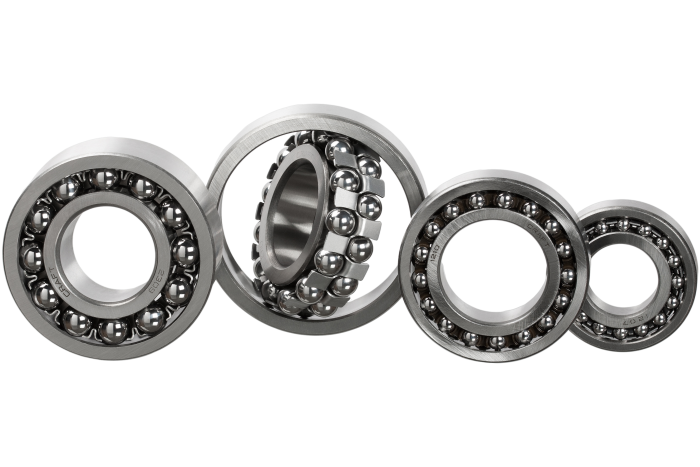
What are the common types of self-aligning bearings, such as spherical or barrel roller bearings?
There are several common types of self-aligning bearings, each offering unique features and advantages. Here’s a detailed explanation of some of the common types:
- Spherical Roller Bearings:
Spherical roller bearings are one of the most common types of self-aligning bearings. They have a spherical outer ring raceway and two rows of barrel-shaped rollers positioned between the inner and outer rings. This design allows for the accommodation of misalignment and provides high radial load-carrying capacity. Spherical roller bearings are commonly used in heavy-duty applications, such as mining equipment, paper mills, and crushers.
- Barrel Roller Bearings:
Barrel roller bearings, also known as toroidal roller bearings, have a barrel-shaped roller arrangement with a concave outer ring raceway and a convex inner ring raceway. This design enables the bearing to accommodate misalignment and axial displacement. Barrel roller bearings are suitable for applications with high radial loads and moderate axial loads, such as in conveyor systems, printing presses, and industrial gearboxes.
- Self-Aligning Ball Bearings:
Self-aligning ball bearings consist of an inner ring with two rows of balls and an outer ring with a spherical raceway. The design allows for misalignment compensation and is particularly suited for applications with low to moderate radial loads and moderate axial loads. Self-aligning ball bearings are commonly used in electric motors, pumps, and automotive applications.
- Self-Aligning Thrust Roller Bearings:
Self-aligning thrust roller bearings are designed to accommodate misalignment in applications with axial loads. They have a spherical rolling element between the shaft washer and the housing washer, allowing for misalignment compensation. These bearings are commonly used in applications such as screw conveyors, heavy machinery, and marine propulsion systems.
- Adapter Sleeve Bearings:
Adapter sleeve bearings are a type of self-aligning bearing that incorporates an adapter sleeve, which facilitates easy mounting and dismounting of the bearing. They are commonly used in applications where frequent bearing replacement or adjustment is required. Adapter sleeve bearings are often employed in conveyor systems, agricultural machinery, and textile equipment.
These are just a few examples of common types of self-aligning bearings. Other variations and specialized designs exist to suit specific application requirements. It’s important to consider factors such as load capacity, operating conditions, and dimensional constraints when selecting the appropriate self-aligning bearing for a particular application.


editor by CX 2024-04-30