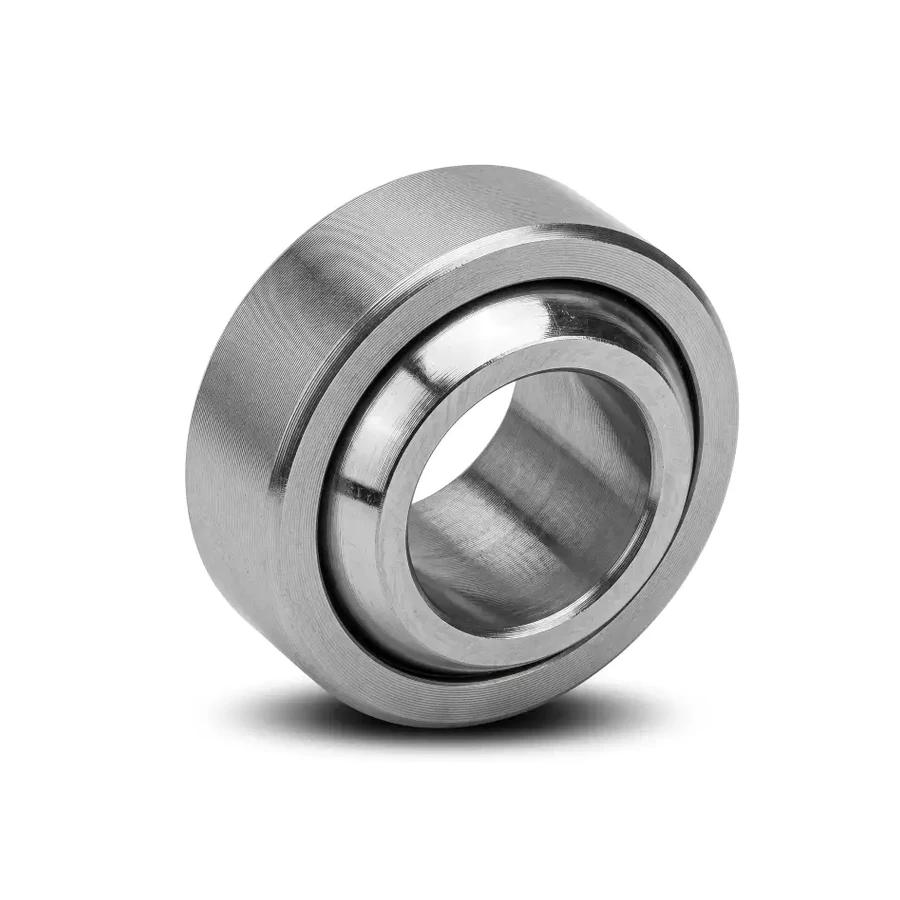
Lubrication is part of the design of greaseable GE, GEG and PB spherical plain bearings. The grease separates sliding surfaces, helps carry contamination out of the joint and protects steel surfaces. The right lubricant and interval depend on load, movement, temperature, contamination and the surrounding machine.
Why lubrication matters
Too little lubricant can increase wear and friction. Too much or an incompatible lubricant can create heat, damage seals or attract contamination. The correct approach is to use the machine-approved lubricant and replenish it often enough to keep the sliding contact protected without treating a generic interval as universal.
Lubricant selection questions
| Condition | What to define |
|---|---|
| General industrial service | Base oil, thickener, consistency and anti-wear requirements compatible with the machine |
| Cold environment | Low-temperature torque and pumpability |
| High temperature | Thermal stability and compatibility with seals |
| Wet or corrosive service | Water resistance and corrosion protection |
| Dirty service | Grease-purge strategy and contamination exclusion |
How to relubricate
Clean the grease fitting
Remove dirt before connecting the grease gun so contamination is not pushed into the bearing.
Use controlled pressure
Apply grease slowly and monitor the joint. Excessive pressure can damage seals or indicate a blocked passage.
Watch the purge path
On a serviceable joint, old grease or contamination may purge at the intended exit. Stop if the behavior is abnormal.
Record the condition
Note grease color, contamination, seal condition and any change in joint stiffness for the maintenance history.
What changes with 2RS
The seals help protect the faces and retain lubricant, but they do not eliminate the lubrication requirement of a greaseable steel/steel bearing. Interval should be based on the actual service environment and machine maintenance plan.
Maintenance-free bearings are different
GE..C and GE..ET 2RS use PTFE-based liners and are selected so the sliding system does not require routine relubrication. Do not automatically apply the grease procedure for a GE..ES bearing to a maintenance-free liner; follow the ordered construction and machine instructions.
Troubleshooting lubrication problems
- High grease-gun resistance can indicate a blocked fitting or passage.
- Rapid grease loss can point to damaged seals or an open contamination path.
- Unexpected heat after service can indicate overfill, incompatible grease or another joint problem.
- Discolored or gritty purge grease is a reason to inspect contamination and wear.
What should set the lubrication interval
Time alone is a poor interval metric. Consider oscillation frequency, contact pressure, contamination, water exposure, temperature and how effectively old grease can purge from the joint. A heavily loaded construction pivot may need much more frequent attention than a lightly cycled indoor linkage using the same part number.
Grease compatibility matters
When changing grease type, check compatibility between base oils, thickeners and seals. Mixing incompatible greases can produce softening, hardening or oil separation. If the machine already specifies a lubricant, use that requirement as the starting point rather than substituting a generic NLGI grade without review.
Condition-based feedback
Grease leaving the joint can reveal useful information. Metallic particles, grit, water contamination or unusual discoloration are reasons to inspect the bearing. A fitting that suddenly requires much higher pressure can indicate a blocked passage. A joint that no longer accepts grease should not simply be forced with more pressure.
Maintenance record fields
- Bearing model and machine position.
- Date/hours/cycles at service.
- Lubricant used.
- Condition of seals and fitting.
- Appearance of purge grease.
- Measured clearance or observed play when part of the maintenance plan.
Need a lubrication strategy matched to the bearing type?
Send the series, application, environment and maintenance constraints so the greaseable and maintenance-free options can be separated correctly.