Type: BALL
Structure: Deep Groove
Applicable Industries: Hotels, Garment Shops, Building Material Shops, Manufacturing Plant, Machinery Repair Shops, Food & Beverage Factory, Farms, Restaurant, Home Use, Retail, Food Shop, Printing Shops, Construction works , Energy & Mining, Food & Beverage Shops, Advertising Company
Bore Size: 1 – 100 mm
Model Number: 6219
Precision Rating: P2
Seals Type: Open ZZ 2RS
Number of Row: Single row
Model: 6219
Size: 95*170*32mm
Application: Automotive.tractor.construction Machinery.rolling Mill
Material: Chrome Steel GCR15
Clearance: C3 C4
Vibration: V1 V2 V3 V4
Packaging Details: 1. Plastic Tube+Carton+Pallet2. As Customers’ Request
Port: HangZhou
Customer Service Products Description Deep groove ball bearing is 1 of the most widely used rolling bearings. It is characterized by small friction resistance and high speed. It can be used to bear radial load or combined load of radial and axial at the same time. It can also be used to bear axial load.The basic deep groove ball bearing consists of an outer ring, an inner ring, a group of steel balls and a group of retaining frames. There are 2 types of deep groove ball bearings:Single row and Double row. The structure of deep groove ball can be divided into sealed and open type. Open type means that the bearing does not have a sealed structure. Sealed deep groove ball can be divided into dust-proof seal and oil-proof seal. Compared with other types, deep groove ball bearing is easy to achieve higher manufacturing accuracy due to its simple structure, so it is convenient for series mass production with low manufacturing cost and widely used. Deep groove ball bearing can be used for gearbox, instrument, motor, household appliances,internal combustion engine, traffic vehicles, agricultural machinery, construction machinery, engineering machinery.
| Product Name | Miniature Thin Section Deep Groove Ball Bearing 6219 For Building Material Shops | ||||||
| Model Number | 6219 | ||||||
| Size | 95*170*32mm | ||||||
| Feature | 1. High Speed; 2.Long Life | ||||||
| Seal Type | Open 2RS ZZ | ||||||
| Precision | P0,P6,P5,P4,P2 | ||||||
| Number of Row | Single Row | ||||||
| Material | Chrome Steel ,Stainless Steel,Carbon Steel | ||||||
| Application | Papermaking machinery, speed reducer, railway vehicle axle, gear box bearing, rolling mill rolling mill rolls, crusher, vibrating screen, printing machinery, woodworking machinery, all kinds of industry. | ||||||
| Delivery Time | 1) 1-3 days for Samples or in Stock2) 10-15 Days for Ordering | ||||||
Materials Used in Bearings
If you’re not familiar with the types of bearings, you may be interested in knowing more about the materials used to manufacture them. Here’s a look at what each type of bearing is made of, how it’s used, and how much they cost. To find the right bearing for your application, it’s important to choose a quality lubricant. The materials used in bearings are determined by their type and applications. Choosing the right lubricant will extend its life, and protect your machine’s parts from damage and premature wear.
Materials used in bearings
Bearings are made from a variety of materials. Stainless steel is a common material used for the components of bearings. It has a higher content of chromium and nickel. When exposed to oxygen, chromium reacts with it to form chromium oxide, which provides a passive film. For higher temperatures, teflon and Viton are also used. These materials offer excellent corrosion resistance and are often preferred by manufacturers for their unique properties.
Stainless steel is another material used in bearings. AISI 440C is a high-carbon stainless steel commonly used in rolling-contact bearings. It is widely used in corrosive environments, especially in applications where corrosion resistance is more important than load capacity. It can also be heat-treated and hardened to 60 HRC, but has lower fatigue life than SAE 52100. Stainless steel bearings may carry a 20-40% price premium, but their superior performance is worth the extra money.
Graphite and molybdenum disulfide are two of the most common materials used in bearings. While graphite is a popular material in bearings, it has very poor corrosion resistance and is unsuitable for applications where oil or grease is required. Graphite-based composite materials are another option. They combine the benefits of both graphite and ceramic materials. A variety of proprietary materials have been developed for high-temperature use, such as graphite and MoS2.
Wood bearings have been around for centuries. The oldest ones used wood and Lignum Vitae. These materials were lightweight, but they were incredibly strong and durable. Wood bearings were also lubricated with animal fats. During the 1700s, iron bearings were a popular choice. In 1839, Isaac Babbitt invented an alloy containing hard metal crystals suspended in a softer metal. It is considered a metal matrix composite.
Applications of bearings
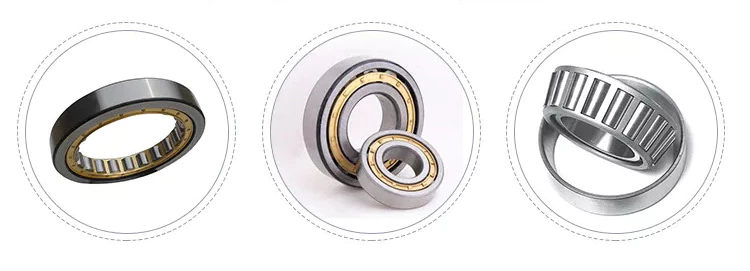
Bearings are used in many different industries and systems to help facilitate rotation. The metal surfaces in the bearings support the weight of the load, which drives the rotation of the unit. Not all loads apply the same amount of force to bearings, however. Thrust and radial loads act in distinctly different ways. To better understand the different uses of bearings, let’s examine the various types of bearings. These versatile devices are essential for many industries, from automobiles to ships and from construction to industrial processes.
Cylindrical roller bearings are designed to support heavy loads. Their cylindrical rolling element distributes the load over a larger area. They are not, however, suited to handling thrust loads. Needle bearings, on the other hand, use small diameter cylinders and can fit into tighter spaces. The advantages of these types of bearings are numerous, and many leading producers are now leveraging the Industrial Internet of Things (IIoT) to develop connected smart bearings.
As a power generation industry, bearings play an essential role. From turbines to compressors, from generators to pumps, bearings are essential components of equipment. In addition to bearings, these components help move the equipment, so they can work properly. Typically, these components use ball bearings, although some roller bearings are used as well. In addition to being efficient and durable, these types of bearings also tend to be built to meet stringent internal clearance requirements and cage design requirements.
In addition to bearings for linear motion, bearings can also bear the weight of a rotary part. Depending on the application, they can be designed to minimize friction between moving parts. By constraining relative motion, bearings are used to reduce friction within a given application. The best-designed bearings minimize friction in a given application. If you’re in the market for a new bearing, NRB Industrial Bearings Limited is an excellent source to begin your search.
Types of bearings
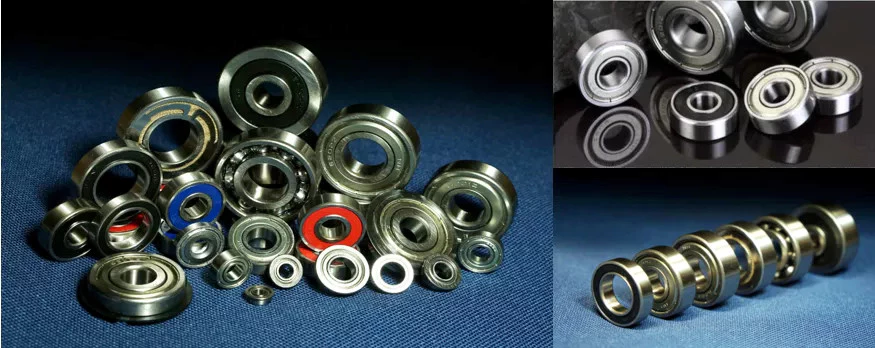
The type of bearings you choose will have a significant impact on the performance of your machinery. Using the right bearings can increase efficiency, accuracy, and service intervals, and even reduce the cost of purchasing and operating machinery. There are several different types of bearings to choose from, including ball bearings and flexure bearings. Some types use a fluid to lubricate their surfaces, while others do not.
Plain bearings are the most common type of bearing, and are used for a variety of applications. Their cylindrical design allows for a relatively smooth movement. Often made of copper or other copper alloy, they have low coefficients of friction and are commonly used in the construction industry. Some types of plain bearings are also available with a gudgeon pin, which connects a piston to a connecting rod in a diesel engine.
Magnetic bearings are the newest type of bearing. They use permanent magnets to create a magnetic field around the shaft without requiring any power. These are difficult to design, and are still in the early stages of development. Electromagnets, on the other hand, require no power but can perform very high-precision positioning. They can be extremely durable and have a long service life. They are also lightweight and easy to repair.
Another type of bearing is needle roller. These are made of thin, long, and slender cylinders that are used in a variety of applications. Their slender size is ideal for a space-constrained application, and their small profile allows them to fit in tight places. These types of bearings are often used in automotive applications, bar stools, and camera panning devices. They have several advantages over ball bearings, including the ability to handle heavy axial loads.
Cost of bearings
A wide range of factors affect the cost of aerospace bearings, including the bearing material and its volatility. Manufacturers typically use high-grade steel for aircraft bearings, which are highly affected by fluctuations in the steel price. Government policies also play a part in the variation in trade price. The implementation of COVID-19 has changed the market dynamics, creating an uncertain outlook for supply and demand of aerospace bearings. New trade norms and transportation restrictions are expected to hamper the growth of this industry.
Demand for aerospace bearings is largely driven by aircraft manufacturers. In North America, aircraft manufacturers must meet extremely high standards of weight, performance, and quality. They also must be lightweight and cost-effective. This has resulted in a rising cost of aerospace bearings. The market for aerospace bearings is expected to grow at the highest CAGR over the next few years, driven by increasing investments in defense and aerospace infrastructure across Asia-Pacific.
Hub assemblies are also expensive. A wheel hub will cost between $400 and $500 for one set of bearings. In addition to this, the speed sensor will be included. The average cost of wheel bearings is between $400 and $500 for one side, including labor. But this price range is much lower if the bearing is a replacement of an entire wheel assembly. It is still worth noting that wheel hub bearings can be purchased separately for a lower price.
Replacement of one or two wheel bearings will depend on the model and year of the vehicle. For a small car, one rear wheel bearing can cost between $190 and $225, whereas two front wheel hubs can cost upwards of $1,000. Labor and parts prices will vary by location, and labor costs may also be covered under some warranty plans. If you decide to have it done yourself, be sure to ask multiple shops for estimates.
Inspection of bearings

To maintain bearing performance and prevent accidents, periodic inspections are essential. In addition to ensuring reliability, these inspections improve productivity and efficiency. Regular maintenance includes disassembly inspection, replenishment of lubricant and monitoring operation status. Here are some common ways to perform the necessary inspections. Keep reading to learn how to maintain bearings. After disassembly, you must clean the components thoroughly. Ensure that the bearings are free of burrs, debris, and corrosion.
Ultrasound technology is an excellent tool for monitoring slow-speed bearings. Most ultrasound instruments offer wide-ranging sensitivity and frequency tuning. Ultrasound can also be used to monitor bearing sound. Ultra-slow bearings are usually large and greased with high-viscosity lubricant. Crackling sounds indicate deformity. You can also listen for abnormal noise by plugging a vibration analyzer into the machine. Once the machine shows abnormal noise, schedule additional inspections.
Ultrasonic inspection involves using an ultrasound transducer to measure the amplitude of sound from a bearing. It is effective in early warnings of bearing failure and prevents over-lubrication. Ultrasound inspection of bearings is a cost-effective solution for early diagnosis of bearing problems. In addition to being a reliable tool, ultrasonic testing is digital and easy to implement. The following are some of the advantages of ultrasonic bearing inspection.
Dynamic quality evaluation involves the use of a special fixture for measuring bearing deformations under low shaft speed and light radial load. The size of the fixture influences the value of the deformations. A fixture should be sized between the diameter of the sensor and the roller to ensure maximum precision. The outer deformation signal is more sensitive with a larger sensor diameter. A vibration-acceleration sensor is used for the contrast test.

editor by czh