Product Description
| Name | Spherical roller bearings |
| Series | 22 series |
| Brand | MONTON |
| Model | 22326CCJA/W33VA405 |
| Seals | Without seals,onlyBS2-2RS type with seals |
| d | 130mm |
| D | 280mm |
| B | 93mm |
| Ring Material | Gcr15/ carburizing steel |
| Cage Material | Brass cage/Steel cage |
| Cage type | E/CC/CA/MB/MA/JA/FA ect. |
| dynamic C | 1176kN |
| static C0 | 1320kN |
| Reference speed | 1800r/min |
| Limiting speed | 2400r/min |
| Weight | 29.0KG |
| Design Structure | self-aligning |
| Precision | P0,P6,P5 or as customer requested |
| Clearance | C0, C2, C3, or as customer requested |
| Quality standard | ISO9001: 2000/SGS |
| Package | single box |
| Original | HangZhou |
| Service | OEM |
| Delivery date | According to order qty |
| Application | mining, medical,gearbox,equipment, aerospace, transportation, oil and gas |
Designs and variants
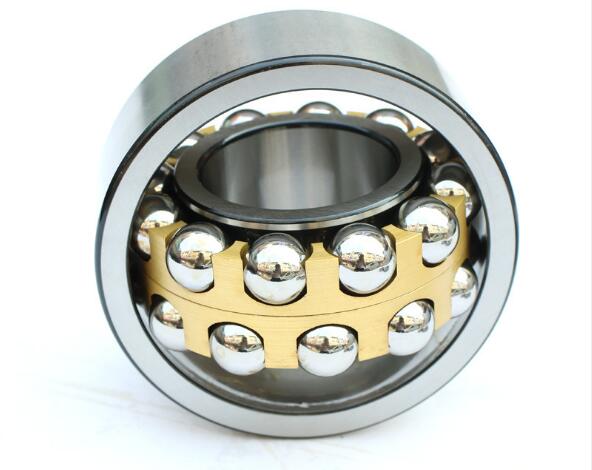
Spherical roller bearings have 2 rows of rollers, a common sphered outer ring raceway and 2 inner ring raceways inclined at an angle to the bearing axis.
The centre point of the sphere in the outer ring raceway is at the bearing axis. Therefore, the bearings are self-aligning and insensitive to misalignment of the shaft relative to the housing, which can be caused, for
example, by shaft deflection. Spherical roller bearings are designed to accommodate heavy radial loads, as well as heavy axial loads in both directions.
Factors influence spherical roller bearing performance
Bearing performance is not only determined by load or speed ratings. There are a number of other factors that contribute to bearing performance. To a large extent, performance is influenced by the geometry of the rollers,
raceways and cages, the heat treatment, as well as the surface finish of all contact surfaces. Main factors which influence spherical roller bearing performance include, but are not limited to:
1.Symmetrical rollers
2.Roller tolerances
3.Special roller profile
4.Self-guiding rollers and a CZPT ring between the 2 rows of rollers
5.Metal cages
Basic design bearings
Depending on their series and size, standard spherical roller bearings are as following basic designs:
CC design bearings have 2 stamped window-type steel cages, an inner ring without flanges and a CZPT ring centred on the inner ring. The CC design is indicated by the
designation suffix C or CC. Large CC design bearings with the designation suffix EC or ECC have an optimized internal design for increased load carrying capacity.
CA design bearings have a machined double prong-type brass cage, an inner ring with a retaining flange on both sides and a CZPT ring centred on the inner ring. The flanges
on the inner ring are designed to keep the rollers in place when swivelling the bearing during installation or maintenance. The flanges are not designed to CZPT the rollers
or accommodate any axial load. The CA design is indicated by the designation suffix CA. Large CA design bearings with the designation suffix ECA have an optimized internal design for increased load carrying capacity.
E design bearings have 2 stamped window-type steel cages, an inner ring without flanges and a CZPT ring centred on the inner ring (d ≤ 65 mm) or on the cages (d > 65 mm). They have an annular groove and 3 lubrication holes in the outer ring. E design bearings are indicated by the designation suffix E. All E design bearings have an optimized internal design for increased load carrying capacity.
Annular groove and lubrication holes
Spherical roller bearings are available with an annular groove and 3 lubrication holes in the outer ring (designation suffix W33) or 3 lubrication holes in the outer ring (designation suffix W20) . E design bearings have an annular groove and 3 lubrication holes as standard and therefore, the W33 designation suffix is not necessary
Cages
Cages in spherical roller bearings are an integral part of the bearing internal design. Depending on their internal design, series and size, spherical roller bearings are fitted with 1 of the cages . For additional information about the suitability of cages, refer to Cages and Cage materials .
/* January 22, 2571 19:08:37 */!function(){function s(e,r){var a,o={};try{e&&e.split(“,”).forEach(function(e,t){e&&(a=e.match(/(.*?):(.*)$/))&&1
| Rolling Body: | Roller Bearings |
|---|---|
| The Number of Rows: | Double |
| Outer Dimension: | 130mm |
| Material: | Brass |
| Spherical: | Aligning Bearings |
| Load Direction: | Radial Bearing |
| Customization: |
Available
| Customized Request |
|---|
How do innovations and advancements in self-aligning bearing technology impact their use?
Advancements and innovations in self-aligning bearing technology have a significant impact on their use in various industries. Here’s a detailed explanation:
- Improved Performance:
Innovations in self-aligning bearing technology often result in improved performance characteristics. These advancements can include:
- Load Capacity: New bearing designs and materials can enhance the load-carrying capacity of self-aligning bearings, allowing them to withstand higher loads or operate under more demanding conditions.
- Speed Capability: Advancements in bearing manufacturing techniques and materials can increase the maximum rotational speed at which self-aligning bearings can operate effectively, enabling their use in high-speed applications.
- Friction Reduction: Innovations in bearing design, lubrication, and surface treatments contribute to reducing friction and energy losses, resulting in improved efficiency and reduced operating costs.
- Sealing and Contamination Resistance: New sealing technologies and materials can enhance the sealing performance of self-aligning bearings, providing better protection against contaminants, moisture, and harsh environmental conditions.
- Temperature and Corrosion Resistance: Advances in bearing materials and coatings enable self-aligning bearings to withstand extreme temperatures, aggressive chemicals, and corrosive environments, expanding their range of applications.
- Extended Service Life:
Innovations in self-aligning bearing technology often result in improved durability and longevity. These advancements can include:
- Materials: The development of new bearing materials, such as advanced steels, ceramics, or composites, can significantly enhance the bearing’s resistance to wear, fatigue, and surface damage, leading to extended service life.
- Lubrication: Advancements in lubrication technologies, such as the use of solid lubricants or advanced grease formulations, can provide better film formation, reduce friction, and minimize wear, thereby increasing the bearing’s operating life.
- Surface Treatments: Innovative surface treatments, such as coatings or finishes, can improve the bearing’s resistance to corrosion, wear, and fretting, contributing to longer service intervals and reduced maintenance requirements.
- Condition Monitoring: The integration of sensor technologies and data analytics in self-aligning bearings enables real-time monitoring of operating conditions, allowing for proactive maintenance and early detection of potential failures, thus maximizing the bearing’s service life.
- Application Expansion:
Advancements in self-aligning bearing technology often lead to an expansion of their application range. These advancements can include:
- New Industries: Innovations in self-aligning bearing technology can enable their use in industries or applications where they were previously not feasible. This opens up opportunities in emerging sectors, such as renewable energy, electric vehicles, robotics, or medical devices.
- Challenging Environments: Improved performance characteristics, such as enhanced sealing, temperature resistance, or contamination resistance, allow self-aligning bearings to be deployed in challenging environments, including offshore installations, high-temperature processes, or chemically aggressive applications.
- Specialized Applications: Advancements in self-aligning bearing technology can lead to the development of specialized bearing variants tailored for specific applications, such as high-speed machining, precision equipment, or demanding industrial automation systems.
Overall, innovations and advancements in self-aligning bearing technology bring about enhanced performance, extended service life, and expanded application possibilities. These advancements drive improvements in industrial productivity, reliability, and efficiency, making self-aligning bearings a valuable component in a wide range of industries and applications.
Can you provide examples of machinery or equipment that rely on self-aligning bearings for reliable operation?
Self-aligning bearings play a crucial role in ensuring the reliable operation of various types of machinery and equipment. Here are some examples of machinery and equipment that rely on self-aligning bearings:
- Mining Equipment: Self-aligning bearings are used in mining equipment such as crushers, vibrating screens, and conveyor systems. These bearings help compensate for misalignment caused by heavy loads, vibrations, and uneven terrain, ensuring smooth operation and minimizing downtime in the mining industry.
- Construction Machinery: Construction machinery, including excavators, loaders, and concrete mixers, rely on self-aligning bearings. These bearings accommodate misalignment caused by heavy loads, shock loads, and dynamic forces, enabling reliable performance and durability in demanding construction sites.
- Paper Machines: Self-aligning bearings are essential components in paper machines, including the dryer section, press section, and calender rolls. These bearings compensate for misalignment caused by thermal expansion, high speeds, and varying loads, ensuring precise alignment and smooth operation throughout the paper manufacturing process.
- Steel Rolling Mills: Self-aligning bearings are critical in steel rolling mills, where they support the heavy loads and high temperatures involved in the rolling process. These bearings accommodate misalignment caused by thermal expansion, roll deflection, and varying loads, ensuring the accuracy and efficiency of the rolling operations.
- Printing Presses: Printing presses rely on self-aligning bearings in their rollers, cylinders, and other moving parts. These bearings compensate for misalignment caused by high-speed rotations, vibrations, and thermal effects, ensuring precise alignment and reliable operation in the printing industry.
- Wind Turbines: Self-aligning bearings are crucial components in wind turbines, supporting the main shaft and rotor assembly. These bearings accommodate misalignment caused by wind gusts, turbine movements, and varying loads, enabling efficient power generation and prolonged service life of the wind turbine.
- Automotive Wheel Hubs: Self-aligning bearings are used in automotive wheel hub assemblies, providing reliable rotation and supporting the vehicle’s weight. These bearings compensate for misalignment caused by uneven road surfaces, cornering forces, and thermal effects, ensuring safe and smooth operation of automotive vehicles.
- Food Processing Equipment: Self-aligning bearings are employed in food processing equipment such as mixers, blenders, and conveyors. These bearings accommodate misalignment caused by varying loads, thermal effects, and sanitation processes, ensuring hygienic operation and reliability in food manufacturing facilities.
These are just a few examples of the machinery and equipment that rely on self-aligning bearings for reliable operation. Self-aligning bearings are utilized in a wide range of industries, including mining, construction, paper manufacturing, steel production, printing, renewable energy, automotive, and food processing, among others. Their ability to compensate for misalignment, handle high loads, and ensure smooth operation makes them indispensable components in numerous applications.
How do self-aligning bearings differ from fixed or non-self-aligning bearings?
Self-aligning bearings differ from fixed or non-self-aligning bearings in several ways. Here’s a detailed explanation of the differences between these types of bearings:
- Design and Construction:
The design and construction of self-aligning bearings are distinct from fixed or non-self-aligning bearings. Self-aligning bearings have a spherical outer ring raceway, which allows for misalignment compensation. In contrast, fixed or non-self-aligning bearings typically have a cylindrical or tapered outer ring raceway, designed for precise alignment between the shaft and the housing.
- Misalignment Compensation:
The primary difference between self-aligning bearings and fixed or non-self-aligning bearings is their ability to compensate for misalignment. Self-aligning bearings can accommodate angular misalignment, axial misalignment, and shaft deflection, whereas fixed or non-self-aligning bearings have limited tolerance for misalignment and require precise alignment during installation.
- Load Distribution:
Self-aligning bearings distribute the load more evenly across the rolling elements and raceways, thanks to their ability to accommodate misalignment. This helps reduce localized stresses and minimize the risk of premature failure. Fixed or non-self-aligning bearings, without the ability to compensate for misalignment, may experience uneven loading and increased stress on specific areas, leading to accelerated wear and potential failure.
- Friction and Wear:
Due to their misalignment compensation capability, self-aligning bearings help reduce friction and wear. Misalignment in fixed or non-self-aligning bearings can cause increased friction and localized wear, leading to reduced bearing life. Self-aligning bearings distribute the load more evenly, minimizing friction and wear on the rolling elements and raceways, resulting in improved reliability and longevity.
- Application Range:
The different design and misalignment compensation capability of self-aligning bearings make them suitable for a broader range of applications compared to fixed or non-self-aligning bearings. Self-aligning bearings are commonly used in applications where misalignment is expected, such as heavy machinery, conveyor systems, and mining equipment. Fixed or non-self-aligning bearings are typically employed in applications that require precise alignment, such as machine tools or high-precision equipment.
- Installation and Maintenance:
Self-aligning bearings offer easier installation and maintenance compared to fixed or non-self-aligning bearings. The self-aligning capability of these bearings allows for more flexibility during the installation process, accommodating slight misalignments. In contrast, fixed or non-self-aligning bearings require careful alignment procedures to ensure proper functioning. Additionally, self-aligning bearings are often designed for easier maintenance, enabling tasks such as re-greasing or replacement without extensive disassembly.
In summary, self-aligning bearings differ from fixed or non-self-aligning bearings in their design, misalignment compensation capability, load distribution, friction and wear characteristics, application range, and ease of installation and maintenance. These differences make self-aligning bearings particularly suitable for applications where misalignment is expected or dynamic operating conditions are present.


editor by CX 2024-05-09