Product Description
High Performance Double Row Machinery Parts Self Aligning Spherical Roller Bearing
Product Description
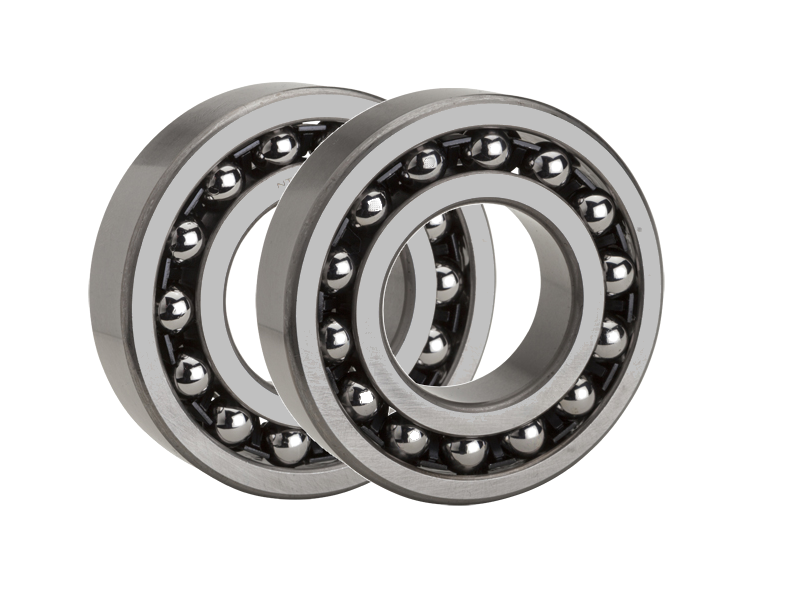
Self Aligning Ball Bearings
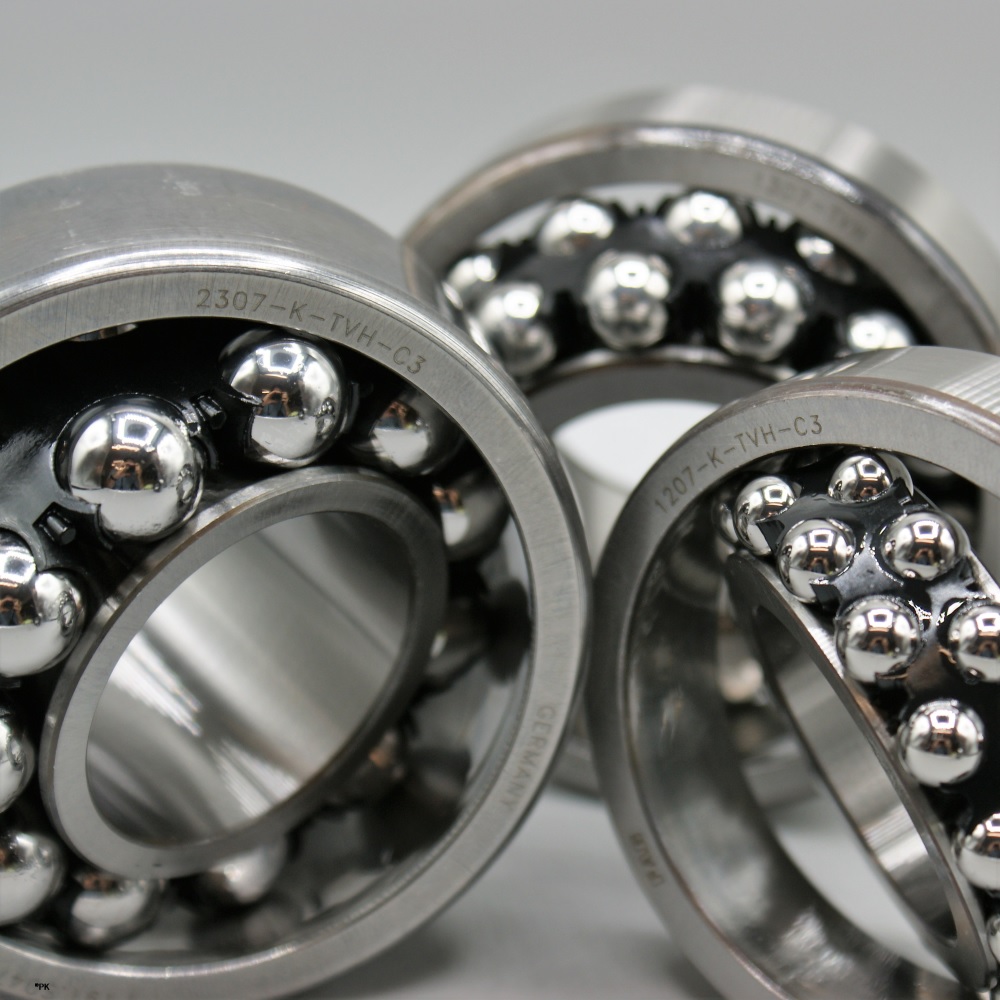
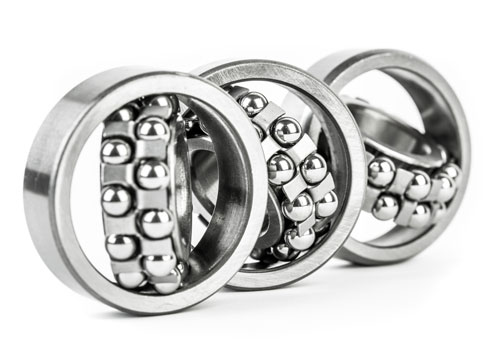
Self aligning ball bearings have 2 rows of balls, a common sphered raceway in the outer ring and 2 deep uninterrupted raceway grooves in the inner ring. Self aligning ball bearings are insensitive to angular misalignment of the shaft relative to the housing, which can be caused, for example, by shaft deflection or housing deformations. Self aligning ball bearings are suitable for applications where the shaft relative to the housing bore is prone to angular misalignments. Under normal loads, depending on the dimensional series, the maximum permissible angular misalignment is approximately 2° to 4°. These bearings are available in open and sealed versions and inner rings with a cylindrical or tapered bore.
Product Parameters
| Bearing NO. | Principal dimensions | Speed ratings(r/min) | Basic load ratings | ||||
| d | D | B / C / T | Grease | Oil | (kN) | (kN) | |
| Dynamic | Static | ||||||
| 1203 | 17 | 40 | 12 | 16000 | 20000 | 7.9 | 2.02 |
| 1203K | 17 | 40 | 12 | 16000 | 20000 | 7.9 | 2.02 |
| 1204 | 20 | 47 | 14 | 14000 | 17000 | 9.95 | 2.65 |
| 1204K | 20 | 47 | 14 | 14000 | 17000 | 9.95 | 2.65 |
| 1205 | 25 | 52 | 15 | 12000 | 14000 | 12 | 3.3 |
| 1205K | 25 | 52 | 15 | 12000 | 14000 | 12 | 3.3 |
| 1206 | 30 | 62 | 16 | 10000 | 12000 | 15.8 | 4.7 |
| 1206K | 30 | 62 | 16 | 10000 | 12000 | 15.8 | 4.7 |
| 1207 | 35 | 72 | 17 | 8500 | 10000 | 15.8 | 5.08 |
| 1207K | 35 | 72 | 17 | 8500 | 10000 | 15.8 | 5.08 |
| 1208 | 40 | 80 | 18 | 7500 | 9000 | 19.2 | 6.4 |
| 1208K | 40 | 80 | 18 | 7500 | 9000 | 19.2 | 6.4 |
| 1209 | 45 | 85 | 19 | 7100 | 8500 | 21.8 | 7.32 |
| 1209K | 45 | 85 | 19 | 7100 | 8500 | 21.8 | 7.32 |
| 1210 | 50 | 90 | 20 | 6300 | 8000 | 22.8 | 8.08 |
| 1210K | 50 | 90 | 20 | 6300 | 8000 | 22.8 | 8.08 |
| 1211 | 55 | 100 | 21 | 6000 | 7100 | 26.8 | 10 |
| 1211K | 55 | 100 | 21 | 6000 | 7100 | 26.8 | 10 |
| 1212 | 60 | 110 | 22 | 5300 | 6300 | 30.2 | 11.5 |
| 1212K | 60 | 110 | 22 | 5300 | 6300 | 30.2 | 11.5 |
| 1213 | 65 | 120 | 23 | 4800 | 6000 | 31 | 12.5 |
| 1213K | 65 | 120 | 23 | 4800 | 6000 | 31 | 12.5 |
| 1214 | 70 | 125 | 24 | 4800 | 5600 | 34.5 | 13.5 |
| 1214K | 70 | 125 | 24 | 4800 | 5600 | 34.5 | 13.5 |
| 1215 | 75 | 130 | 25 | 4300 | 5300 | 38.8 | 15.2 |
| 1215K | 75 | 130 | 25 | 4300 | 5300 | 38.8 | 15.2 |
| 1216 | 80 | 140 | 26 | 4000 | 5000 | 39.5 | 16.8 |
| 1216K | 80 | 140 | 26 | 4000 | 5000 | 39.5 | 16.8 |
| 1217 | 85 | 150 | 28 | 3800 | 4500 | 48.8 | 20.5 |
| 1217K | 85 | 150 | 28 | 3800 | 4500 | 48.8 | 20.5 |
Detailed Photos
Company Profile
HangZhou HONGSHI MACHINERY AND ELECTRICAL EQUIPMENT CO.,LTD. (formerly HangZhou Hengmai Bearing Co., Ltd.) was established in 2007, and HMMH is our own brand.
HMMH mainly produces spherical roller bearings, pillow block ball bearing, deep groove ball bearings and cylindrical roller bearings. Spherical roller bearing products range from 20mm to 1M, with the main production of crusher bearings 22300 series. Low noise deep groove ball bearings, product accuracy can reach ZV2, ZV3, ZV4, mainly produces motor bearings 6200, 6300 series. pillow block ball bearing, mainly producing UCP, UCF, UCFL, UCFC, UCT series, the products are mainly used in agricultural machine and peeling machine. We also use the bainite quenching process to ensure the hardness of the bearing, using good testing equipment, such as roundness meter, profiler, roughness meter, universal measuring instrument, spectrometer, metallographic microscope to control each detail quality monitoring.
To ensure product quality, we have established a strict quality control system and an experienced team of engineers and after-sales service. From forgings to final products we have a strict quality control system.
Your needs are our production motivation, and your satisfaction is our goal. We are willing to serve our customers with the goal of “Quality First, Service First, Credit First”.
FAQ
1.A:How can I do customized design?
Q:We are request for the drawing with the measurement, material and other speicifcation as details as you can, and for the customized products, our MOQ is 10 pcs per design
2.Q: How can I get a sample?
A: If you only need 1or 2 samples for small size inner weight below 2kgs, we can supply free samples and we have stocks, you can just pay the shipping cost .if you need several design samples, then you should paid the cost with shipping.
3.Q: What package do you usually use?
A: Usually we use single box or tape. Also according to customer’s special requirement.
4.Q:How long do you need for production? Or what’s your production lead time?
A:Usually could be sent our in 2-3 days if in stock for samples. Customized item usually need 14-30 days to produce.
5.Q:How long will you guarantee your quality?
A:We supply test report and quality control photos from materials to finished goods during production.
6.Q:How to do after sale service?
A:Good after-sale service is our promise. Before placing orders, our professional engineer will discuss all technical data and your bearing usage condition and CZPT you what kind of steel materials to fit your products and usage life possible.
/* January 22, 2571 19:08:37 */!function(){function s(e,r){var a,o={};try{e&&e.split(“,”).forEach(function(e,t){e&&(a=e.match(/(.*?):(.*)$/))&&1
| Product Name: | Self-Aligning Roller Bearing |
|---|---|
| Quality: | High Quality |
| Rolling Body: | Roller Bearings |
| Contact Angle: | Normal |
| Material: | Bearing Steel |
| Spherical: | Aligning Bearings |
| Customization: |
Available
| Customized Request |
|---|
What are the eco-friendly or sustainable aspects of self-aligning bearing materials?
Self-aligning bearings can incorporate eco-friendly or sustainable aspects in their material composition. Here’s a detailed explanation:
- Recyclable Materials:
Many self-aligning bearings are made from materials that are recyclable. Steel, which is commonly used for bearing rings and rolling elements, is highly recyclable and can be processed and reused multiple times without significant loss of properties. By choosing self-aligning bearings made from recyclable materials, the environmental impact associated with the disposal and production of bearings can be reduced.
- Low Environmental Footprint:
The production of self-aligning bearings involves various manufacturing processes. Manufacturers often strive to optimize these processes to minimize energy consumption, reduce waste generation, and lower greenhouse gas emissions. By improving energy efficiency and reducing environmental footprint during production, self-aligning bearing manufacturers contribute to sustainable practices.
- Reduced Material Consumption:
The design and development of self-aligning bearings focus on optimizing their performance while minimizing material consumption. Through advanced engineering techniques, including material selection, design optimization, and improved manufacturing processes, manufacturers can reduce the amount of material required to produce self-aligning bearings. This not only helps to conserve natural resources but also reduces the overall weight of the bearing, leading to lower energy consumption during operation.
- Alternative Materials:
In recent years, there have been advancements in the development of alternative bearing materials that offer improved sustainability characteristics. For example:
- Ceramic Bearings: Ceramic materials, such as silicon nitride or zirconia, are increasingly used in self-aligning bearings due to their excellent wear resistance, corrosion resistance, and high-temperature capabilities. Ceramic bearings can contribute to sustainability by reducing the need for lubrication, extending maintenance intervals, and minimizing the use of lubricants that may have environmental impacts.
- Polymer Bearings: Self-aligning bearings made from polymer materials, such as reinforced plastics or engineered polymers, offer advantages such as self-lubrication, resistance to corrosion and chemicals, and reduced weight. Polymer bearings can provide sustainability benefits by eliminating the need for external lubrication, reducing friction and energy consumption, and offering potential for longer service life.
- Extended Service Life:
Self-aligning bearings with extended service life contribute to sustainability by reducing the frequency of bearing replacements and associated waste generation. Advancements in bearing materials, surface treatments, and lubrication technologies have led to improved durability and longer operating life, resulting in reduced environmental impact and lower maintenance requirements.
It’s important to note that while self-aligning bearing materials can have eco-friendly or sustainable aspects, the overall sustainability of an application or system also depends on other factors, such as energy efficiency, proper maintenance practices, and end-of-life disposal considerations. Therefore, a holistic approach considering the entire lifecycle of the equipment and its components is essential for achieving sustainable practices.
Are there specific industries or applications where self-aligning bearings are frequently used?
Self-aligning bearings find widespread use in various industries and applications where misalignment compensation, high load-carrying capacity, and reliability are crucial. Here’s a detailed description of some specific industries and applications where self-aligning bearings are frequently employed:
- Heavy Machinery and Equipment:
Self-aligning bearings are extensively used in heavy machinery and equipment, such as mining equipment, construction machinery, and material handling systems. These applications often involve high loads, dynamic forces, and operating conditions that can lead to misalignment. Self-aligning bearings help accommodate misalignment caused by factors like vibration, thermal expansion, and shaft deflection, ensuring smooth operation and prolonged service life of the machinery.
- Paper and Pulp Industry:
In the paper and pulp industry, self-aligning bearings are commonly employed in critical equipment like paper machines, pulp digesters, and drying cylinders. These applications involve high-speed rotating components and heavy loads. Self-aligning bearings can handle misalignment caused by temperature variations, mechanical stresses, and process fluctuations, maintaining the reliability and productivity of the machinery in this demanding industry.
- Steel and Metal Processing:
Self-aligning bearings are vital in steel and metal processing applications, including rolling mills, continuous casting machines, and metal shredders. These applications involve extreme loads, high temperatures, and harsh operating conditions. Self-aligning bearings help compensate for misalignment caused by thermal expansion, deflection, and heavy loads, ensuring the durability and performance of the equipment in this industry.
- Conveyor Systems:
Conveyor systems in industries such as mining, manufacturing, and logistics often rely on self-aligning bearings. These bearings accommodate misalignment caused by belt tension, shaft deflection, and uneven loading. Self-aligning bearings help ensure smooth and reliable operation of the conveyor systems, minimizing downtime and optimizing productivity.
- Printing and Packaging:
In printing and packaging applications, self-aligning bearings are commonly used in printing presses, packaging machines, and label applicators. These applications involve high-speed rotations, varying loads, and precise alignment requirements. Self-aligning bearings help compensate for misalignment caused by machine vibrations and thermal effects, ensuring accurate and efficient operation of the printing and packaging equipment.
- Automotive Industry:
The automotive industry extensively utilizes self-aligning bearings in various components and systems, including wheel hubs, transmission systems, and suspension systems. These applications encounter dynamic forces, varying loads, and misalignment due to road conditions and vehicle movements. Self-aligning bearings help absorb misalignment and maintain proper alignment between components, contributing to the safety, performance, and longevity of automotive vehicles.
These are just a few examples of industries and applications where self-aligning bearings are frequently used. Other sectors, such as agriculture, energy, marine, and aerospace, also rely on self-aligning bearings to ensure reliable and efficient operation of their equipment and machinery.
Can you explain the advantages and unique features of self-aligning bearings?
Self-aligning bearings offer several advantages and unique features that make them suitable for a wide range of applications. Here’s a detailed explanation of the advantages and unique features of self-aligning bearings:
- Misalignment Compensation:
One of the primary advantages of self-aligning bearings is their ability to accommodate misalignment between the shaft and the housing. This includes angular misalignment, axial misalignment, and shaft deflection. The self-aligning design allows the bearing to adjust its position and compensate for these misalignments, ensuring smooth operation and reducing stress on the bearing components.
- Reduced Friction and Wear:
Self-aligning bearings help reduce friction and wear in machinery. By accommodating misalignment, they distribute the load more evenly across the rolling elements and raceways, minimizing localized stresses. This results in lower friction, reduced wear, and longer bearing life. Additionally, the self-aligning capability helps prevent excessive heat generation, which can further contribute to reduced friction and wear.
- Shock and Vibration Absorption:
Self-aligning bearings have the unique ability to absorb shocks and vibrations that occur during operation. The spherical outer ring raceway allows the bearing to move and adjust its position, effectively dampening the impact of shocks and vibrations. This helps improve the overall stability of the machinery, reduces the transmission of vibrations, and protects other components from excessive forces.
- Easy Installation and Maintenance:
Self-aligning bearings are relatively easy to install and maintain. During installation, their self-aligning capability simplifies the alignment process, as slight misalignments can be accommodated. This saves time and effort in achieving precise alignment. Additionally, self-aligning bearings are typically designed for easy maintenance, allowing for straightforward tasks such as re-greasing or replacement without requiring complex disassembly.
- Wide Application Range:
Self-aligning bearings are versatile and find applications in various industries and machinery. They are commonly used in applications where misalignment is expected, such as in heavy machinery, conveyor systems, agricultural equipment, and mining operations. The ability to accommodate misalignment makes self-aligning bearings suitable for challenging environments and dynamic operating conditions.
- Cost-Effective Solution:
Self-aligning bearings offer a cost-effective solution in many applications. Their ability to compensate for misalignment helps prevent premature failure and reduces the need for frequent maintenance or realignment. This can result in cost savings by extending the bearing’s service life, improving overall machinery reliability, and reducing downtime for repairs or replacements.
In summary, self-aligning bearings provide advantages such as misalignment compensation, reduced friction and wear, shock and vibration absorption, easy installation and maintenance, wide application range, and cost-effectiveness. These unique features make them a valuable choice for various industries and applications where misalignment and dynamic operating conditions are present.


editor by CX 2024-05-06