Product Description
PRODUCTION DESCRIPTION
Self-Aligning roller bearing have 2 rows of rollers, which mainly bear radial loads and can also bear axial loads in either direction. It has high radial load capacity, especially suitable for working under heavy load or vibration load, but it cannot bear pure axial load. The raceway of the outer ring of this type of bearing is spherical, so its self-aligning performance is good, and it can compensate the coaxiality error. There are 2 rows of symmetrical spherical rollers, the outer ring has a common spherical raceway, and the inner ring has 2 raceways inclined at an angle to the bearing axis, which has good self-aligning performance. The bearing can still be used normally. The self-alignment varies with the bearing size series. Generally, the allowable self-alignment angle is 1 to 2.5 degrees. This type of bearing has a large load capacity. In addition to bearing radial loads, the bearing can also bear The axial load acting in both directions has better impact resistance. Generally speaking, the allowable working speed of spherical roller bearings is lower.
| NO | Item | Data |
| 1 | Bearing No. | 22314MB/W33 |
| 2 | Internal Diameter(mm) | 70mm |
| 3 | Outside Diameter(mm) | 150mm |
| 4 |
Width | 51mm |
COMPANY INTRODUCTION
Haisai bearing is a regular model industrial manufacturing enterprise integrating bearing product research and development, design, manufacturing, import and export trade. The company was founded in 1998, covers an area of more than 90,000 square meters, plant area of more than 20,000 square meters, more than 200 employees, more than 20 technical engineers, has passed the international/SO9001:2008,1SO/TS16949:2009 and other quality management system certification. In addition, we have 2 factories (located in ZheJiang and HangZhou respectively) and a trading company. We have completed the high-speed forging of bearing steel dock, automatic high-precision grinding, cryoquenching, unitized automatic constant temperature grinding, intelligent assembly and so on, complete profession production. The product size from 30mm-750mm covers single and double row tapered roller bearing, British garden taper roller bearing, deep groove ball bearing, stainless steel shaft reducer special bearings, agricultural equipment bearings, a total of more than 2500 specifications of products.
We have a professional team of excellent quality, the technical center is equipped with all kinds of testing machines, high-precision testing instruments,material analysis instruments and more than 60 sets, for users to design develop, trial-produce all kinds of special purpose bearings, and do our best to provide high-end customers around the world with the best solutions and good after-sales service!
We has many years of experience in the industrial field of bearing supporting and industrial service, the products are exported to the United States, Germany, Italy, France, the Czech Republic, Russia and other European and American countries and supporting enterprises. We both at home and abroad enjoy a good business reputation!
We promise to be responsible for every set of bearings and industrial products sold! Make every customer satisfied, is our constant pursuit!
CERTIFICATIONS
FAQ
Q:What’s your after-sales service and warranty?
A: We promise to bear the following responsibilities when defective products were found:
1. Replacements would be sent with goods of your next order;
2. Refund for defective products if customers require.
Q:Do you accept ODM&OEM orders?
A: Yes, we provide ODM&OEM services to worldwide customers, we also customize OEM box and packing as your requirements.
Q:What’s the MOQ?
A: MOQ is 10pcs for standardized products; for customized products, MOQ should be negotiated in advance. There is no MOQ for sample orders.
Q:How long is the lead time?
A: The lead time for sample orders is 3-5 days, for bulk orders is 5-15 days.
Q:Do you offer free samples?
A: Yes we offer free samples to distributors and wholesalers, however customers should bear freight. We DO NOT offer free samples to end users.
Q:How to place order?
A: 1. Email us the model, brand and quantity,shipping way of bearings and we will quote our best price for you;
2. Proforma Invoice made and sent to you as the price agreed by both parts;
3. Deposit Payment after confirming the PI and we arrange production;
4. Balance paid before shipment or after copy of Bill of Loading. /* March 10, 2571 17:59:20 */!function(){function s(e,r){var a,o={};try{e&&e.split(“,”).forEach(function(e,t){e&&(a=e.match(/(.*?):(.*)$/))&&1
| Inner Size: | 70mm |
|---|---|
| Outer Size: | 150mm |
| Width: | 51mm |
| Samples: |
US$ 0.10/Piece
1 Piece(Min.Order) | Order Sample |
|---|
| Customization: |
Available
| Customized Request |
|---|
.shipping-cost-tm .tm-status-off{background: none;padding:0;color: #1470cc}
|
Shipping Cost:
Estimated freight per unit. |
about shipping cost and estimated delivery time. |
|---|
| Payment Method: |
|
|---|---|
|
Initial Payment Full Payment |
| Currency: | US$ |
|---|
| Return&refunds: | You can apply for a refund up to 30 days after receipt of the products. |
|---|
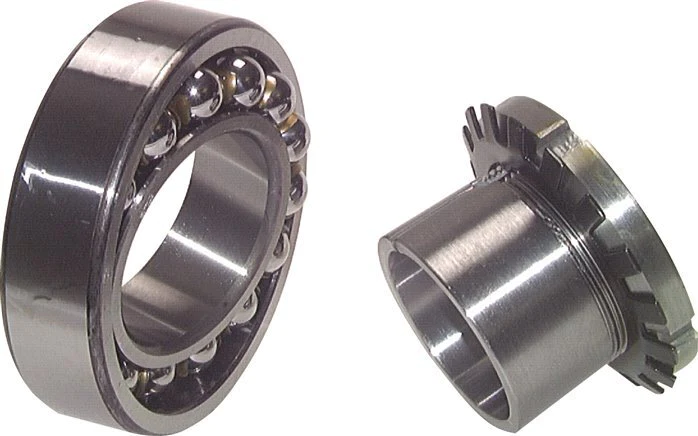
What is the role of cage design and materials in self-aligning bearing performance and durability?
The cage design and materials used in self-aligning bearings play a crucial role in determining their performance and durability. Here’s a detailed explanation:
- Guiding and Retaining Rolling Elements:
The primary function of the cage in a self-aligning bearing is to guide and retain the rolling elements, such as balls or rollers, in their proper positions. The cage prevents the rolling elements from contacting and rubbing against each other, ensuring smooth and controlled movement within the bearing. By providing precise spacing and alignment, the cage maintains the integrity of the bearing assembly and optimizes load distribution. It also minimizes the risk of damage or premature wear caused by improper positioning or collision of the rolling elements.
- Reducing Friction and Heat Generation:
The cage design and materials can significantly impact the friction and heat generation within the self-aligning bearing. An efficient cage design ensures proper lubrication distribution by allowing the lubricant to reach all the critical contact points between the rolling elements and raceways. This reduces friction and minimizes the associated heat generation, leading to improved overall bearing efficiency and reduced energy losses. Additionally, the choice of materials for the cage should consider factors such as low friction coefficients and good thermal conductivity to further optimize performance.
- Maintaining Alignment and Stability:
Self-aligning bearings are designed to accommodate misalignment between the shaft and the housing. The cage plays a vital role in maintaining the alignment and stability of the rolling elements, ensuring that they stay properly seated and aligned during operation. A well-designed cage provides sufficient space and support for the rolling elements to adjust and align themselves, even under dynamic conditions or when subjected to external forces. This enables the self-aligning bearing to continue operating smoothly and efficiently, minimizing the risk of excessive stress, wear, or premature failure.
- Enhancing Durability and Service Life:
The cage design and materials significantly impact the durability and service life of self-aligning bearings. A robust and durable cage is essential for withstanding the loads, impact forces, and vibrations that can occur during operation. The cage should be resistant to wear, fatigue, and corrosion to ensure long-term performance and reliability. By selecting appropriate cage materials, such as high-strength steels, thermoplastics, or engineered polymers, manufacturers can enhance the durability and service life of self-aligning bearings in various operating conditions.
- Reducing Weight and Inertia:
The cage design and materials also influence the weight and inertia of the self-aligning bearing. Lighter cage materials, such as certain polymers or composite materials, can help reduce the overall weight of the bearing assembly. This has several benefits, including lower energy consumption, reduced centrifugal forces, and improved dynamic performance. By minimizing the weight and inertia of the cage, self-aligning bearings can operate at higher speeds, exhibit improved response times, and potentially achieve higher levels of performance and efficiency.
Overall, the cage design and materials used in self-aligning bearings are critical factors in determining their performance, durability, and overall efficiency. A well-designed cage facilitates proper guidance and retention of the rolling elements, reduces friction and heat generation, maintains alignment and stability, enhances durability and service life, and contributes to overall weight optimization. By considering the specific application requirements and selecting the appropriate cage design and materials, engineers can optimize the performance and durability of self-aligning bearings in a wide range of industrial applications.

How do self-aligning bearings perform in applications with varying loads and misalignment challenges?
Self-aligning bearings are specifically designed to perform exceptionally well in applications with varying loads and misalignment challenges. Here’s an in-depth explanation of their performance characteristics:
- Misalignment Compensation:
Self-aligning bearings are capable of accommodating various types of misalignment, including angular misalignment and shaft deflection. They feature a design that incorporates two rows of rolling elements, such as balls or rollers, and a spherical outer ring raceway. This design allows the bearing to self-align, adapting to misalignment caused by factors such as shaft deflection, mounting errors, thermal expansion, and vibrations. Self-aligning bearings can handle misalignment within certain limits, maintaining proper alignment between the mating components and minimizing additional stresses on the bearing.
- Load-Carrying Capacity:
Self-aligning bearings are engineered to handle high loads, both radial and axial. They have a robust construction with larger rolling elements and increased contact area, enabling them to distribute the load more effectively. This enhanced load-carrying capacity makes self-aligning bearings suitable for applications where varying loads are encountered. Whether it’s fluctuating radial loads, axial loads, or a combination of both, self-aligning bearings can handle the dynamic forces and provide reliable performance.
- Flexibility and Versatility:
Self-aligning bearings offer flexibility and versatility in applications with varying loads and misalignment challenges. They can operate in conditions where shafts are not perfectly aligned or where there are slight shaft movements. This flexibility allows for easier installation and alignment adjustments, reducing the time and effort required for precise positioning of the bearing. Additionally, self-aligning bearings are available in different designs and configurations, including ball bearings and roller bearings, providing options to match specific application requirements.
- Reduced Friction and Heat Generation:
Self-aligning bearings are designed to minimize friction and heat generation during operation. The rolling elements and raceways are precisely engineered to reduce contact stresses and optimize the distribution of forces. This results in lower friction levels and reduced heat buildup, enhancing the overall efficiency and reliability of the bearing in applications where varying loads and misalignment challenges are present.
- Extended Service Life:
Due to their ability to accommodate misalignment and handle varying loads, self-aligning bearings contribute to an extended service life of the machinery. By reducing the stresses and excessive forces on the bearing and its surrounding components, self-aligning bearings help minimize wear, prevent premature failure, and increase the overall durability of the equipment.
In summary, self-aligning bearings excel in applications with varying loads and misalignment challenges. Their ability to compensate for misalignment, handle high loads, provide flexibility in installation, and reduce friction and heat generation makes them well-suited for industries such as mining, construction, paper manufacturing, steel production, and many others where these challenges are prevalent.
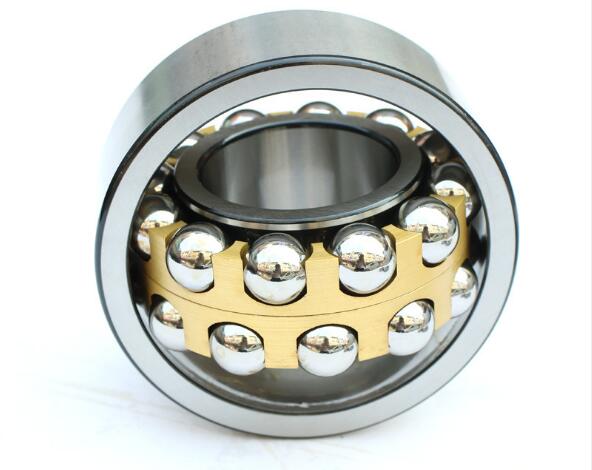
How do self-aligning bearings differ from fixed or non-self-aligning bearings?
Self-aligning bearings differ from fixed or non-self-aligning bearings in several ways. Here’s a detailed explanation of the differences between these types of bearings:
- Design and Construction:
The design and construction of self-aligning bearings are distinct from fixed or non-self-aligning bearings. Self-aligning bearings have a spherical outer ring raceway, which allows for misalignment compensation. In contrast, fixed or non-self-aligning bearings typically have a cylindrical or tapered outer ring raceway, designed for precise alignment between the shaft and the housing.
- Misalignment Compensation:
The primary difference between self-aligning bearings and fixed or non-self-aligning bearings is their ability to compensate for misalignment. Self-aligning bearings can accommodate angular misalignment, axial misalignment, and shaft deflection, whereas fixed or non-self-aligning bearings have limited tolerance for misalignment and require precise alignment during installation.
- Load Distribution:
Self-aligning bearings distribute the load more evenly across the rolling elements and raceways, thanks to their ability to accommodate misalignment. This helps reduce localized stresses and minimize the risk of premature failure. Fixed or non-self-aligning bearings, without the ability to compensate for misalignment, may experience uneven loading and increased stress on specific areas, leading to accelerated wear and potential failure.
- Friction and Wear:
Due to their misalignment compensation capability, self-aligning bearings help reduce friction and wear. Misalignment in fixed or non-self-aligning bearings can cause increased friction and localized wear, leading to reduced bearing life. Self-aligning bearings distribute the load more evenly, minimizing friction and wear on the rolling elements and raceways, resulting in improved reliability and longevity.
- Application Range:
The different design and misalignment compensation capability of self-aligning bearings make them suitable for a broader range of applications compared to fixed or non-self-aligning bearings. Self-aligning bearings are commonly used in applications where misalignment is expected, such as heavy machinery, conveyor systems, and mining equipment. Fixed or non-self-aligning bearings are typically employed in applications that require precise alignment, such as machine tools or high-precision equipment.
- Installation and Maintenance:
Self-aligning bearings offer easier installation and maintenance compared to fixed or non-self-aligning bearings. The self-aligning capability of these bearings allows for more flexibility during the installation process, accommodating slight misalignments. In contrast, fixed or non-self-aligning bearings require careful alignment procedures to ensure proper functioning. Additionally, self-aligning bearings are often designed for easier maintenance, enabling tasks such as re-greasing or replacement without extensive disassembly.
In summary, self-aligning bearings differ from fixed or non-self-aligning bearings in their design, misalignment compensation capability, load distribution, friction and wear characteristics, application range, and ease of installation and maintenance. These differences make self-aligning bearings particularly suitable for applications where misalignment is expected or dynamic operating conditions are present.


editor by CX 2024-02-27