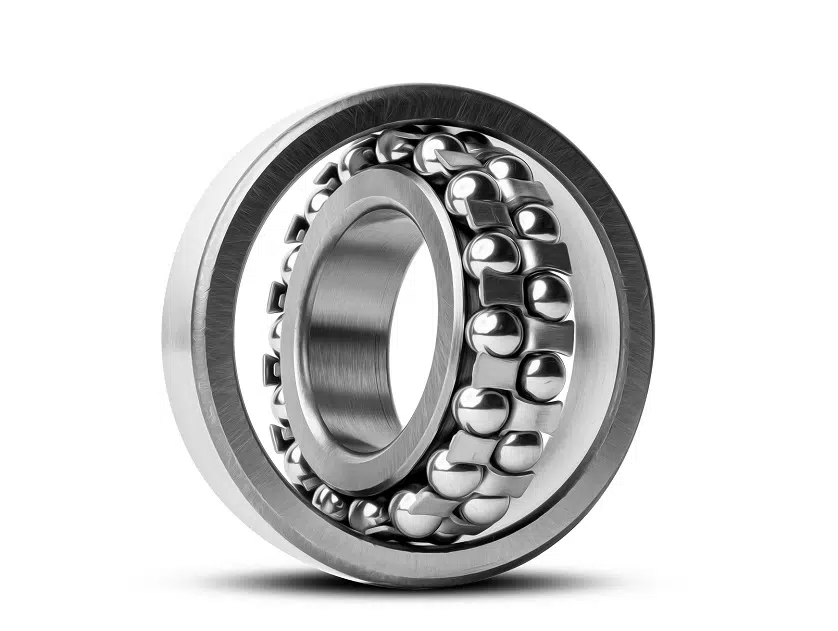
How do self-aligning bearings enhance the overall efficiency and functionality of machinery and equipment?
Self-aligning bearings play a crucial role in enhancing the overall efficiency and functionality of machinery and equipment. Here’s a detailed explanation:
- Compensation for Misalignment:
One of the key benefits of self-aligning bearings is their ability to compensate for misalignment between the shaft and the housing. Misalignment can occur due to various factors such as shaft deflection, thermal expansion, or mounting errors. Self-aligning bearings have the capability to accommodate angular misalignment, axial displacement, and shaft deflection, ensuring smooth operation even in challenging conditions. By accommodating misalignment, self-aligning bearings minimize stress and wear on other components, reducing the risk of premature failure and improving overall machinery efficiency.
- Reduced Friction and Energy Consumption:
Self-aligning bearings are designed to operate with low friction, which helps to reduce energy consumption within the machinery or equipment. The rolling elements and raceways of self-aligning bearings are precisely engineered to minimize contact friction. This reduced friction results in lower power losses, allowing the machinery to operate more efficiently and potentially leading to energy savings.
- Increased Reliability and Service Life:
Self-aligning bearings contribute to the overall reliability and service life of machinery and equipment. By accommodating misalignment and reducing friction, they help to distribute loads evenly, minimize stress concentrations, and prevent premature wear and failures. This improved load distribution and reduced friction can extend the service life of other critical components, such as gears, shafts, and seals. Additionally, self-aligning bearings often feature robust designs and high-quality materials, further enhancing their durability and reliability in demanding operating conditions.
- Enhanced Performance in Challenging Environments:
Self-aligning bearings are well-suited for applications in challenging environments. They can withstand conditions such as high temperatures, extreme speeds, or contaminated operating conditions. The ability to accommodate misalignment and the use of specialized bearing materials and lubricants enable self-aligning bearings to maintain their performance and functionality in adverse conditions. This enhances the overall efficiency and reliability of machinery and equipment in industries such as mining, steel, paper, and food processing.
- Ease of Installation and Maintenance:
Self-aligning bearings are designed for ease of installation and maintenance. Their self-aligning capability simplifies the alignment process during installation, reducing the time and effort required. Additionally, self-aligning bearings often feature integrated seals or shields that help to protect against contamination and retain lubrication, resulting in reduced maintenance requirements. The ease of installation and maintenance of self-aligning bearings contributes to the overall efficiency of machinery and equipment by minimizing downtime and improving overall operational productivity.
Overall, self-aligning bearings enhance the efficiency and functionality of machinery and equipment by accommodating misalignment, reducing friction and energy consumption, increasing reliability and service life, performing well in challenging environments, and enabling easier installation and maintenance. By incorporating self-aligning bearings into their designs, engineers and equipment manufacturers can optimize performance, reduce downtime, and improve the overall efficiency of their machinery and equipment.
What are the potential challenges or limitations associated with using self-aligning bearings in specific industries?
While self-aligning bearings offer many advantages, there are some potential challenges and limitations associated with their use in specific industries. Here’s a detailed explanation of these considerations:
- Load Capacity:
While self-aligning bearings are designed to handle high loads, there are limits to their load-carrying capacity. In industries with extremely heavy or shock loads, such as heavy machinery, mining, or construction, the load demands may exceed the capabilities of self-aligning bearings. In such cases, alternative bearing designs or additional support mechanisms may be required to handle the extreme load conditions.
- Speed Limitations:
Self-aligning bearings may have certain speed limitations due to factors such as centrifugal forces, increased friction, or potential instability at high rotational speeds. In industries that require very high-speed applications, such as aerospace or certain manufacturing processes, specialized high-speed bearings may be more suitable to ensure optimal performance and prevent premature failure.
- Temperature and Environmental Constraints:
Self-aligning bearings have specific temperature and environmental constraints that can impact their performance. In industries involving extreme temperatures, aggressive chemicals, or harsh environmental conditions, the choice of bearing materials and lubricants becomes critical. Certain industries, such as oil and gas, chemical processing, or marine applications, may require specialized bearing designs or coatings to withstand the demanding operating conditions.
- Maintenance and Lubrication:
Proper maintenance and lubrication are essential for the reliable operation of self-aligning bearings. In industries where access for maintenance is challenging or where frequent maintenance is not feasible, the longevity and performance of self-aligning bearings may be compromised. Additionally, industries with high contamination or abrasive particles in the operating environment may require more frequent lubrication or specialized sealing arrangements to protect the bearings from premature wear and failure.
- Space Limitations:
Self-aligning bearings have a larger footprint compared to some other bearing designs due to their double-row construction and spherical outer ring raceway. In industries with space constraints or compact machinery designs, the dimensions of self-aligning bearings may pose challenges in terms of integration or fitting within limited spaces. In such cases, alternative bearing designs with smaller profiles may be more suitable.
- Cost Considerations:
Self-aligning bearings can be more expensive compared to certain other bearing types, especially in applications that require larger sizes or specialized configurations. In industries with cost-sensitive considerations, such as consumer products or automotive manufacturing, the higher cost of self-aligning bearings may influence the selection of alternative bearing options that can meet the application requirements at a lower cost.
While self-aligning bearings offer numerous benefits, it is important to carefully evaluate the specific challenges and limitations in each industry or application. By considering these factors and consulting with bearing experts or manufacturers, the most suitable bearing solution can be selected to ensure optimal performance, reliability, and cost-effectiveness.
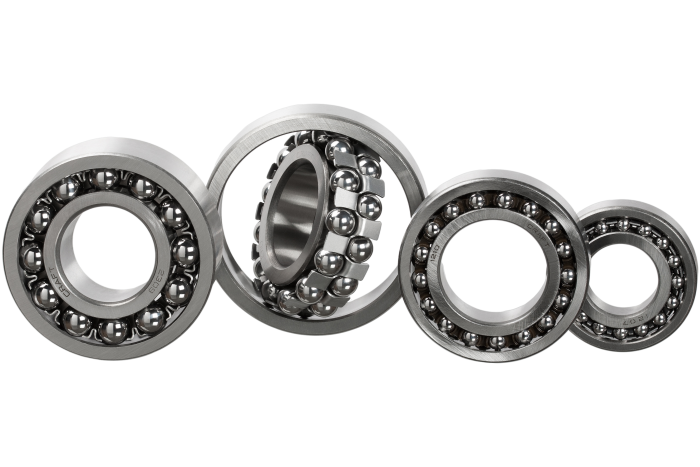
What are the common types of self-aligning bearings, such as spherical or barrel roller bearings?
There are several common types of self-aligning bearings, each offering unique features and advantages. Here’s a detailed explanation of some of the common types:
- Spherical Roller Bearings:
Spherical roller bearings are one of the most common types of self-aligning bearings. They have a spherical outer ring raceway and two rows of barrel-shaped rollers positioned between the inner and outer rings. This design allows for the accommodation of misalignment and provides high radial load-carrying capacity. Spherical roller bearings are commonly used in heavy-duty applications, such as mining equipment, paper mills, and crushers.
- Barrel Roller Bearings:
Barrel roller bearings, also known as toroidal roller bearings, have a barrel-shaped roller arrangement with a concave outer ring raceway and a convex inner ring raceway. This design enables the bearing to accommodate misalignment and axial displacement. Barrel roller bearings are suitable for applications with high radial loads and moderate axial loads, such as in conveyor systems, printing presses, and industrial gearboxes.
- Self-Aligning Ball Bearings:
Self-aligning ball bearings consist of an inner ring with two rows of balls and an outer ring with a spherical raceway. The design allows for misalignment compensation and is particularly suited for applications with low to moderate radial loads and moderate axial loads. Self-aligning ball bearings are commonly used in electric motors, pumps, and automotive applications.
- Self-Aligning Thrust Roller Bearings:
Self-aligning thrust roller bearings are designed to accommodate misalignment in applications with axial loads. They have a spherical rolling element between the shaft washer and the housing washer, allowing for misalignment compensation. These bearings are commonly used in applications such as screw conveyors, heavy machinery, and marine propulsion systems.
- Adapter Sleeve Bearings:
Adapter sleeve bearings are a type of self-aligning bearing that incorporates an adapter sleeve, which facilitates easy mounting and dismounting of the bearing. They are commonly used in applications where frequent bearing replacement or adjustment is required. Adapter sleeve bearings are often employed in conveyor systems, agricultural machinery, and textile equipment.
These are just a few examples of common types of self-aligning bearings. Other variations and specialized designs exist to suit specific application requirements. It’s important to consider factors such as load capacity, operating conditions, and dimensional constraints when selecting the appropriate self-aligning bearing for a particular application.


editor by CX 2024-05-07