Product Description
We offer all type of ball bearing and roller bearings, they are available in various cross sections and satisfy a huge variety of operating conditions and application performance requirements.
Our products are mainly exported to Mideast, Canada, Southeast Asia, South America, Singapore, South Korea, India, Pakistan,and other countries all over the world. We have reliable quality and quantity products to provide. We implement the CZPT principle and take the slogan as “the best quality, the best credit and the best service”
Our company insists on the “quality first, credit first” business ideas and our product specification is well-founded. We have a good reputation in the international market by our perfect service and sufficient supply.
Product Description
Brief introduction:
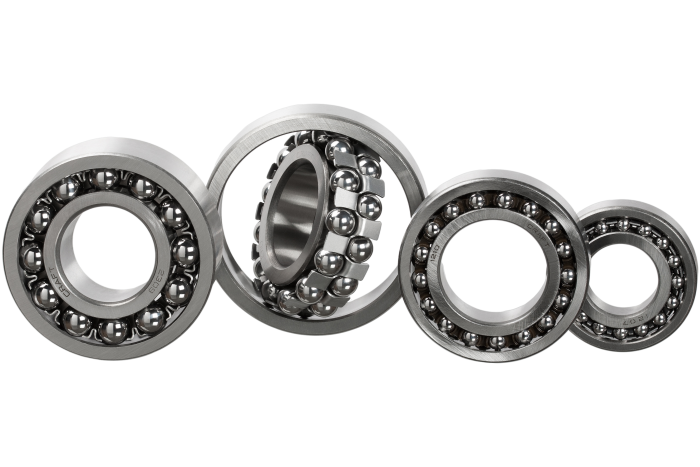
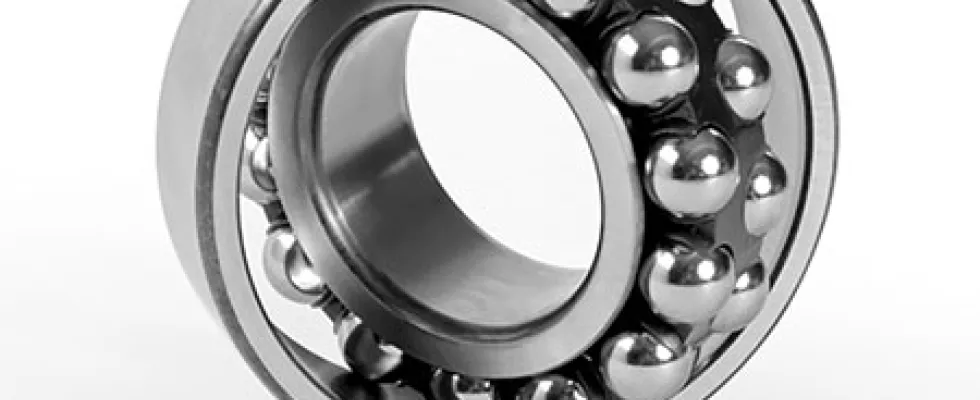
The components of the self aligning ball bearing include 2 rows of balls, a cage, an inner ring, and an outer ring with a common concave sphered raceway.This type of bearings is self-aligning and insensitive to angular misalignments of the shaft relative to the housing. The bearings are produced in several design: open bearings with the basic design, sealed bearings, open bearings with an extended inner ring.The self alignning ball bearings have the lowest friction of all rolling bearings.The bearings are available with a cylindrical bore or with a tapered bore in certain size ranges. Self-aligning ball bearings have 2 rows of balls and a common concave sphered raceway in the outer ring. The bearing is consequently self-aligning and insensitive to angular misalignments of the shaft relative to the housing. It is particularly suitable for applications where considerable shaft deflections or misalignment are to be expected. Additionally, the self-aligning ball bearing has the lowest friction of all rolling bearings, which enables it to run cooler even at high speeds.
Features:
When shaft shell deflection occurs, they can be automatically adjusted without increasing the burden on the bearings. They can withstand higher radial load, but also bear certain axial load. This kind of bearing’s outer ring raceway is spherical, aligning it with the performance, when the bend or tilt axis force leaves the center line of the inner and outer rings relative to the center line of slope less than 1 ° to 2.5 °, the bearings can still work.With 2 structures of bore cylindrical or tapered and retainers made of steel sheet or synthetic resins, the bearings’ spherically formed outer ring raceways allowes for misalignment within 3 degree deflection between inner ring and outer ring so as to compensate concentricity and deflection errors.
Product line:
Mini-series: 10x, 12x, 13x
General Series: 12xx, 13xx, 22xx 23xx
Typical applications:
Aligning ball bearings are widely applied to heavy loads and shock load, precision instruments, low noise motors, automobiles, motorcycles, metallurgy, mill, mining, petroleum, paper, cement, squeezed sugar industry and general machinery.
Suffix definitions of Self-aligning ball bearings:
C3: radial clearance than ordinary clearance
K: 1/12 taper tapered bore
K30: 1/30 taper tapered bore
M: Ball guided machined brass cage
2RS: with both ends of closures
TV: ball CZPT glass fiber reinforced polyamide (nylon) solid cage
Detailed Photos
Packaging & Shipping
Packing
1) Industrial Package:bearing+kraft paper+cartons+wooden case+pallets
2) Industrial packing: plastic tube+carton+wooden pallet
3) According to yours requirements
Shipping
1) Less than 45 KGS, we will send by express. ( Door to Door, Convenient
2) Between 45 – 200 KGS, we will send by air transport. ( Fastest and safest, but expensive )
3) More than 200 KGS, we will send by sea. ( Cheapest, but long time )
Company Profile
Production process:
Our other products:
Our Advantages
1) World famous brand bearing: We provide our customers with all kinds of world famous brand bearing with top high quality.
2) Inch Bearing: Any requirement for Inch bearings is easily fulfilled by us due to our vast knowledge and links in the industry.
3) Genuine Products with Excellent Quality: Company has always proved the 100% quality products it provides with genuine intent
4) After Sales Service and Technical Assistance: Weprovides after sales service and technical assistance as per the customers requirement and needs.
5) Quick Delivery: The Company provides just-in-time delivery with its streamlined supply chain.
6) Cost Saving: We provide long-life, shock-resistant and high reliability bearings with excellent quality and better performance, resulting in increased cost saving.
FAQ
SAMPLES
Samples are available.
CUSTOMIZED
The customized LOGO or drawing is acceptable for us.
MOQ
1.MOQ: 10 pcs mix different standard bearings.
2.MOQ: 5000 pcs customized your brand bearings.
OEM POLICY
1.We can printing your brand (logo,artwork)on the shield or laser engraving your brand on the shield.
2.We can custom your packaging according to your design
3.All copy right own by clients and we promised don’t disclose any info.
/* March 10, 2571 17:59:20 */!function(){function s(e,r){var a,o={};try{e&&e.split(“,”).forEach(function(e,t){e&&(a=e.match(/(.*?):(.*)$/))&&1
| Aligning: | Aligning Bearing |
|---|---|
| Separated: | Unseparated |
| Rows Number: | Double |
| Material: | Bearing Steel |
| Contact Angle: | N/a |
| Load Direction: | Axial and Radial Bearing |
| Samples: |
US$ 0/Set
1 Set(Min.Order) | |
|---|
Can you provide guidance on the selection and sizing of self-aligning bearings for specific applications?
Yes, here’s a detailed explanation on the selection and sizing of self-aligning bearings for specific applications:
- Understand the Application Requirements:
The first step in selecting and sizing self-aligning bearings is to thoroughly understand the requirements of the application. Consider factors such as:
- Load: Determine the magnitude and direction of the load the bearing will be subjected to, including static, dynamic, and shock loads.
- Speed: Identify the rotational speed or frequency of operation to ensure the selected bearing can handle the required speed without compromising performance.
- Environment: Consider the operating environment, including temperature range, presence of contaminants, moisture, or corrosive substances, and any other specific environmental factors that may affect the bearing’s performance.
- Mounting and Space Constraints: Evaluate the available space for bearing installation and any specific mounting requirements or constraints within the application.
- Service Life and Maintenance: Determine the desired service life and maintenance intervals to select a bearing that can meet these requirements.
- Consult Bearing Manufacturer’s Catalogs and Technical Resources:
Once the application requirements are understood, consult the catalogs and technical resources provided by self-aligning bearing manufacturers. These resources contain valuable information such as bearing types, sizes, load ratings, and operating characteristics.
Identify the specific self-aligning bearing series or types that are suitable for the application based on the load capacity, speed capability, and other performance factors.
- Consider Bearing Materials and Lubrication:
Pay attention to the bearing materials and lubrication requirements. Different bearing materials, such as steel, ceramic, or polymers, offer varying levels of performance in terms of load capacity, temperature resistance, and corrosion resistance.
Choose the appropriate bearing material that aligns with the application’s requirements. Additionally, consider the lubrication method and type of lubricant recommended for optimal bearing performance and longevity.
- Factor in Safety and Reliability:
Ensure that the selected self-aligning bearing has an appropriate safety margin to handle the expected loads and operating conditions. It is advisable to consult with bearing experts or utilize engineering calculations to verify the bearing’s suitability and reliability.
- Consider Application-Specific Features:
Depending on the application, there may be specific features or options to consider. For example, applications with high contamination levels may require sealed or shielded bearings to prevent debris ingress, while applications with high-speed requirements may benefit from bearings with optimized internal designs or cage materials.
- Review Manufacturer Recommendations:
Finally, review the manufacturer’s recommendations for the selected self-aligning bearing in terms of installation guidelines, maintenance procedures, and any specific considerations for the application.
By following these guidelines and consulting with bearing manufacturers or experts when needed, you can make an informed selection and sizing of self-aligning bearings that meet the specific requirements of your application, ensuring reliable performance and longevity.

How do self-aligning bearings perform in applications with varying loads and misalignment challenges?
Self-aligning bearings are specifically designed to perform exceptionally well in applications with varying loads and misalignment challenges. Here’s an in-depth explanation of their performance characteristics:
- Misalignment Compensation:
Self-aligning bearings are capable of accommodating various types of misalignment, including angular misalignment and shaft deflection. They feature a design that incorporates two rows of rolling elements, such as balls or rollers, and a spherical outer ring raceway. This design allows the bearing to self-align, adapting to misalignment caused by factors such as shaft deflection, mounting errors, thermal expansion, and vibrations. Self-aligning bearings can handle misalignment within certain limits, maintaining proper alignment between the mating components and minimizing additional stresses on the bearing.
- Load-Carrying Capacity:
Self-aligning bearings are engineered to handle high loads, both radial and axial. They have a robust construction with larger rolling elements and increased contact area, enabling them to distribute the load more effectively. This enhanced load-carrying capacity makes self-aligning bearings suitable for applications where varying loads are encountered. Whether it’s fluctuating radial loads, axial loads, or a combination of both, self-aligning bearings can handle the dynamic forces and provide reliable performance.
- Flexibility and Versatility:
Self-aligning bearings offer flexibility and versatility in applications with varying loads and misalignment challenges. They can operate in conditions where shafts are not perfectly aligned or where there are slight shaft movements. This flexibility allows for easier installation and alignment adjustments, reducing the time and effort required for precise positioning of the bearing. Additionally, self-aligning bearings are available in different designs and configurations, including ball bearings and roller bearings, providing options to match specific application requirements.
- Reduced Friction and Heat Generation:
Self-aligning bearings are designed to minimize friction and heat generation during operation. The rolling elements and raceways are precisely engineered to reduce contact stresses and optimize the distribution of forces. This results in lower friction levels and reduced heat buildup, enhancing the overall efficiency and reliability of the bearing in applications where varying loads and misalignment challenges are present.
- Extended Service Life:
Due to their ability to accommodate misalignment and handle varying loads, self-aligning bearings contribute to an extended service life of the machinery. By reducing the stresses and excessive forces on the bearing and its surrounding components, self-aligning bearings help minimize wear, prevent premature failure, and increase the overall durability of the equipment.
In summary, self-aligning bearings excel in applications with varying loads and misalignment challenges. Their ability to compensate for misalignment, handle high loads, provide flexibility in installation, and reduce friction and heat generation makes them well-suited for industries such as mining, construction, paper manufacturing, steel production, and many others where these challenges are prevalent.
What are self-aligning bearings, and how do they function in machinery?
Self-aligning bearings are a type of rolling contact bearings that are designed to accommodate misalignment between the shaft and the housing in machinery. They are commonly used in applications where shaft deflection, shaft misalignment, or mounting errors are expected.
Here’s a detailed explanation of self-aligning bearings and their functioning in machinery:
- Design and Construction:
Self-aligning bearings consist of two main components: an inner ring with the rolling elements and an outer ring with a spherical raceway. The inner ring is typically mounted on the rotating shaft, while the outer ring is mounted in the housing. The rolling elements, usually balls or rollers, are positioned between the inner and outer rings to facilitate smooth rotation.
The key feature of self-aligning bearings is the spherical shape of the outer ring raceway. This design allows the bearing to accommodate angular misalignment between the shaft and the housing, as well as any axial misalignment or shaft deflection that may occur during operation.
- Functioning in Machinery:
Self-aligning bearings function in machinery by providing several important benefits:
- Misalignment Compensation: Self-aligning bearings can compensate for angular misalignment between the shaft and the housing. This is particularly useful in applications where there may be slight misalignments due to manufacturing tolerances, thermal expansion, or shaft deflection under load. The self-aligning capability allows the bearing to maintain proper alignment and minimize stress on the bearing components.
- Reduced Friction and Wear: The ability of self-aligning bearings to accommodate misalignment helps reduce friction and wear. Misalignment can cause uneven loading and increased stress on the bearing, leading to premature failure. By allowing the bearing to adjust its position, self-aligning bearings distribute the load more evenly, reducing friction and wear on the rolling elements and raceways.
- Shock and Vibration Absorption: Self-aligning bearings can also absorb shocks and vibrations that may occur during operation. The spherical shape of the outer ring raceway allows the bearing to move and adjust its position, effectively absorbing and dampening the impact of shocks and vibrations. This helps improve the overall stability, smoothness, and durability of the machinery.
- Easy Installation and Maintenance: Self-aligning bearings are relatively easy to install and maintain. The self-aligning capability simplifies the alignment process during installation, as slight misalignments can be accommodated. Additionally, regular maintenance tasks, such as re-greasing or replacement of the bearing, can be performed more easily due to the flexibility and adjustability of self-aligning bearings.
Overall, self-aligning bearings play a crucial role in machinery by allowing for misalignment compensation, reducing friction and wear, absorbing shocks and vibrations, and providing ease of installation and maintenance. These features contribute to improved performance, reliability, and durability of the machinery in various applications.


editor by CX 2024-02-07