Application
Spherical Plain Bearings for Construction & Mining Equipment
Heavy mobile equipment joints combine shock, abrasive contamination and slow reversing motion, making GEG envelope, sealing and interface condition central to selection.

Application Overview
What changes the bearing decision
Excavators, loaders, dozers and mining equipment use spherical plain bearings at boom, stick, bucket, steering and articulated linkage points. These joints combine high force with shock, abrasive contamination and slow reversing motion. The same contact region may carry repeated load for long periods, especially in mining duty where fine particles and long operating cycles make contamination control difficult.
Heavy-duty selection is not simply a matter of choosing the largest bearing that fits the pin. Housing width, bracket stiffness, lubrication route, seal exposure and the condition of the existing pin can determine whether the joint achieves even load distribution. During rebuilds, measurements should be taken from the least-worn surfaces and compared with the design envelope rather than forcing a worn joint back to a familiar part number.

Key Application Points
Where spherical plain bearings are used
Excavator boom, stick and bucket pivots
Heavy radial and shock loading generally puts the GEG family at the top of the comparison list.
Loader / dozer articulated joints
Face sealing becomes important where abrasive material or wash-down reaches the joint directly.
Mining process and steering linkages
Long duty cycles and fine contamination make grease delivery, pin hardness and housing condition important to replacement life.
Recommended Products
EVER POWER series to compare first
Primary route for heavy exposed pivots where a wider section and two-side sealing are both justified.
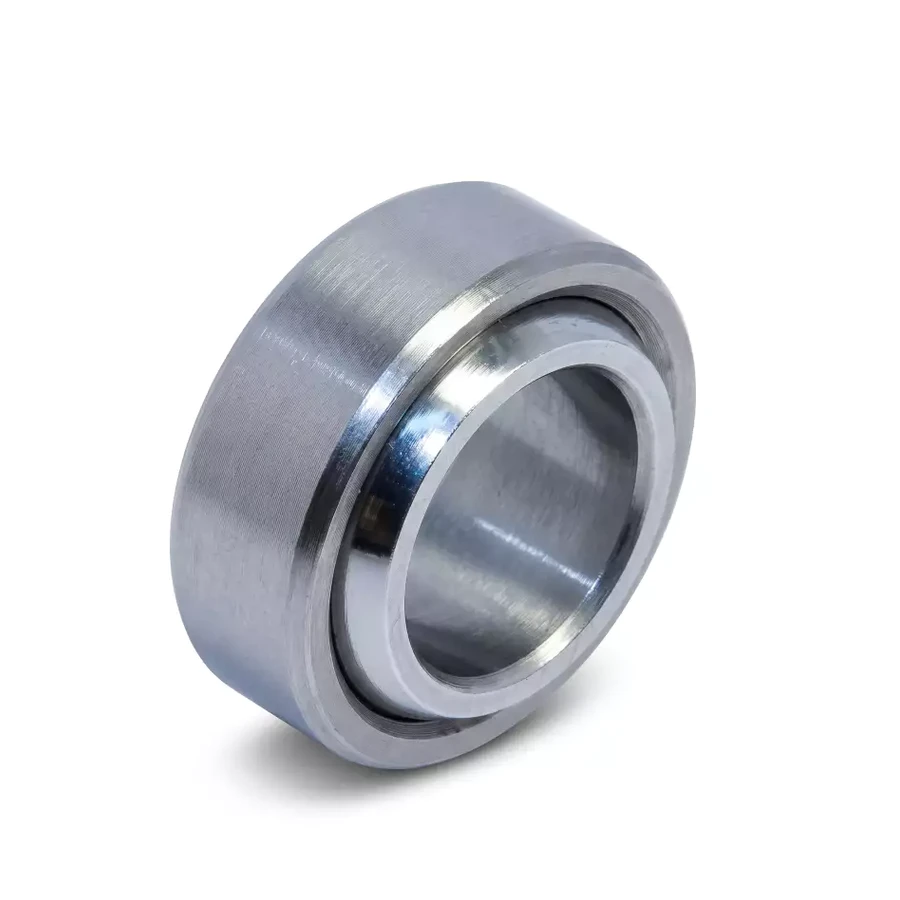
Open heavy-duty alternative for protected joints with dependable lubrication and inspection access.

Compact sealed route for smaller joints that still operate in contaminated service.
Selection Guide
Inputs that matter before model selection
Impact and load direction
Record the shock direction and whether the load reverses; repeated edge loading can dominate wear.
Housing and pin condition
Check ovality, fretting and pin bending before assigning all looseness to the bearing.
Lubrication route
Confirm whether grease reaches the loaded zone and whether purging is part of the maintenance routine.
Seal exposure
Identify abrasive dust, water and pressure washing so the sealed/unsealed decision matches the real environment.
Technical Challenges
Common problems and the practical selection response
Abrasive contamination
2RS sealed families can reduce direct particle entry at the bearing faces; surrounding joint design still matters.
Shock and bracket flex
Wider GEG geometry is a useful heavy-duty starting point, but the structure around the bearing must carry the load without excessive edge loading.
Rebuilds with worn interfaces
Measure pin and housing condition before fitting a new bearing; otherwise a new component may inherit the same misalignment and fretting problem.
Related Technical Articles
Continue the selection work
GEG Heavy-Duty Bearings for Excavator Joints
Heavy-duty envelope, contamination and rebuild considerations for excavator pivots.
GEG Spherical Bearing Dimensions
How to read the wider GEG envelope before changing series.
Five Failure Patterns to Investigate
Use visible wear patterns to check the bearing and adjacent components.
Discuss your construction or mining bearing requirements
Send the current bearing marking, d / D / B / C dimensions, joint location, motion, contamination, maintenance access and any drawing or document requirement.