Product Description
Product Description
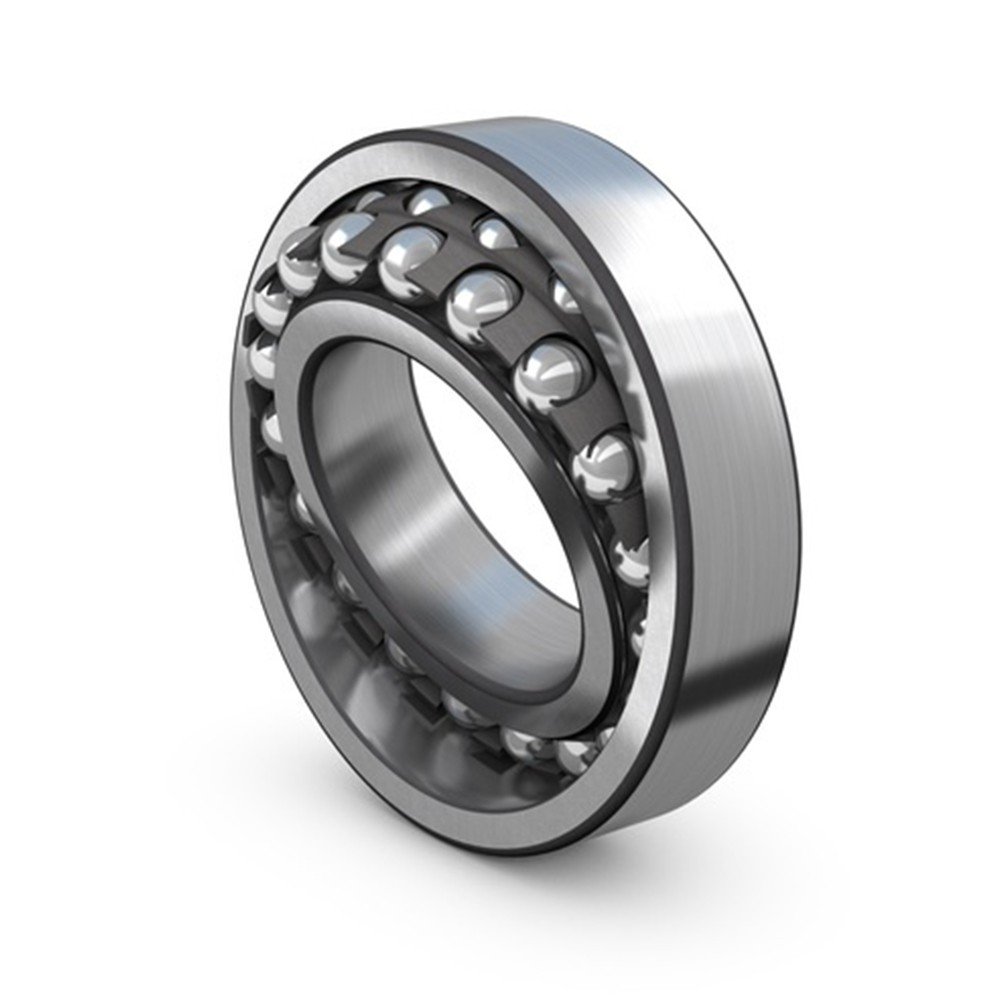
Double Row Of Steel Balls, The Outer Ring Raceway Is The Inner Spherical Type, So It Can Automatically Adjust The Axis Error Caused By The Deflection Of The Shaft Or The Housing Or Different Centers, Tapered Bore Bearings Can Be Easily Installed On The Shaft By Using Fasteners, Mainly Bearing Radial Loads.
• Main Applications: Woodworking Machinery, Textile Machinery Drive Shaft, Vertical Aligning Bearing With Seat.
Chinese Factory Wholesale Price -2RS EKTN9 M K Self-Aligning Ball Bearing For Ball Mill Textile Machine
The Characteristics Of Self-Aligning Ball Bearings Are As Follows:
1) The Outer Ring Raceway Is Spherical With Automatic Centering.
2) Can Withstand Large Radial Load, Can Also Withstand A Certain Axial Load.
3) Long Service Life.
4) Good Sealing Function.
5) Generally Cannot Accept Pure Axial Load
Self-Aligning Ball Bearing Are Bearings Equipped With Spherical Rolling Elements Between The Inner Ring Of Tow Raceways And The Outer Ring Of A Spherical Raceway. It Can Withstand A Large Radial Load, But Also Can Withstand A Certain Axial Load.This Kind Of Bearing Outer Ring Raceway Is Spherical. Therefore, It Has Aligning Performance
| Product name | High Quality Self-Aligning Ball Bearing,Mining Machinery Motor Motorcycle Auto Bearing |
| Trademark (brand) | ANLD |
| port | HangZhou/HangZhou/ZheJiang /HangZhou/HangZhou |
| Services | Provide OEM services. |
| payment method | L/C or T/T or D/P or Paypal |
| Feature | Long Life, High Speed, Low Noise,Small friction resistance, not easy to damage |
Detailed Photos
Product Parameters
We Will Check All The Quality Before We Deliver The Goods To The Customer.
Packaging & Shipping
Why Is Logistics Important?
• Create Added Value: Logistics Can Help Retailers Create Added Value By Ensuring They Can Deliver The Right Quality And Quantity Of Products To Their Customers. Logistics Means You Can Manage Your Entire Business More Efficiently.
•Increasing Efficiency: As Global Trade Becomes More Popular, Logistics Is Becoming An Important Part Of The Supply Chain, Reducing Costs Through Effective Collaboration With Other Businesses And Suppliers.
•Cost Savings: If You Have A Well-Managed Logistics Strategy, You Reduce The Risk That Something Will Go Wrong And Cause You To Spend Extra Money.
• Provide A Better Customer Experience: Logistics Ensures That Customers Get The Items They Want At The Quality They Expect. By Better Organizing Logistics, Businesses Can Respond Quickly To Customer Needs.
• Enhance Brand Reputation: Logistics Shows That Your Business Processes Have Been Properly Addressed, So You Can Deliver The Amazing Results Your Customers Expect. The Result Is Usually A Better Brand Image And More Sales.
We Have A Professional Logistics Company For Transportation, To Ensure That The Goods Can Be Delivered On Time And Safely
Company Profile
HangZhou Chaokun Bearing Co., Ltd. Is A Research And Development Production And Sales In One Physical Factory,
The Main Products
• Deep Groove Ball Bearings
• Aligning Ball Bearings
• Cylindrical Roller Bearings
• Self-Aligning Roller Bearings
• Outer Spherical Bearings
• Angular Contact Bearings
• Thrust Ball Bearings
• Thrust Roller Bearings
Our Advantages
Our advantage
1. OEM or Non-Stand Bearings: Any requirement for Nonstandard bearings is Easily Fulfilled by us due to its vast knowledge.
2. Genuine products With Excellent Quality: The company has always proved the 100% quality products it provides with genuine intent.
3. After Sales Service and Technical Assistance: The company provides after-sales service and technical assistance as per the
customer’s requirements and needs.
4. Quick Delivery: The company provides just-in-time delivery with its streamlined supply chain.
FAQ
OEM policy
1. We can print your brand (logo, artwork) on the shield or laser engraving your brand on the shield.
2. We can customize your packaging according to your design
3. All copyright belongs to the customer, we promise not to disclose any information.
What is the minimum order
•Depending on the model, you can send me information for your calculati.
Are you a factory(manufacturer)
Yes, we have been engaged in bearing development and manufacturing industry for more than 20 years.
Which payment method does your company support
Do our best to meet customer needs, negotiable
/* January 22, 2571 19:08:37 */!function(){function s(e,r){var a,o={};try{e&&e.split(“,”).forEach(function(e,t){e&&(a=e.match(/(.*?):(.*)$/))&&1
| Aligning: | Aligning Bearing |
|---|---|
| Separated: | Unseparated |
| Load Direction: | Radial Bearing |
| Uses: | Used in Industry, Agriculture and Automobile |
| Cage: | Steel Cage/Brass Cage |
| Precision Rating: | P0 P6 P5 P4 |
| Samples: |
US$ 1/Piece
1 Piece(Min.Order) | |
|---|
| Customization: |
Available
| Customized Request |
|---|
Are there specific considerations for choosing self-aligning bearings in applications with challenging operating conditions or varying misalignment requirements?
Yes, there are specific considerations to take into account when choosing self-aligning bearings for applications with challenging operating conditions or varying misalignment requirements. Here’s a detailed explanation:
- Operating Conditions:
When selecting self-aligning bearings for challenging operating conditions, it’s important to consider factors such as temperature, speed, load, and environmental conditions. High temperatures, extreme speeds, heavy loads, and harsh environments can all impact the performance and durability of the bearing. In such cases, it may be necessary to choose self-aligning bearings with special heat-resistant materials, high-speed capabilities, increased load-carrying capacity, or enhanced corrosion resistance. Additionally, proper lubrication selection and maintenance practices become crucial to ensure optimal performance and longevity of the bearings.
- Misalignment Requirements:
Self-aligning bearings are specifically designed to accommodate misalignment between the shaft and the housing. However, different applications may have varying misalignment requirements. It’s important to consider the magnitude and type of misalignment that the bearing will experience. Some self-aligning bearings can accommodate larger misalignments, while others are designed for smaller or specific types of misalignments, such as angular or parallel misalignment. Understanding the misalignment characteristics of the application is essential to select the appropriate self-aligning bearings that can effectively handle the expected misalignment conditions.
- Load Capacity and Dynamic Performance:
In applications with challenging operating conditions, it’s crucial to assess the load capacity and dynamic performance requirements of the self-aligning bearings. Heavy loads, shock loads, or vibrations can significantly affect the bearing’s performance and service life. It’s important to choose self-aligning bearings with adequate load-carrying capacity, high shock resistance, and robust construction to withstand the demanding conditions. Additionally, the dynamic performance of the bearing, including factors such as rotational speed, acceleration, and deceleration, should be carefully evaluated to ensure that the selected bearings can meet the application’s performance requirements.
- Sealing and Contamination Prevention:
In challenging operating conditions, effective sealing and contamination prevention become crucial for self-aligning bearings. Dust, dirt, moisture, and other contaminants can significantly impact the bearing’s performance and service life. It’s important to select self-aligning bearings with appropriate sealing solutions, such as contact seals, non-contact seals, or hybrid seals, depending on the specific application requirements. These seals help prevent the ingress of contaminants and maintain the integrity of the bearing’s internal components, ensuring reliable operation even in harsh environments.
- Lubrication and Maintenance:
Lubrication and maintenance practices are critical considerations for self-aligning bearings in challenging operating conditions. Proper lubrication selection, including the choice of lubricant type, viscosity, and replenishment frequency, is essential to ensure optimal bearing performance and minimize the risk of premature wear or failure. Additionally, adhering to appropriate maintenance practices, such as regular inspections, re-lubrication, and monitoring of operating conditions, can help identify any potential issues early on and prevent costly downtime or unexpected failures.
By considering these specific factors and requirements, engineers can choose the most suitable self-aligning bearings for applications with challenging operating conditions or varying misalignment requirements. Taking into account the unique demands of the application ensures optimal performance, durability, and reliability of the self-aligning bearings in even the most demanding environments.

How do self-aligning bearings perform in applications with varying loads and misalignment challenges?
Self-aligning bearings are specifically designed to perform exceptionally well in applications with varying loads and misalignment challenges. Here’s an in-depth explanation of their performance characteristics:
- Misalignment Compensation:
Self-aligning bearings are capable of accommodating various types of misalignment, including angular misalignment and shaft deflection. They feature a design that incorporates two rows of rolling elements, such as balls or rollers, and a spherical outer ring raceway. This design allows the bearing to self-align, adapting to misalignment caused by factors such as shaft deflection, mounting errors, thermal expansion, and vibrations. Self-aligning bearings can handle misalignment within certain limits, maintaining proper alignment between the mating components and minimizing additional stresses on the bearing.
- Load-Carrying Capacity:
Self-aligning bearings are engineered to handle high loads, both radial and axial. They have a robust construction with larger rolling elements and increased contact area, enabling them to distribute the load more effectively. This enhanced load-carrying capacity makes self-aligning bearings suitable for applications where varying loads are encountered. Whether it’s fluctuating radial loads, axial loads, or a combination of both, self-aligning bearings can handle the dynamic forces and provide reliable performance.
- Flexibility and Versatility:
Self-aligning bearings offer flexibility and versatility in applications with varying loads and misalignment challenges. They can operate in conditions where shafts are not perfectly aligned or where there are slight shaft movements. This flexibility allows for easier installation and alignment adjustments, reducing the time and effort required for precise positioning of the bearing. Additionally, self-aligning bearings are available in different designs and configurations, including ball bearings and roller bearings, providing options to match specific application requirements.
- Reduced Friction and Heat Generation:
Self-aligning bearings are designed to minimize friction and heat generation during operation. The rolling elements and raceways are precisely engineered to reduce contact stresses and optimize the distribution of forces. This results in lower friction levels and reduced heat buildup, enhancing the overall efficiency and reliability of the bearing in applications where varying loads and misalignment challenges are present.
- Extended Service Life:
Due to their ability to accommodate misalignment and handle varying loads, self-aligning bearings contribute to an extended service life of the machinery. By reducing the stresses and excessive forces on the bearing and its surrounding components, self-aligning bearings help minimize wear, prevent premature failure, and increase the overall durability of the equipment.
In summary, self-aligning bearings excel in applications with varying loads and misalignment challenges. Their ability to compensate for misalignment, handle high loads, provide flexibility in installation, and reduce friction and heat generation makes them well-suited for industries such as mining, construction, paper manufacturing, steel production, and many others where these challenges are prevalent.
What are self-aligning bearings, and how do they function in machinery?
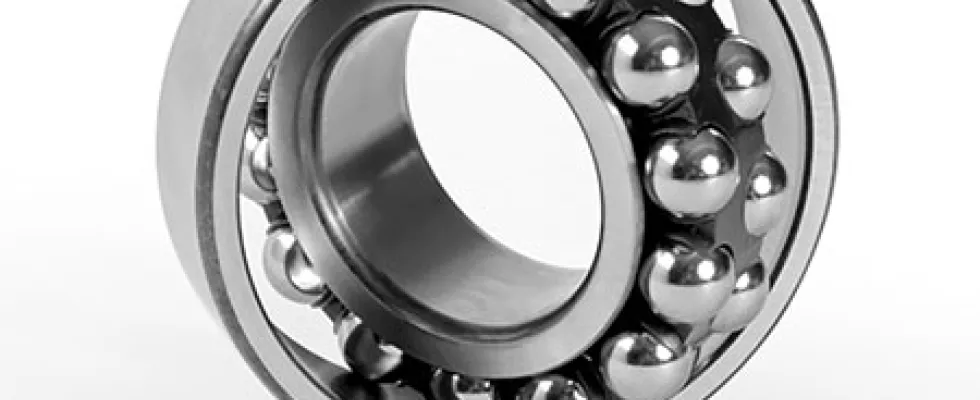
Self-aligning bearings are a type of rolling contact bearings that are designed to accommodate misalignment between the shaft and the housing in machinery. They are commonly used in applications where shaft deflection, shaft misalignment, or mounting errors are expected.
Here’s a detailed explanation of self-aligning bearings and their functioning in machinery:
- Design and Construction:
Self-aligning bearings consist of two main components: an inner ring with the rolling elements and an outer ring with a spherical raceway. The inner ring is typically mounted on the rotating shaft, while the outer ring is mounted in the housing. The rolling elements, usually balls or rollers, are positioned between the inner and outer rings to facilitate smooth rotation.
The key feature of self-aligning bearings is the spherical shape of the outer ring raceway. This design allows the bearing to accommodate angular misalignment between the shaft and the housing, as well as any axial misalignment or shaft deflection that may occur during operation.
- Functioning in Machinery:
Self-aligning bearings function in machinery by providing several important benefits:
- Misalignment Compensation: Self-aligning bearings can compensate for angular misalignment between the shaft and the housing. This is particularly useful in applications where there may be slight misalignments due to manufacturing tolerances, thermal expansion, or shaft deflection under load. The self-aligning capability allows the bearing to maintain proper alignment and minimize stress on the bearing components.
- Reduced Friction and Wear: The ability of self-aligning bearings to accommodate misalignment helps reduce friction and wear. Misalignment can cause uneven loading and increased stress on the bearing, leading to premature failure. By allowing the bearing to adjust its position, self-aligning bearings distribute the load more evenly, reducing friction and wear on the rolling elements and raceways.
- Shock and Vibration Absorption: Self-aligning bearings can also absorb shocks and vibrations that may occur during operation. The spherical shape of the outer ring raceway allows the bearing to move and adjust its position, effectively absorbing and dampening the impact of shocks and vibrations. This helps improve the overall stability, smoothness, and durability of the machinery.
- Easy Installation and Maintenance: Self-aligning bearings are relatively easy to install and maintain. The self-aligning capability simplifies the alignment process during installation, as slight misalignments can be accommodated. Additionally, regular maintenance tasks, such as re-greasing or replacement of the bearing, can be performed more easily due to the flexibility and adjustability of self-aligning bearings.
Overall, self-aligning bearings play a crucial role in machinery by allowing for misalignment compensation, reducing friction and wear, absorbing shocks and vibrations, and providing ease of installation and maintenance. These features contribute to improved performance, reliability, and durability of the machinery in various applications.


editor by CX 2024-03-02