Application
Spherical Plain Bearings for Robotics & Automation
Automation joints may be lightly loaded yet sensitive to play, friction, cleanliness and mounting distortion, making compact maintenance-free options useful comparison points.
Application Overview
What changes the bearing decision
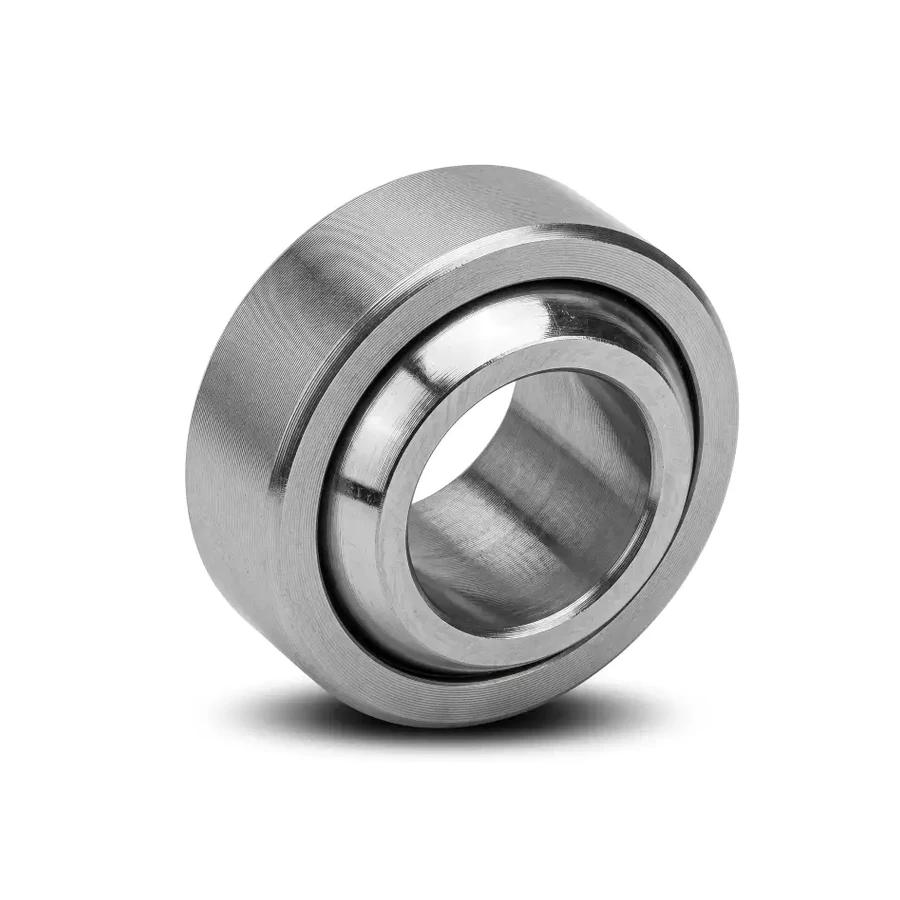
Robotics and automation equipment use spherical plain bearings where a compact linkage must tolerate angular misalignment without adding a more complex alignment mechanism. Typical locations include robot auxiliary linkages, AGV steering joints, positioning fixtures and compact machine mechanisms. In these applications gross load may be modest, while backlash, friction behavior, cleanliness and repeatability can become more important.
Maintenance-free PTFE-lined families are useful starting points when the equipment design avoids routine greasing. GE..ET 2RS adds face sealing where debris or splash can reach the joint, while a standard greaseable GE family remains relevant when lubrication is already part of the machine maintenance plan. The surrounding geometry, mounting distortion and required play should be considered before treating a low-load joint as automatically easy.

Key Application Points
Where spherical plain bearings are used
Robot auxiliary linkages
Compact maintenance-free GE..C bearings can simplify service where low-speed articulation and clean operation are required.
AGV / guided-vehicle steering
GE..ET 2RS can add face sealing where floor debris or splash reaches the joint.
Positioning fixtures and automation mechanisms
Standard GE or maintenance-free families are compared according to allowed play, cleanliness and maintenance access.
Recommended Products
EVER POWER series to compare first

Compact maintenance-free PTFE-composite construction for clean or protected automation joints.
Maintenance-free PTFE-fabric family with two-side sealing for exposed compact mechanisms.
Greaseable compact GE route when periodic lubrication is already part of machine maintenance.
Selection Guide
Inputs that matter before model selection
Allowed play / backlash
State the machine requirement for joint play and repeatability rather than selecting only by nominal bore.
Movement amplitude
Low-angle repeated oscillation can keep contact in a narrow zone, so cycle and motion pattern are relevant.
Cleanliness and contamination
Identify dust, coolant, wash-down or floor debris exposure before choosing open or sealed construction.
Mounting distortion
Small bearings can be sensitive to misaligned brackets and surface roughness because the available contact area is limited.
Technical Challenges
Common problems and the practical selection response
Low friction and reduced maintenance
PTFE-lined families can remove routine greasing when the actual load, motion and environment support them.
Compact packaging
The GE envelope is often easier to package than the wider GEG family where loads do not require the larger section.
Repeatability and housing accuracy
Control bracket alignment, fit and pin surface condition to avoid adding unwanted play or edge load to the mechanism.
Related Technical Articles
Continue the selection work
GE..C vs GE..ET 2RS
Compare two maintenance-free routes for compact articulated mechanisms.
How to Select a Spherical Plain Bearing
Selection framework for load, motion, maintenance, sealing and interface.
Fitting Tolerances
Reference tolerance classes before defining the final precision fit.
Discuss your robotics or automation bearing requirements
Send the current bearing marking, d / D / B / C dimensions, joint location, motion, contamination, maintenance access and any drawing or document requirement.