Product Description
Why Choose US
1.Professional Bearing Manufacturer with 10 years export experience.
2.Large Stock.
3.Prompt Lead time.
4.SMALL order accepted.
5.A Wide Range of Qualified Bearing with Competitive price.
6.FREE Samples.
7.Brand Packagings accepted.
8.OEM service(Manufacturing according to your drawings and special request).
Brief Introduction
SHZ BEARING MANUFACTURING Co., Ltd is a professional bearing factory and trading company in HangZhou, ZheJiang .
The factory mainly produce Tapered roller bearing, Deep groove ball bearing, Wheel hub bearing, Clutch release bearing, Pillow block bearing, etc. After 10 years in the global market, SHZ Bearings get a high reputation among following Countries and regions: Russia, Algeria, Egypt, Italy, Korea, Mexico, Brazil, South Africa, Turkey, Iran, Pakistan, Singapore, Philipphines, USA and so on.
SHZ has accumulated more than 10 years in bearing innovation and production. SHZ persist with “Quality first, Innovation win, Service first” as perpose. “The pursuit of perfect quality, create first-class brand” as management policy, promoting the brand strategy,continuously improving product quality and brand connotation.
SHZ has the most advanced production equipments and strictest quality control system, it makes our products meet domestic and international standard.
Welcome all of customers visit our factory and cooperate for mutual benefit.
Product Description
|
Name |
6203 2RS Deep Groove Ball Bearing |
||||||||
|
Model Number |
6203 2RS |
||||||||
|
Brand |
CZPT Or Customized Logo |
||||||||
|
Material |
Chrome Steel (GCR15/SAE512-3480 |
||||||||
|
6014 |
6214 |
6314 |
6414 |
6803 |
62214 |
62314 |
9491-3820 |
||
|
6017 |
6217 |
6317 |
6417 |
6806 |
160703 |
3201 |
9491 |
3202 |
B17-116 |
|
6019 |
6219 |
6319 |
6419 |
6808 |
1160304 |
3203 |
DG3062 |
||
|
6571 |
6220 |
6320 |
6420 |
6809 |
1160305 |
3204 |
DG358571 |
||
|
6571 |
6221 |
6321 |
606-2RS |
6810 |
1180304 |
3205 |
DG357226 |
||
|
6571 |
6222 |
6322 |
607-2RS |
3211 |
1180305 |
3206 |
DG357222 |
||
|
6571 |
6224 |
6324 |
608-2RS |
3212 |
20703 |
3207 |
DG4 0571 1/27 |
||
|
6026 |
6226 |
6326 |
609-2RS |
3213 |
20803 |
3208 |
B8-85 |
||
|
6571 |
6228 |
6328 |
626-2RS |
3214 |
98305 |
3209 |
B17-99 |
||
|
6030 |
6230 |
6330 |
627-2RS |
3215 |
B22-19 |
3210 |
B15-86 |
||
Packing
General Packing Methods:
A: Tube Package + Outer Carton + Pallet
B: Single Box + Outer Carton + Pallet
C: Tube Package + Middle Box + Outer Carton + Pallet
D: Single package+ Middle Box+ Outer Carton+ Pallet
E: According to your request
Production & Quality Control
Our Service & Exhibition Show
Payment & Deivery
| Delivery Time | Payment Terms | Shipping Method | |
| Samle Order | 1-3days | 100% in Advance | By Air |
| LCL Order | 3-25days | 30% Deposit and the Balance Paid Before Shipment Or Against B/L Copy |
By Air Or By Sea |
| FCL Order | 25-45days | By Air Or By Sea |
FAQ
1. How many the MOQ of your company?
Our company MOQ is 1pc.
2. Could you accept OEM and customize?
YES, We can customize for you according to your sample or drawings.
3. Could you supply samples for free?
YES, We can supply samples for free, while you have o pay for the freight cost.
4. What is your terms of delivery?
We can accept EXW, FOB, CFR, CIF, etc. You can choose the 1 which is the most convenient cost effective for you.
5. Is it your company factory or Trade company?
We are factory, our type is Factory+Trade.
6. What is the warranty for your bearing?
2years, Customer need supply photos and send bearings back.
7. Could you tell me the packing of your goods?
Single Plastic Bag+Inner Box+Carton+Pallet, or according to your request.
8. Could you supply door to door service?
YES, by air or by express (DHL, FEDEX, TNT, EMS, SF7-10 days to your city)
9. Could you tell me the payment term of your company can accept?
T/T, Western Union, Paypal, L/C, etc.
10. What about the lead time for mass production?
Honestly, it depends on the order quantity and the season you place the order, our production capacity is 8*20ft containerseach month. Generally speaking, we suggest you start inquiry 3 to 4 months before the date you would like to get the products at your Country.
/* January 22, 2571 19:08:37 */!function(){function s(e,r){var a,o={};try{e&&e.split(“,”).forEach(function(e,t){e&&(a=e.match(/(.*?):(.*)$/))&&1
| Vibration: | V2 /V3/V4 |
|---|---|
| Clearance: | C0 /C2/C3 |
| Noise: | Z1 Z2 Z3 |
| Tolerance Level: | ABEC-1 (P0) ABEC-3 (P6) |
| Lubrication: | Oil, Grease, Dry |
| Seals Type: | Open, Zz, 2RS |
| Samples: |
US$ 0.1/Piece
1 Piece(Min.Order) | |
|---|
| Customization: |
Available
| Customized Request |
|---|
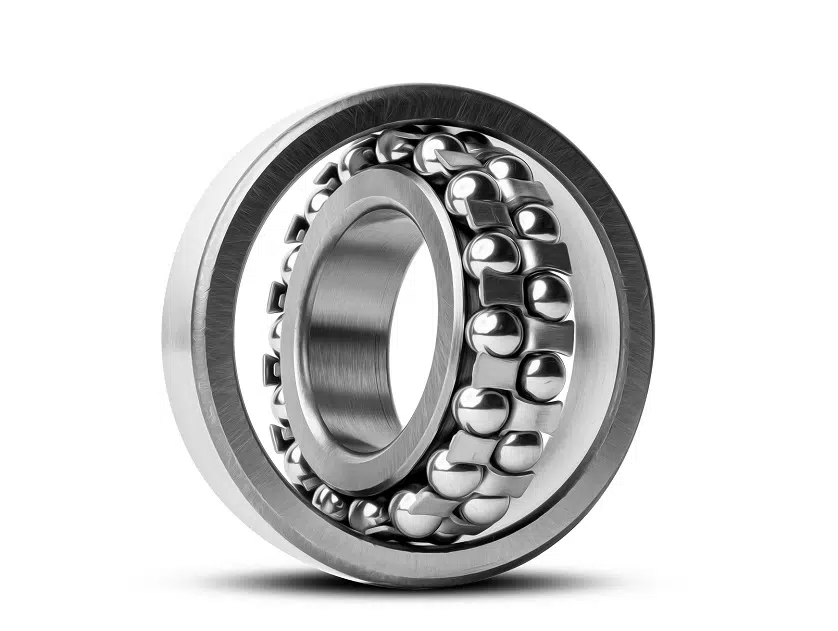
How do self-aligning bearings enhance the overall efficiency and functionality of machinery and equipment?
Self-aligning bearings play a crucial role in enhancing the overall efficiency and functionality of machinery and equipment. Here’s a detailed explanation:
- Compensation for Misalignment:
One of the key benefits of self-aligning bearings is their ability to compensate for misalignment between the shaft and the housing. Misalignment can occur due to various factors such as shaft deflection, thermal expansion, or mounting errors. Self-aligning bearings have the capability to accommodate angular misalignment, axial displacement, and shaft deflection, ensuring smooth operation even in challenging conditions. By accommodating misalignment, self-aligning bearings minimize stress and wear on other components, reducing the risk of premature failure and improving overall machinery efficiency.
- Reduced Friction and Energy Consumption:
Self-aligning bearings are designed to operate with low friction, which helps to reduce energy consumption within the machinery or equipment. The rolling elements and raceways of self-aligning bearings are precisely engineered to minimize contact friction. This reduced friction results in lower power losses, allowing the machinery to operate more efficiently and potentially leading to energy savings.
- Increased Reliability and Service Life:
Self-aligning bearings contribute to the overall reliability and service life of machinery and equipment. By accommodating misalignment and reducing friction, they help to distribute loads evenly, minimize stress concentrations, and prevent premature wear and failures. This improved load distribution and reduced friction can extend the service life of other critical components, such as gears, shafts, and seals. Additionally, self-aligning bearings often feature robust designs and high-quality materials, further enhancing their durability and reliability in demanding operating conditions.
- Enhanced Performance in Challenging Environments:
Self-aligning bearings are well-suited for applications in challenging environments. They can withstand conditions such as high temperatures, extreme speeds, or contaminated operating conditions. The ability to accommodate misalignment and the use of specialized bearing materials and lubricants enable self-aligning bearings to maintain their performance and functionality in adverse conditions. This enhances the overall efficiency and reliability of machinery and equipment in industries such as mining, steel, paper, and food processing.
- Ease of Installation and Maintenance:
Self-aligning bearings are designed for ease of installation and maintenance. Their self-aligning capability simplifies the alignment process during installation, reducing the time and effort required. Additionally, self-aligning bearings often feature integrated seals or shields that help to protect against contamination and retain lubrication, resulting in reduced maintenance requirements. The ease of installation and maintenance of self-aligning bearings contributes to the overall efficiency of machinery and equipment by minimizing downtime and improving overall operational productivity.
Overall, self-aligning bearings enhance the efficiency and functionality of machinery and equipment by accommodating misalignment, reducing friction and energy consumption, increasing reliability and service life, performing well in challenging environments, and enabling easier installation and maintenance. By incorporating self-aligning bearings into their designs, engineers and equipment manufacturers can optimize performance, reduce downtime, and improve the overall efficiency of their machinery and equipment.
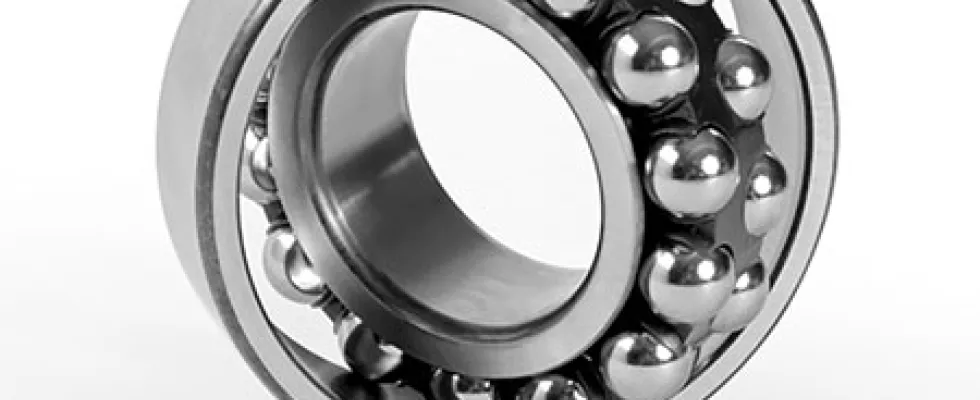
What are the potential challenges or limitations associated with using self-aligning bearings in specific industries?
While self-aligning bearings offer many advantages, there are some potential challenges and limitations associated with their use in specific industries. Here’s a detailed explanation of these considerations:
- Load Capacity:
While self-aligning bearings are designed to handle high loads, there are limits to their load-carrying capacity. In industries with extremely heavy or shock loads, such as heavy machinery, mining, or construction, the load demands may exceed the capabilities of self-aligning bearings. In such cases, alternative bearing designs or additional support mechanisms may be required to handle the extreme load conditions.
- Speed Limitations:
Self-aligning bearings may have certain speed limitations due to factors such as centrifugal forces, increased friction, or potential instability at high rotational speeds. In industries that require very high-speed applications, such as aerospace or certain manufacturing processes, specialized high-speed bearings may be more suitable to ensure optimal performance and prevent premature failure.
- Temperature and Environmental Constraints:
Self-aligning bearings have specific temperature and environmental constraints that can impact their performance. In industries involving extreme temperatures, aggressive chemicals, or harsh environmental conditions, the choice of bearing materials and lubricants becomes critical. Certain industries, such as oil and gas, chemical processing, or marine applications, may require specialized bearing designs or coatings to withstand the demanding operating conditions.
- Maintenance and Lubrication:
Proper maintenance and lubrication are essential for the reliable operation of self-aligning bearings. In industries where access for maintenance is challenging or where frequent maintenance is not feasible, the longevity and performance of self-aligning bearings may be compromised. Additionally, industries with high contamination or abrasive particles in the operating environment may require more frequent lubrication or specialized sealing arrangements to protect the bearings from premature wear and failure.
- Space Limitations:
Self-aligning bearings have a larger footprint compared to some other bearing designs due to their double-row construction and spherical outer ring raceway. In industries with space constraints or compact machinery designs, the dimensions of self-aligning bearings may pose challenges in terms of integration or fitting within limited spaces. In such cases, alternative bearing designs with smaller profiles may be more suitable.
- Cost Considerations:
Self-aligning bearings can be more expensive compared to certain other bearing types, especially in applications that require larger sizes or specialized configurations. In industries with cost-sensitive considerations, such as consumer products or automotive manufacturing, the higher cost of self-aligning bearings may influence the selection of alternative bearing options that can meet the application requirements at a lower cost.
While self-aligning bearings offer numerous benefits, it is important to carefully evaluate the specific challenges and limitations in each industry or application. By considering these factors and consulting with bearing experts or manufacturers, the most suitable bearing solution can be selected to ensure optimal performance, reliability, and cost-effectiveness.
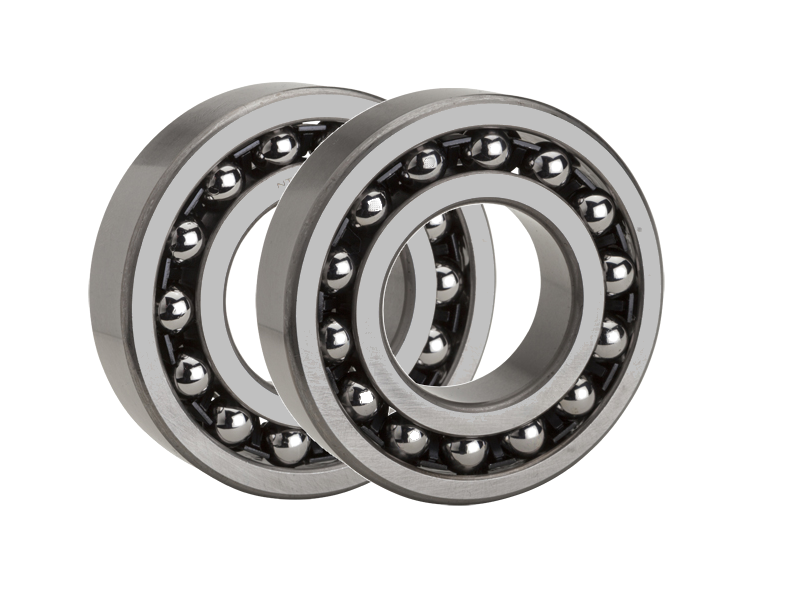
Can you describe the load-carrying capacity and load ratings of self-aligning bearings?
Self-aligning bearings are designed to carry both radial and axial loads, and their load-carrying capacity is an essential consideration for their proper selection and application. Here’s a detailed description of the load-carrying capacity and load ratings of self-aligning bearings:
- Radial Load Capacity:
The radial load capacity of a self-aligning bearing refers to its ability to carry loads that act perpendicular to the axis of rotation. It is influenced by factors such as bearing geometry, material properties, and internal design. Self-aligning bearings, particularly spherical roller bearings, are known for their high radial load-carrying capacity. This is due to their construction that includes multiple rows of robust rolling elements and optimized raceway profiles. The larger contact area between the rolling elements and raceways allows for efficient load distribution, enabling the bearing to handle substantial radial loads.
- Axial Load Capacity:
The axial load capacity of a self-aligning bearing refers to its ability to carry loads that act parallel to the axis of rotation. The axial load-carrying capacity depends on the bearing type and design, as well as the arrangement of rolling elements. Self-aligning thrust roller bearings, for example, are specifically designed to handle significant axial loads. They utilize cylindrical or tapered rolling elements arranged in a specific orientation to withstand axial forces. Self-aligning ball bearings can also carry moderate axial loads in addition to their primary radial load-carrying capacity.
- Dynamic Load Rating:
The dynamic load rating of a self-aligning bearing is a standardized value that indicates the maximum load that the bearing can sustain for a specified number of rotations or operating hours without experiencing premature fatigue failure. It is expressed in terms of the calculated dynamic equivalent radial or axial load, which takes into account the actual load distribution within the bearing. The dynamic load rating is typically provided by the manufacturer and allows engineers to compare and select bearings based on their expected performance under dynamic operating conditions.
- Static Load Rating:
The static load rating of a self-aligning bearing represents the maximum load that the bearing can sustain without permanent deformation or excessive stress when the bearing is stationary or subjected to very slow rotations. It is typically higher than the dynamic load rating. The static load rating is an important consideration for applications where the bearing may be subjected to prolonged static or slow-speed conditions, such as in machinery that operates with intermittent or intermittent rotational motion.
It is important to note that the load-carrying capacity and load ratings provided by manufacturers are based on standardized testing methods and assumptions about operating conditions. Actual load capacity can be influenced by factors such as temperature, lubrication, misalignment, and operating speed. Therefore, it is crucial to consider the specific application requirements and consult the manufacturer’s technical data and guidelines when selecting a self-aligning bearing to ensure its suitability and optimal performance.


editor by CX 2024-03-04