Product Description
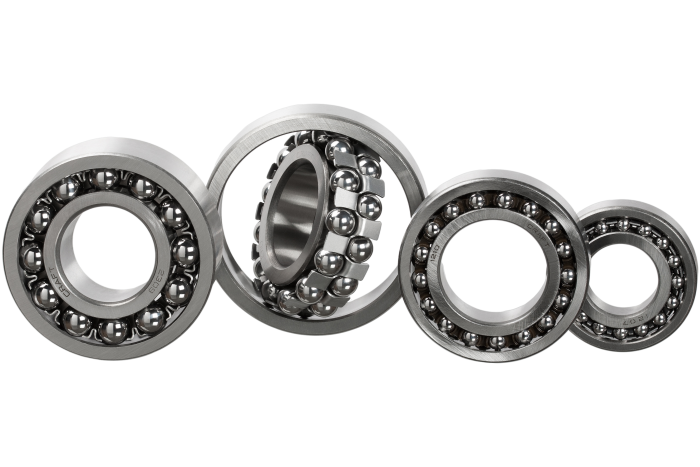
Famous Brand Industrial 21307 21315 Self-Aligning Spherical Roller Bearing
| Bearing Number | Dia(mm) | Weight | Cr | Cor | Structure | mmp | |
| New Model | Old Model | DxdxT | (Kg) | (KN) | (KN) | ||
| 22200 series | |||||||
| 22205 | 3505 | 25x52x18 | 0.177 | 35.8 | 36.8 | MB/CA/CC/EK/CK/CMW33 | 8000 |
| 22206 | 3506 | 30x62x20 | 0.3 | 51.8 | 56.8 | MB/CA/CC/EK/CK/CMW33 | 6300 |
| 22207 | 3507 | 35x72x23 | 0.43 | 45.2 | 59.5 | MB/CA/CC/EK/CK/CMW33 | 4800 |
| 22208 | 3508 | 40x80x23 | 0.55 | 49.8 | 68.5 | MB/CA/CC/EK/CK/CMW33 | 4500 |
| 22209 | 3509 | 45x85x23 | 0.59 | 52.2 | 73.2 | MB/CA/CC/EK/CK/CMW33 | 4000 |
| 22210 | 3510 | 50x90x23 | 0.614 | 83.8 | 102 | MB/CA/CC/EK/CK/CMW33 | 4300 |
| 22211 | 3511 | 55x100x25 | 0.847 | 102 | 125 | MB/CA/CC/EK/CK/CMW33 | 3800 |
| 22212 | 3512 | 60x110x28 | 1.22 | 81.8 | 122 | MB/CA/CC/EK/CK/CMW33 | 3200 |
| 22213 | 3513 | 65x120x31 | 1.63 | 88.5 | 128 | MB/CA/CC/EK/CK/CMW33 | 2800 |
| 22214 | 3514 | 70x125x31 | 1.66 | 95 | 142 | MB/CA/CC/EK/CK/CMW33 | 2600 |
| 22215 | 3515 | 75x130x31 | 1.75 | 95 | 142 | MB/CA/CC/EK/CK/CMW33 | 2400 |
| 22216 | 3516 | 80x140x33 | 2.2 | 115 | 180 | MB/CA/CC/EK/CK/CMW33 | 2200 |
| 22217 | 3517 | 85x150x36 | 2.8 | 145 | 228 | MB/CA/CC/EK/CK/CMW33 | 2000 |
| 22218 | 3518 | 90x160x40 | 4 | 168 | 272 | MB/CA/CC/EK/CK/CMW33 | 1900 |
| 22219 | 3519 | 95x170x43 | 4.2 | 212 | 322 | MB/CA/CC/EK/CK/CMW33 | 1800 |
| 22220 | 3520 | 100x180x46 | 4 | 275 | 360 | MB/CA/CC/EK/CK/CMW33 | 2400 |
| 22222 | 3522 | 110x200x53 | 7.25 | 396 | 543 | MB/CA/CC/EK/CK/CMW33 | 2000 |
| 22224 | 3524 | 120x215x58 | 9.139 | 425 | 940 | MB/CA/CC/EK/CK/CMW33 | 1900 |
| 22226 | 3526 | 130x230x64 | 11.38 | 490 | 805 | MB/CA/CC/EK/CK/CMW33 | 1800 |
| 22228 | 3528 | 140x250x68 | 14.44 | 560 | 930 | MB/CA/CC/EK/CK/CMW33 | 1700 |
| 22230 | 3530 | 150x270x73 | 18.22 | 630 | 1050 | MB/CA/CC/EK/CK/CMW33 | 1600 |
| 22232 | 3532 | 160x290x80 | 22.95 | 750 | 1300 | MB/CA/CC/EK/CK/CMW33 | 1500 |
| 22234 | 3534 | 170x310x86 | 28.41 | 845 | 1450 | MB/CA/CC/EK/CK/CMW33 | 1300 |
| 22236 | 3536 | 180x320x86 | 29.67 | 895 | 1500 | MB/CA/CC/EK/CK/CMW33 | 1300 |
| 22238 | 3538 | 190x340x92 | 35.55 | 865 | 1620 | MB/CA/CC/EK/CK/CMW33 | 1200 |
| 22240 | 3540 | 200x360x98 | 43.9 | 1100 | 1950 | MB/CA/CC/EK/CK/CMW33 | 1100 |
| 22244 | 3544 | 220x400x108 | 61.7 | 1350 | 2400 | MB/CA/CC/EK/CK/CMW33 | 950 |
SAMPLES
1. Samples quantity: 1-10 PCS are available.
2. Free samples: It depends on the Model No., material and quantity. Some of the bearings samples need client to pay samples charge and shipping cost.
3. It’s better to start your order with Trade Assurance to get full protection for your samples order.
CUSTOMIZED
The customized LOGO or drawing is acceptable for us.
MOQ
1. MOQ: 10 PCS mix different standard bearings.
2. MOQ: 3000 PCS customized your brand bearings.
OEM POLICY
1. We can printing your brand (logo, artwork)on the shield or laser engraving your brand on the shield.
2. We can custom your packaging according to your design
3. All copyright own by clients and we promised don’t disclose any info.
SUPORT
Please visit our bearings website, we strongly encourge that you can communicate with us through email, thanks!
We have all kinds of bearings, just tell me your item number and quantity, best price will be offered to you soon
The material of the bearings, precision rating, seals type, OEM service, etc, all of them we can make according to your requirement.
/* January 22, 2571 19:08:37 */!function(){function s(e,r){var a,o={};try{e&&e.split(“,”).forEach(function(e,t){e&&(a=e.match(/(.*?):(.*)$/))&&1
| Brand: | OEM Service |
|---|---|
| Type: | Cc/MB/Ca/E |
| Feature: | Low Price, High Speed, Long Life |
| Samples: |
US$ 5/Piece
1 Piece(Min.Order) | Order Sample |
|---|
| Customization: |
Available
| Customized Request |
|---|
.shipping-cost-tm .tm-status-off{background: none;padding:0;color: #1470cc}
| Shipping Cost:
Estimated freight per unit. |
about shipping cost and estimated delivery time. |
|---|
| Payment Method: |
|
|---|---|
|
Initial Payment Full Payment |
| Currency: | US$ |
|---|
| Return&refunds: | You can apply for a refund up to 30 days after receipt of the products. |
|---|
Can you provide guidance on the selection and sizing of self-aligning bearings for specific applications?
Yes, here’s a detailed explanation on the selection and sizing of self-aligning bearings for specific applications:
- Understand the Application Requirements:
The first step in selecting and sizing self-aligning bearings is to thoroughly understand the requirements of the application. Consider factors such as:
- Load: Determine the magnitude and direction of the load the bearing will be subjected to, including static, dynamic, and shock loads.
- Speed: Identify the rotational speed or frequency of operation to ensure the selected bearing can handle the required speed without compromising performance.
- Environment: Consider the operating environment, including temperature range, presence of contaminants, moisture, or corrosive substances, and any other specific environmental factors that may affect the bearing’s performance.
- Mounting and Space Constraints: Evaluate the available space for bearing installation and any specific mounting requirements or constraints within the application.
- Service Life and Maintenance: Determine the desired service life and maintenance intervals to select a bearing that can meet these requirements.
- Consult Bearing Manufacturer’s Catalogs and Technical Resources:
Once the application requirements are understood, consult the catalogs and technical resources provided by self-aligning bearing manufacturers. These resources contain valuable information such as bearing types, sizes, load ratings, and operating characteristics.
Identify the specific self-aligning bearing series or types that are suitable for the application based on the load capacity, speed capability, and other performance factors.
- Consider Bearing Materials and Lubrication:
Pay attention to the bearing materials and lubrication requirements. Different bearing materials, such as steel, ceramic, or polymers, offer varying levels of performance in terms of load capacity, temperature resistance, and corrosion resistance.
Choose the appropriate bearing material that aligns with the application’s requirements. Additionally, consider the lubrication method and type of lubricant recommended for optimal bearing performance and longevity.
- Factor in Safety and Reliability:
Ensure that the selected self-aligning bearing has an appropriate safety margin to handle the expected loads and operating conditions. It is advisable to consult with bearing experts or utilize engineering calculations to verify the bearing’s suitability and reliability.
- Consider Application-Specific Features:
Depending on the application, there may be specific features or options to consider. For example, applications with high contamination levels may require sealed or shielded bearings to prevent debris ingress, while applications with high-speed requirements may benefit from bearings with optimized internal designs or cage materials.
- Review Manufacturer Recommendations:
Finally, review the manufacturer’s recommendations for the selected self-aligning bearing in terms of installation guidelines, maintenance procedures, and any specific considerations for the application.
By following these guidelines and consulting with bearing manufacturers or experts when needed, you can make an informed selection and sizing of self-aligning bearings that meet the specific requirements of your application, ensuring reliable performance and longevity.
What are the potential challenges or limitations associated with using self-aligning bearings in specific industries?
While self-aligning bearings offer many advantages, there are some potential challenges and limitations associated with their use in specific industries. Here’s a detailed explanation of these considerations:
- Load Capacity:
While self-aligning bearings are designed to handle high loads, there are limits to their load-carrying capacity. In industries with extremely heavy or shock loads, such as heavy machinery, mining, or construction, the load demands may exceed the capabilities of self-aligning bearings. In such cases, alternative bearing designs or additional support mechanisms may be required to handle the extreme load conditions.
- Speed Limitations:
Self-aligning bearings may have certain speed limitations due to factors such as centrifugal forces, increased friction, or potential instability at high rotational speeds. In industries that require very high-speed applications, such as aerospace or certain manufacturing processes, specialized high-speed bearings may be more suitable to ensure optimal performance and prevent premature failure.
- Temperature and Environmental Constraints:
Self-aligning bearings have specific temperature and environmental constraints that can impact their performance. In industries involving extreme temperatures, aggressive chemicals, or harsh environmental conditions, the choice of bearing materials and lubricants becomes critical. Certain industries, such as oil and gas, chemical processing, or marine applications, may require specialized bearing designs or coatings to withstand the demanding operating conditions.
- Maintenance and Lubrication:
Proper maintenance and lubrication are essential for the reliable operation of self-aligning bearings. In industries where access for maintenance is challenging or where frequent maintenance is not feasible, the longevity and performance of self-aligning bearings may be compromised. Additionally, industries with high contamination or abrasive particles in the operating environment may require more frequent lubrication or specialized sealing arrangements to protect the bearings from premature wear and failure.
- Space Limitations:
Self-aligning bearings have a larger footprint compared to some other bearing designs due to their double-row construction and spherical outer ring raceway. In industries with space constraints or compact machinery designs, the dimensions of self-aligning bearings may pose challenges in terms of integration or fitting within limited spaces. In such cases, alternative bearing designs with smaller profiles may be more suitable.
- Cost Considerations:
Self-aligning bearings can be more expensive compared to certain other bearing types, especially in applications that require larger sizes or specialized configurations. In industries with cost-sensitive considerations, such as consumer products or automotive manufacturing, the higher cost of self-aligning bearings may influence the selection of alternative bearing options that can meet the application requirements at a lower cost.
While self-aligning bearings offer numerous benefits, it is important to carefully evaluate the specific challenges and limitations in each industry or application. By considering these factors and consulting with bearing experts or manufacturers, the most suitable bearing solution can be selected to ensure optimal performance, reliability, and cost-effectiveness.
What are the common types of self-aligning bearings, such as spherical or barrel roller bearings?
There are several common types of self-aligning bearings, each offering unique features and advantages. Here’s a detailed explanation of some of the common types:
- Spherical Roller Bearings:
Spherical roller bearings are one of the most common types of self-aligning bearings. They have a spherical outer ring raceway and two rows of barrel-shaped rollers positioned between the inner and outer rings. This design allows for the accommodation of misalignment and provides high radial load-carrying capacity. Spherical roller bearings are commonly used in heavy-duty applications, such as mining equipment, paper mills, and crushers.
- Barrel Roller Bearings:
Barrel roller bearings, also known as toroidal roller bearings, have a barrel-shaped roller arrangement with a concave outer ring raceway and a convex inner ring raceway. This design enables the bearing to accommodate misalignment and axial displacement. Barrel roller bearings are suitable for applications with high radial loads and moderate axial loads, such as in conveyor systems, printing presses, and industrial gearboxes.
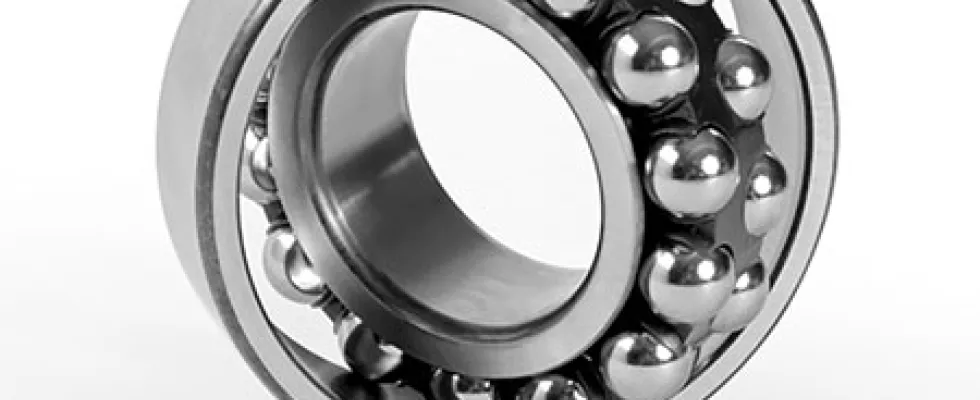
- Self-Aligning Ball Bearings:
Self-aligning ball bearings consist of an inner ring with two rows of balls and an outer ring with a spherical raceway. The design allows for misalignment compensation and is particularly suited for applications with low to moderate radial loads and moderate axial loads. Self-aligning ball bearings are commonly used in electric motors, pumps, and automotive applications.
- Self-Aligning Thrust Roller Bearings:
Self-aligning thrust roller bearings are designed to accommodate misalignment in applications with axial loads. They have a spherical rolling element between the shaft washer and the housing washer, allowing for misalignment compensation. These bearings are commonly used in applications such as screw conveyors, heavy machinery, and marine propulsion systems.
- Adapter Sleeve Bearings:
Adapter sleeve bearings are a type of self-aligning bearing that incorporates an adapter sleeve, which facilitates easy mounting and dismounting of the bearing. They are commonly used in applications where frequent bearing replacement or adjustment is required. Adapter sleeve bearings are often employed in conveyor systems, agricultural machinery, and textile equipment.
These are just a few examples of common types of self-aligning bearings. Other variations and specialized designs exist to suit specific application requirements. It’s important to consider factors such as load capacity, operating conditions, and dimensional constraints when selecting the appropriate self-aligning bearing for a particular application.


editor by CX 2024-04-26