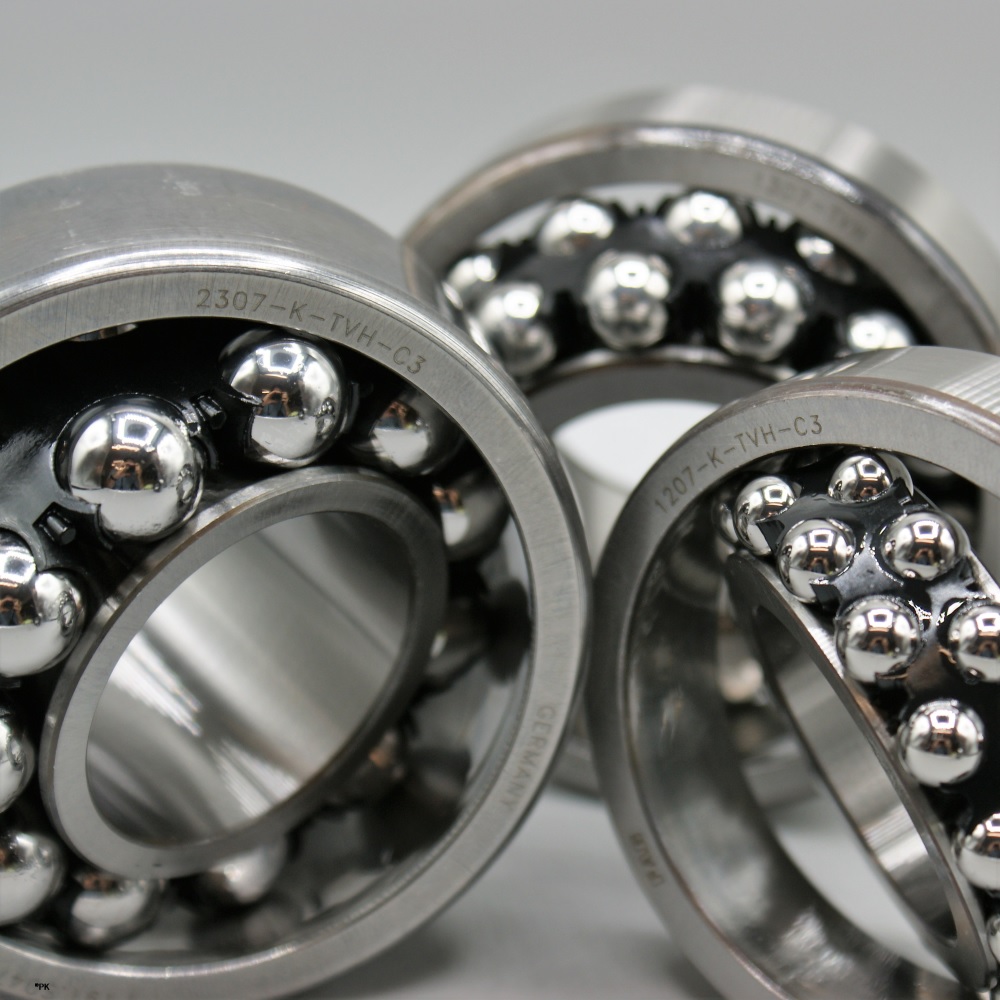
Can you describe the various types of seals and shields used with self-aligning bearings for contamination prevention?
Yes, here’s a detailed description of the various types of seals and shields used with self-aligning bearings for contamination prevention:
- Contact Seals:
Contact seals, also known as lip seals or radial seals, are commonly used with self-aligning bearings to prevent the ingress of contaminants. These seals feature a flexible lip that makes contact with the inner ring of the bearing, creating a barrier against dust, dirt, water, and other external substances. Contact seals provide effective contamination prevention but may introduce slightly higher friction due to the contact between the seal lip and the bearing surface. They are typically made of rubber or synthetic materials and offer good sealing performance in most operating conditions.
- Felt Seals:
Felt seals are simple and cost-effective sealing solutions used with self-aligning bearings. They consist of a felt material that is compressed against the bearing inner ring or housing to create a barrier against contaminants. Felt seals are commonly used in applications with low to moderate speeds and light contamination levels. While they offer basic protection against solid particles, they may not provide effective sealing against liquids or fine particles.
- Metallic Shields:
Metallic shields, also known as metal shields or non-contact shields, are used to protect self-aligning bearings from solid contaminants such as dust and dirt. These shields are typically made of steel or other metals and are designed to fit closely to the bearing inner ring without making contact. Metallic shields provide effective protection while minimizing friction and heat generation. They are suitable for high-speed applications where low torque and minimal drag are desired.
- Rubber Shields:
Rubber shields, also known as non-contact seals or labyrinth seals, consist of a rubber or elastomeric material that forms a barrier around the bearing without making direct contact. Rubber shields are designed with a labyrinth-like structure that uses multiple barriers to prevent the entry of contaminants. These shields provide effective sealing against both solid particles and liquids while still allowing for low-friction operation. Rubber shields are commonly used in applications where low torque, minimal drag, and enhanced contamination protection are required.
- Hybrid Seals:
Hybrid seals combine the advantages of different sealing technologies to provide optimal contamination prevention. These seals may incorporate a combination of contact seals, non-contact shields, or additional features such as flingers or slingers. Hybrid seals are designed to provide enhanced protection against a wide range of contaminants while minimizing friction and maintaining low torque. They are often used in demanding applications where a high level of sealing performance is required.
- Additional Features:
In addition to the primary seals and shields mentioned above, some self-aligning bearings may incorporate additional features to enhance contamination prevention. These features include flingers, which are rotating discs or rings that help to deflect contaminants away from the bearing; slingers, which are similar to flingers but operate by centrifugal force; and specialized coatings or surface treatments that provide enhanced resistance to corrosion or chemical attack.
It’s important to consult the bearing manufacturer’s specifications and guidelines to select the appropriate type of seal or shield for a specific self-aligning bearing and its operating conditions. By choosing the right sealing solution, engineers can effectively prevent contamination and prolong the service life of self-aligning bearings in various applications.
Are there specific industries or applications where self-aligning bearings are frequently used?
Self-aligning bearings find widespread use in various industries and applications where misalignment compensation, high load-carrying capacity, and reliability are crucial. Here’s a detailed description of some specific industries and applications where self-aligning bearings are frequently employed:
- Heavy Machinery and Equipment:
Self-aligning bearings are extensively used in heavy machinery and equipment, such as mining equipment, construction machinery, and material handling systems. These applications often involve high loads, dynamic forces, and operating conditions that can lead to misalignment. Self-aligning bearings help accommodate misalignment caused by factors like vibration, thermal expansion, and shaft deflection, ensuring smooth operation and prolonged service life of the machinery.
- Paper and Pulp Industry:
In the paper and pulp industry, self-aligning bearings are commonly employed in critical equipment like paper machines, pulp digesters, and drying cylinders. These applications involve high-speed rotating components and heavy loads. Self-aligning bearings can handle misalignment caused by temperature variations, mechanical stresses, and process fluctuations, maintaining the reliability and productivity of the machinery in this demanding industry.
- Steel and Metal Processing:
Self-aligning bearings are vital in steel and metal processing applications, including rolling mills, continuous casting machines, and metal shredders. These applications involve extreme loads, high temperatures, and harsh operating conditions. Self-aligning bearings help compensate for misalignment caused by thermal expansion, deflection, and heavy loads, ensuring the durability and performance of the equipment in this industry.
- Conveyor Systems:
Conveyor systems in industries such as mining, manufacturing, and logistics often rely on self-aligning bearings. These bearings accommodate misalignment caused by belt tension, shaft deflection, and uneven loading. Self-aligning bearings help ensure smooth and reliable operation of the conveyor systems, minimizing downtime and optimizing productivity.
- Printing and Packaging:
In printing and packaging applications, self-aligning bearings are commonly used in printing presses, packaging machines, and label applicators. These applications involve high-speed rotations, varying loads, and precise alignment requirements. Self-aligning bearings help compensate for misalignment caused by machine vibrations and thermal effects, ensuring accurate and efficient operation of the printing and packaging equipment.
- Automotive Industry:
The automotive industry extensively utilizes self-aligning bearings in various components and systems, including wheel hubs, transmission systems, and suspension systems. These applications encounter dynamic forces, varying loads, and misalignment due to road conditions and vehicle movements. Self-aligning bearings help absorb misalignment and maintain proper alignment between components, contributing to the safety, performance, and longevity of automotive vehicles.
These are just a few examples of industries and applications where self-aligning bearings are frequently used. Other sectors, such as agriculture, energy, marine, and aerospace, also rely on self-aligning bearings to ensure reliable and efficient operation of their equipment and machinery.
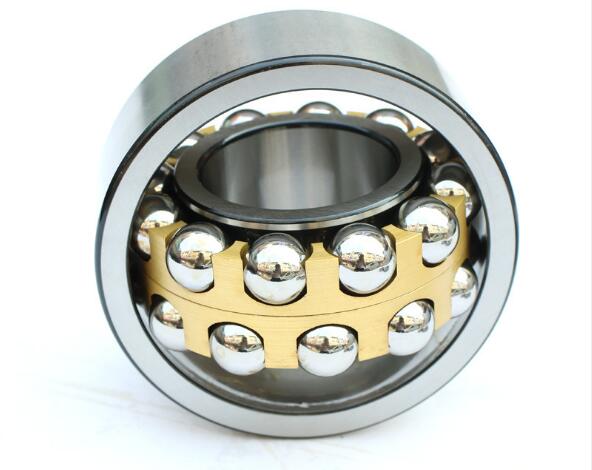
How do self-aligning bearings differ from fixed or non-self-aligning bearings?
Self-aligning bearings differ from fixed or non-self-aligning bearings in several ways. Here’s a detailed explanation of the differences between these types of bearings:
- Design and Construction:
The design and construction of self-aligning bearings are distinct from fixed or non-self-aligning bearings. Self-aligning bearings have a spherical outer ring raceway, which allows for misalignment compensation. In contrast, fixed or non-self-aligning bearings typically have a cylindrical or tapered outer ring raceway, designed for precise alignment between the shaft and the housing.
- Misalignment Compensation:
The primary difference between self-aligning bearings and fixed or non-self-aligning bearings is their ability to compensate for misalignment. Self-aligning bearings can accommodate angular misalignment, axial misalignment, and shaft deflection, whereas fixed or non-self-aligning bearings have limited tolerance for misalignment and require precise alignment during installation.
- Load Distribution:
Self-aligning bearings distribute the load more evenly across the rolling elements and raceways, thanks to their ability to accommodate misalignment. This helps reduce localized stresses and minimize the risk of premature failure. Fixed or non-self-aligning bearings, without the ability to compensate for misalignment, may experience uneven loading and increased stress on specific areas, leading to accelerated wear and potential failure.
- Friction and Wear:
Due to their misalignment compensation capability, self-aligning bearings help reduce friction and wear. Misalignment in fixed or non-self-aligning bearings can cause increased friction and localized wear, leading to reduced bearing life. Self-aligning bearings distribute the load more evenly, minimizing friction and wear on the rolling elements and raceways, resulting in improved reliability and longevity.
- Application Range:
The different design and misalignment compensation capability of self-aligning bearings make them suitable for a broader range of applications compared to fixed or non-self-aligning bearings. Self-aligning bearings are commonly used in applications where misalignment is expected, such as heavy machinery, conveyor systems, and mining equipment. Fixed or non-self-aligning bearings are typically employed in applications that require precise alignment, such as machine tools or high-precision equipment.
- Installation and Maintenance:
Self-aligning bearings offer easier installation and maintenance compared to fixed or non-self-aligning bearings. The self-aligning capability of these bearings allows for more flexibility during the installation process, accommodating slight misalignments. In contrast, fixed or non-self-aligning bearings require careful alignment procedures to ensure proper functioning. Additionally, self-aligning bearings are often designed for easier maintenance, enabling tasks such as re-greasing or replacement without extensive disassembly.
In summary, self-aligning bearings differ from fixed or non-self-aligning bearings in their design, misalignment compensation capability, load distribution, friction and wear characteristics, application range, and ease of installation and maintenance. These differences make self-aligning bearings particularly suitable for applications where misalignment is expected or dynamic operating conditions are present.


editor by CX 2024-05-09