Product Description
Product Description
The aligning ball bearings are mainly used to bear radial loads. While bearing radial loads, they can also bear a small amount of axial loads, but generally cannot bear pure axial loads. Their limiting speed is lower than that of deep groove ball bearings. Bearings are mostly used on double support shafts that are easy to bend under the action of load, and in parts with double bearing holes that cannot guarantee strict coaxiality, but the relative inclination of the centerline of the inner ring and the centerline of the outer ring must not exceed 3 degrees.
| Product Name | spherical roller bearing 22318 EK |
| Bearing Materials | GCr15 |
| Feature | Low Noise, Low Vibration, High Precision, Long Life |
| Size | 90*190*64mm |
| Precision Grade | P6,P5 |
| Application | Papermaking machinery, deceleration device, railway vehicle axis, rolling machine gear box bearing seat, rolling machine roller, crusher, vibration screen, printing machinery, woodworking machinery, various industrial reducers, vertical band -seat stitching bearing. |
| main bearing models | |||||||
| 1018 | 1210 | 105718H | 1302 | 1317 | 2207 | 2222 | 2311 |
| 1026 | 1211 | 1230 | 1303 | 1318 | 2208 | 2224 | 2312 |
| 1571 | 1212 | 11204 | 1304 | 1319 | 2209 | 2226 | 2313 |
| 1571 | 1213 | 11205 | 1305 | 1320 | 2210 | 2228 | 2314 |
| 1096 | 1214 | 11206 | 1306 | 1321 | 2211 | 2300 | 2315 |
| 1200 | 1215 | 11207 | 1307 | 1322 | 2212 | 2301 | 2316 |
| 1201 | 1216 | 11208 | 1308 | 1324 | 2213 | 2302 | 2317 |
| 1202 | 1217 | 11209 | 1309 | 1326 | 2214 | 2303 | 2318 |
| 1203 | 1218 | 11210 | 1310 | 2200 | 2215 | 2304 | 2319 |
| 1204 | 1219 | 11211 | 1311 | 2201 | 2216 | 2305 | 2320 |
| 1205 | 1220 | 11212 | 1312 | 2202 | 2217 | 2306 | 2321 |
| 1206 | 1221 | 11213 | 1313 | 2203 | 2218 | 2307 | 2322 |
| 1207 | 1222 | 1035 | 1314 | 2204 | 2219 | 2308 | 2324 |
| 1208 | 1224 | 1300 | 1315 | 2205 | 2220 | 2309 | 2326 |
| 1209 | 1226 | 1301 | 1316 | 2206 | 2221 | 2310 |
Detailed Photos
Company Profile
Our Advantages
Application
advantage:
Long service life
High load carrying capacity
Compact arrangements
Accommodate misalignment
Minimum maintenance
Reduced operating costs
Fewer unplanned stops
Environmental sustainability
High availability
Technical support
FAQ
Q1 : Why choose us?
A1 : We have more than 30 years of professional experience in bearing industry, and serve many leader companies in bike industry with guarantee quality product. We sell variety of bearing brands and can also do OEM and ODM.
Q2: How about the quality of products in your company?
A2: We implement strict inspection on all bearing parts before the production and during the production process, all bearing meet ISO international standard.
Q3: How to choose a bearing?
A3: We have a professional engineer team to help you choose bearing and find appropriate solutions, contact us now!
Q4: How long is your delivery term?
A4: Our standard product delivery term is 3 to 7 days. A new product development cycle is between 60 to 90 days.
There are standing stock for regular types.
Q5: Do you provide samples?
A5: Yes, we provide samples, but shipping cost and tax pay by buyer.
/* January 22, 2571 19:08:37 */!function(){function s(e,r){var a,o={};try{e&&e.split(“,”).forEach(function(e,t){e&&(a=e.match(/(.*?):(.*)$/))&&1
| Type: | Roller Bearing |
|---|---|
| Model: | 22318 Ek |
| Chrome Steel: | Gcr15 |
| Structure: | Spherical |
| Cage: | Steel Cage |
| Packing: | Single Box |
| Customization: |
Available
| Customized Request |
|---|
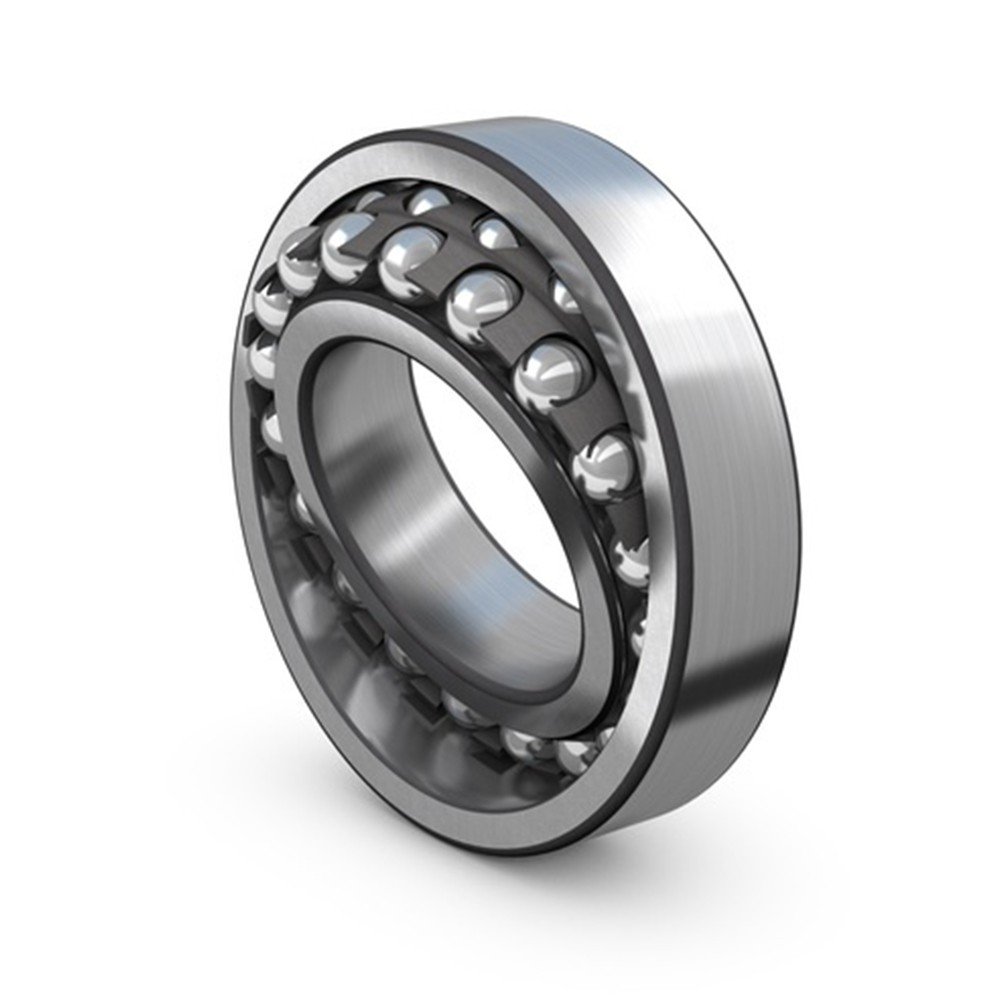
Are there specific considerations for choosing self-aligning bearings in applications with challenging operating conditions or varying misalignment requirements?
Yes, there are specific considerations to take into account when choosing self-aligning bearings for applications with challenging operating conditions or varying misalignment requirements. Here’s a detailed explanation:
- Operating Conditions:
When selecting self-aligning bearings for challenging operating conditions, it’s important to consider factors such as temperature, speed, load, and environmental conditions. High temperatures, extreme speeds, heavy loads, and harsh environments can all impact the performance and durability of the bearing. In such cases, it may be necessary to choose self-aligning bearings with special heat-resistant materials, high-speed capabilities, increased load-carrying capacity, or enhanced corrosion resistance. Additionally, proper lubrication selection and maintenance practices become crucial to ensure optimal performance and longevity of the bearings.
- Misalignment Requirements:
Self-aligning bearings are specifically designed to accommodate misalignment between the shaft and the housing. However, different applications may have varying misalignment requirements. It’s important to consider the magnitude and type of misalignment that the bearing will experience. Some self-aligning bearings can accommodate larger misalignments, while others are designed for smaller or specific types of misalignments, such as angular or parallel misalignment. Understanding the misalignment characteristics of the application is essential to select the appropriate self-aligning bearings that can effectively handle the expected misalignment conditions.
- Load Capacity and Dynamic Performance:
In applications with challenging operating conditions, it’s crucial to assess the load capacity and dynamic performance requirements of the self-aligning bearings. Heavy loads, shock loads, or vibrations can significantly affect the bearing’s performance and service life. It’s important to choose self-aligning bearings with adequate load-carrying capacity, high shock resistance, and robust construction to withstand the demanding conditions. Additionally, the dynamic performance of the bearing, including factors such as rotational speed, acceleration, and deceleration, should be carefully evaluated to ensure that the selected bearings can meet the application’s performance requirements.
- Sealing and Contamination Prevention:
In challenging operating conditions, effective sealing and contamination prevention become crucial for self-aligning bearings. Dust, dirt, moisture, and other contaminants can significantly impact the bearing’s performance and service life. It’s important to select self-aligning bearings with appropriate sealing solutions, such as contact seals, non-contact seals, or hybrid seals, depending on the specific application requirements. These seals help prevent the ingress of contaminants and maintain the integrity of the bearing’s internal components, ensuring reliable operation even in harsh environments.
- Lubrication and Maintenance:
Lubrication and maintenance practices are critical considerations for self-aligning bearings in challenging operating conditions. Proper lubrication selection, including the choice of lubricant type, viscosity, and replenishment frequency, is essential to ensure optimal bearing performance and minimize the risk of premature wear or failure. Additionally, adhering to appropriate maintenance practices, such as regular inspections, re-lubrication, and monitoring of operating conditions, can help identify any potential issues early on and prevent costly downtime or unexpected failures.
By considering these specific factors and requirements, engineers can choose the most suitable self-aligning bearings for applications with challenging operating conditions or varying misalignment requirements. Taking into account the unique demands of the application ensures optimal performance, durability, and reliability of the self-aligning bearings in even the most demanding environments.
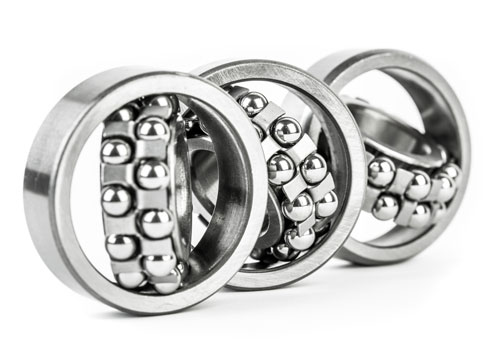
Can self-aligning bearings be customized or modified for unique industrial needs?
Yes, self-aligning bearings can be customized or modified to meet unique industrial needs. Here’s a detailed explanation:
- Customized Designs:
Manufacturers of self-aligning bearings often offer customization options to accommodate specific industrial requirements. These customization options can include:
- Size and Dimensions: Self-aligning bearings can be customized to different sizes and dimensions, allowing them to fit specific equipment or space constraints within an industrial setting.
- Load Capacity: Manufacturers can modify self-aligning bearings to handle higher or lower load capacities based on the unique demands of an application. This can involve altering the bearing’s internal geometry, material selection, or heat treatment processes.
- Operating Conditions: Customizations can be madeto enhance the performance of self-aligning bearings in specific operating conditions. For example, the bearing’s materials, lubrication, or sealing arrangements can be tailored to withstand extreme temperatures, corrosive environments, or high levels of contamination.
- Mounting Configurations: Self-aligning bearings can be customized to meet specific mounting requirements. This may involve modifying the bearing’s outer ring, inner ring, or flange configurations to ensure proper fit and alignment within a particular industrial setup.
- Sealing and Protection: Manufacturers can provide customized sealing arrangements to prevent the ingress of contaminants or protect the bearing from harsh external conditions. This can include adding specialized seals, shields, or coatings to enhance the bearing’s durability and longevity.
- Lubrication: The lubrication requirements of self-aligning bearings can be customized based on the application’s specific needs. Manufacturers can offer different lubrication options, such as solid lubricants or specialized greases, to optimize performance and minimize maintenance requirements.
- Collaboration with Manufacturers:
When unique industrial needs arise, it is advisable to collaborate closely with the bearing manufacturer or consult with bearing experts. They can provide technical expertise and guidance to assess the specific requirements and propose suitable customizations or modifications to the self-aligning bearings.
It is important to note that customization or modification of self-aligning bearings may involve additional costs and lead time for manufacturing. Therefore, a thorough evaluation of the application’s needs, cost-benefit analysis, and discussions with the manufacturer are essential to determine the feasibility and effectiveness of the customization process.
By leveraging the customization options offered by bearing manufacturers and working in collaboration with experts, self-aligning bearings can be tailored to meet the unique demands of various industries, ensuring optimal performance, reliability, and longevity in specific industrial applications.
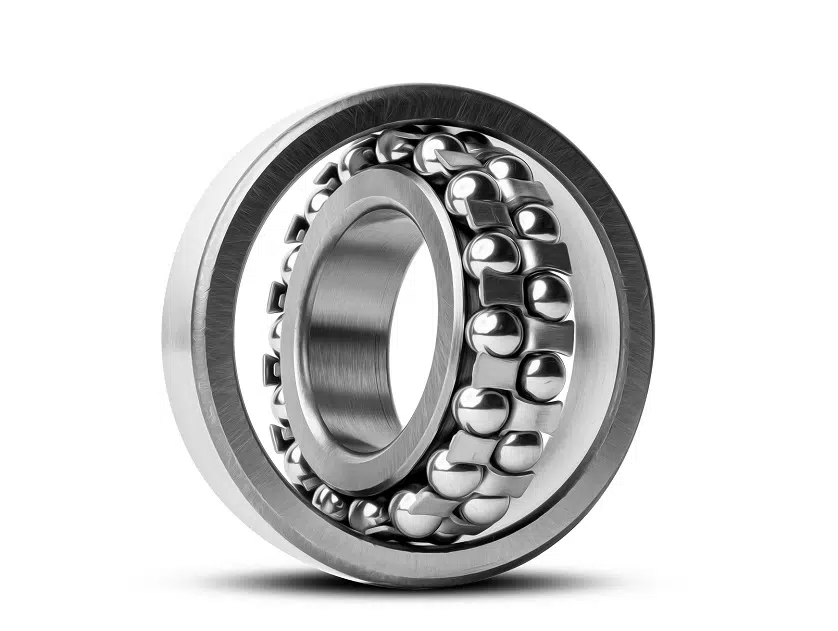
How do self-aligning bearings compensate for misalignment in machinery?
Self-aligning bearings are designed to compensate for misalignment in machinery, allowing them to accommodate angular misalignment, axial misalignment, and shaft deflection. Here’s a detailed explanation of how self-aligning bearings achieve misalignment compensation:
- Spherical Outer Ring Raceway:
The key feature of self-aligning bearings is their spherical outer ring raceway. This raceway is designed to have a curvature that matches the spherical shape of the rolling elements, such as balls or rollers. The spherical outer ring raceway allows the bearing to tilt or swivel in response to misalignment, enabling it to self-align with the mating components.
- Rolling Element Design:
The rolling elements in self-aligning bearings are carefully designed to facilitate misalignment compensation. For example, spherical roller bearings have barrel-shaped rollers, while self-aligning ball bearings have two rows of balls. These rolling elements can adjust their positions within the bearing, redistributing the load and accommodating misalignment between the shaft and the housing.
- Internal Clearance:
Self-aligning bearings often have a larger internal clearance compared to fixed or non-self-aligning bearings. This additional clearance provides space for the bearing components to move and adjust their positions during misalignment. The internal clearance allows the bearing to properly distribute the load, reduce friction, and prevent excessive stress on the rolling elements and raceways.
- Flexible Mounting:
Self-aligning bearings offer flexibility in their mounting arrangements. They can tolerate slight misalignments during installation, which simplifies the alignment process. This flexibility is particularly beneficial in applications where thermal expansion, shaft deflection, or other dynamic factors may cause misalignment during operation.
- Load Distribution:
When misalignment occurs, self-aligning bearings distribute the load more evenly across the rolling elements and raceways. This even load distribution helps reduce localized stresses and minimizes the risk of premature failure. By accommodating misalignment, self-aligning bearings allow for smoother operation and improved reliability in machinery.
It’s important to note that while self-aligning bearings can compensate for certain degrees of misalignment, there are limits to their misalignment capability. Excessive misalignment beyond the bearing’s specified limits can lead to increased friction, reduced bearing life, and potential damage. Therefore, it is crucial to follow the manufacturer’s guidelines and recommendations regarding misalignment limits and operating conditions to ensure optimal performance and longevity of self-aligning bearings in machinery.


editor by CX 2024-03-28