Product Description
1203 1203K 17*40* 12 Steel Cage Self-Aligning Ball Bearings
self-aligning bearing :
1)Self-Aligning Ball Bearing has 2 kinds of structure:cylindrical or tapered hole, the cage material is steel plate, brass,etc..Its characteristics is spherical raceway, with the natureof mind, can automatically adjustable to compensate concentration and shaft deflection caused by error, but the inner and outer rings relative inclination shall not be more than 3 degrees.
2)Self-Aligning Ball Bearing can bear larger radial load,but also can withstand axial load. This kind of bearing outer ring raceway is spherical shape, so it is self-aligning performance,when the axial force bending or tilt the inner center line and center of the outer ring line relative slope up to a maximum of 1 to 2.5degrees bearing can still work.
3)Taper bore of 1:1 2 or 1:30. In order to strengthen the lubrication performance of the bearing, the bearing outer ring of the oil groove and the processing of 3 oil hole.
4)Self-Aligning Ball Bearing is applied to withstand heavy load and impact load, precision instruments, low noise motor,
automobile,motorcycle, metallurgy, rolling mill, mine, oil, paper, cement, sugar industry,general machinery and so on.
Other model number we are supply
| Bearing No. | Main size | Rmin | |||
| OPEN, 2RS | OPEN, 2RS | d | D | b | |
| 1200 | 1200K | 10 | 30 | 9 | 0.6 |
| 1201 | 1201K | 12 | 32 | 10 | 0.6 |
| 1202 | 1202K | 15 | 35 | 11 | 0.6 |
| 1203 | 1203K | 17 | 40 | 12 | 0.6 |
| 1204 | 1204K | 20 | 47 | 14 | 1 |
| 1205 | 1205K | 25 | 52 | 15 | 1 |
| 1206 | 1206K | 30 | 62 | 16 | 1 |
| 1207 | 1207K | 35 | 72 | 17 | 1.1 |
| 1208 | 1208K | 40 | 80 | 18 | 1.1 |
| 1209 | 1209K | 45 | 85 | 19 | 1.1 |
| 1210 | 1210K | 50 | 90 | 20 | 1.1 |
| 1211 | 1211K | 55 | 100 | 21 | 1.5 |
| 1212 | 1212K | 60 | 110 | 22 | 1.5 |
| 1213 | 1213K | 65 | 120 | 23 | 1.5 |
| 1214 | 1214K | 70 | 125 | 24 | 1.5 |
| 1215 | 1215K | 75 | 130 | 25 | 1.5 |
| 1216 | 1216K | 80 | 140 | 26 | 2 |
| 1217 | 1217K | 85 | 150 | 28 | 2 |
| 1218 | 1218K | 90 | 160 | 30 | 2 |
| 1219 | 1219K | 95 | 170 | 32 | 2.1 |
| 1220 | 1220K | 100 | 180 | 34 | 2.1 |
| 1221 | 1221K | 105 | 190 | 36 | 2.1 |
| 1222 | 1222K | 110 | 200 | 38 | 2.1 |
| 1300 | 1300K | 10 | 35 | 11 | 0.6 |
| 1301 | 1301K | 12 | 37 | 12 | 1 |
| 1302 | 1302K | 15 | 42 | 13 | 1 |
| 1303 | 1303K | 17 | 47 | 14 | 1 |
| 1304 | 1304K | 20 | 52 | 15 | 1.1 |
| 1305 | 1305K | 25 | 62 | 17 | 1.1 |
| 1306 | 1306K | 30 | 72 | 19 | 1.1 |
| 1307 | 1307K | 35 | 80 | 21 | 1.5 |
/* January 22, 2571 19:08:37 */!function(){function s(e,r){var a,o={};try{e&&e.split(“,”).forEach(function(e,t){e&&(a=e.match(/(.*?):(.*)$/))&&1
| Aligning: | Aligning Bearing |
|---|---|
| Separated: | Unseparated |
| Rows Number: | Double |
| Load Direction: | Radial Bearing |
| Material: | Bearing Steel |
| Transport Package: | as Per Client′s Requirement |
| Customization: |
Available
| Customized Request |
|---|
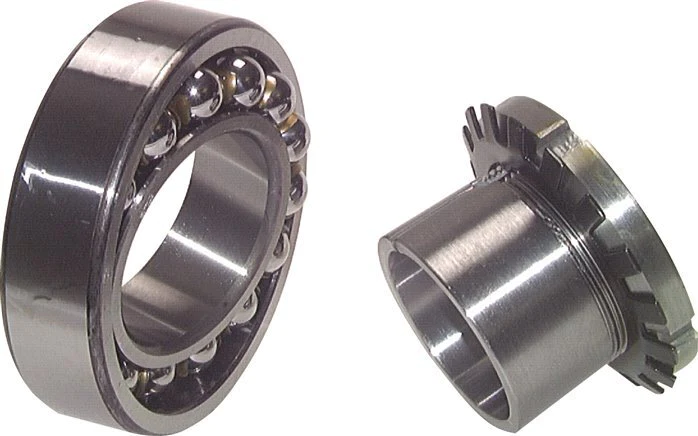
What is the role of cage design and materials in self-aligning bearing performance and durability?
The cage design and materials used in self-aligning bearings play a crucial role in determining their performance and durability. Here’s a detailed explanation:
- Guiding and Retaining Rolling Elements:
The primary function of the cage in a self-aligning bearing is to guide and retain the rolling elements, such as balls or rollers, in their proper positions. The cage prevents the rolling elements from contacting and rubbing against each other, ensuring smooth and controlled movement within the bearing. By providing precise spacing and alignment, the cage maintains the integrity of the bearing assembly and optimizes load distribution. It also minimizes the risk of damage or premature wear caused by improper positioning or collision of the rolling elements.
- Reducing Friction and Heat Generation:
The cage design and materials can significantly impact the friction and heat generation within the self-aligning bearing. An efficient cage design ensures proper lubrication distribution by allowing the lubricant to reach all the critical contact points between the rolling elements and raceways. This reduces friction and minimizes the associated heat generation, leading to improved overall bearing efficiency and reduced energy losses. Additionally, the choice of materials for the cage should consider factors such as low friction coefficients and good thermal conductivity to further optimize performance.
- Maintaining Alignment and Stability:
Self-aligning bearings are designed to accommodate misalignment between the shaft and the housing. The cage plays a vital role in maintaining the alignment and stability of the rolling elements, ensuring that they stay properly seated and aligned during operation. A well-designed cage provides sufficient space and support for the rolling elements to adjust and align themselves, even under dynamic conditions or when subjected to external forces. This enables the self-aligning bearing to continue operating smoothly and efficiently, minimizing the risk of excessive stress, wear, or premature failure.
- Enhancing Durability and Service Life:
The cage design and materials significantly impact the durability and service life of self-aligning bearings. A robust and durable cage is essential for withstanding the loads, impact forces, and vibrations that can occur during operation. The cage should be resistant to wear, fatigue, and corrosion to ensure long-term performance and reliability. By selecting appropriate cage materials, such as high-strength steels, thermoplastics, or engineered polymers, manufacturers can enhance the durability and service life of self-aligning bearings in various operating conditions.
- Reducing Weight and Inertia:
The cage design and materials also influence the weight and inertia of the self-aligning bearing. Lighter cage materials, such as certain polymers or composite materials, can help reduce the overall weight of the bearing assembly. This has several benefits, including lower energy consumption, reduced centrifugal forces, and improved dynamic performance. By minimizing the weight and inertia of the cage, self-aligning bearings can operate at higher speeds, exhibit improved response times, and potentially achieve higher levels of performance and efficiency.
Overall, the cage design and materials used in self-aligning bearings are critical factors in determining their performance, durability, and overall efficiency. A well-designed cage facilitates proper guidance and retention of the rolling elements, reduces friction and heat generation, maintains alignment and stability, enhances durability and service life, and contributes to overall weight optimization. By considering the specific application requirements and selecting the appropriate cage design and materials, engineers can optimize the performance and durability of self-aligning bearings in a wide range of industrial applications.

How do self-aligning bearings perform in applications with varying loads and misalignment challenges?
Self-aligning bearings are specifically designed to perform exceptionally well in applications with varying loads and misalignment challenges. Here’s an in-depth explanation of their performance characteristics:
- Misalignment Compensation:
Self-aligning bearings are capable of accommodating various types of misalignment, including angular misalignment and shaft deflection. They feature a design that incorporates two rows of rolling elements, such as balls or rollers, and a spherical outer ring raceway. This design allows the bearing to self-align, adapting to misalignment caused by factors such as shaft deflection, mounting errors, thermal expansion, and vibrations. Self-aligning bearings can handle misalignment within certain limits, maintaining proper alignment between the mating components and minimizing additional stresses on the bearing.
- Load-Carrying Capacity:
Self-aligning bearings are engineered to handle high loads, both radial and axial. They have a robust construction with larger rolling elements and increased contact area, enabling them to distribute the load more effectively. This enhanced load-carrying capacity makes self-aligning bearings suitable for applications where varying loads are encountered. Whether it’s fluctuating radial loads, axial loads, or a combination of both, self-aligning bearings can handle the dynamic forces and provide reliable performance.
- Flexibility and Versatility:
Self-aligning bearings offer flexibility and versatility in applications with varying loads and misalignment challenges. They can operate in conditions where shafts are not perfectly aligned or where there are slight shaft movements. This flexibility allows for easier installation and alignment adjustments, reducing the time and effort required for precise positioning of the bearing. Additionally, self-aligning bearings are available in different designs and configurations, including ball bearings and roller bearings, providing options to match specific application requirements.
- Reduced Friction and Heat Generation:
Self-aligning bearings are designed to minimize friction and heat generation during operation. The rolling elements and raceways are precisely engineered to reduce contact stresses and optimize the distribution of forces. This results in lower friction levels and reduced heat buildup, enhancing the overall efficiency and reliability of the bearing in applications where varying loads and misalignment challenges are present.
- Extended Service Life:
Due to their ability to accommodate misalignment and handle varying loads, self-aligning bearings contribute to an extended service life of the machinery. By reducing the stresses and excessive forces on the bearing and its surrounding components, self-aligning bearings help minimize wear, prevent premature failure, and increase the overall durability of the equipment.
In summary, self-aligning bearings excel in applications with varying loads and misalignment challenges. Their ability to compensate for misalignment, handle high loads, provide flexibility in installation, and reduce friction and heat generation makes them well-suited for industries such as mining, construction, paper manufacturing, steel production, and many others where these challenges are prevalent.
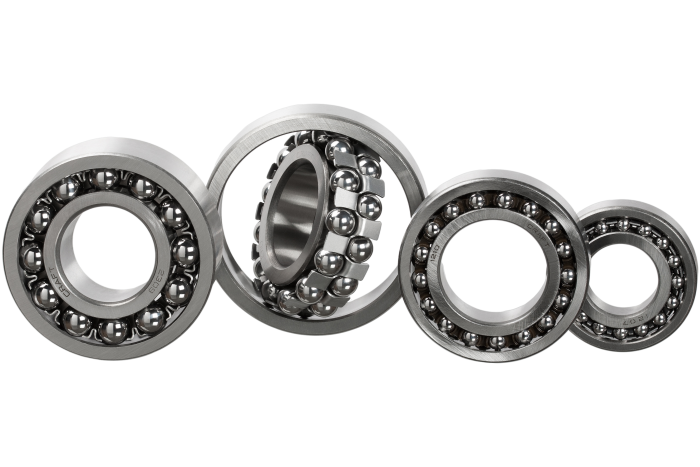
What are the common types of self-aligning bearings, such as spherical or barrel roller bearings?
There are several common types of self-aligning bearings, each offering unique features and advantages. Here’s a detailed explanation of some of the common types:
- Spherical Roller Bearings:
Spherical roller bearings are one of the most common types of self-aligning bearings. They have a spherical outer ring raceway and two rows of barrel-shaped rollers positioned between the inner and outer rings. This design allows for the accommodation of misalignment and provides high radial load-carrying capacity. Spherical roller bearings are commonly used in heavy-duty applications, such as mining equipment, paper mills, and crushers.
- Barrel Roller Bearings:
Barrel roller bearings, also known as toroidal roller bearings, have a barrel-shaped roller arrangement with a concave outer ring raceway and a convex inner ring raceway. This design enables the bearing to accommodate misalignment and axial displacement. Barrel roller bearings are suitable for applications with high radial loads and moderate axial loads, such as in conveyor systems, printing presses, and industrial gearboxes.
- Self-Aligning Ball Bearings:
Self-aligning ball bearings consist of an inner ring with two rows of balls and an outer ring with a spherical raceway. The design allows for misalignment compensation and is particularly suited for applications with low to moderate radial loads and moderate axial loads. Self-aligning ball bearings are commonly used in electric motors, pumps, and automotive applications.
- Self-Aligning Thrust Roller Bearings:
Self-aligning thrust roller bearings are designed to accommodate misalignment in applications with axial loads. They have a spherical rolling element between the shaft washer and the housing washer, allowing for misalignment compensation. These bearings are commonly used in applications such as screw conveyors, heavy machinery, and marine propulsion systems.
- Adapter Sleeve Bearings:
Adapter sleeve bearings are a type of self-aligning bearing that incorporates an adapter sleeve, which facilitates easy mounting and dismounting of the bearing. They are commonly used in applications where frequent bearing replacement or adjustment is required. Adapter sleeve bearings are often employed in conveyor systems, agricultural machinery, and textile equipment.
These are just a few examples of common types of self-aligning bearings. Other variations and specialized designs exist to suit specific application requirements. It’s important to consider factors such as load capacity, operating conditions, and dimensional constraints when selecting the appropriate self-aligning bearing for a particular application.


editor by CX 2024-03-28