Product Description
PRODUCT PICTURES
RELATED PRODUCTS
OUR SERVICES
We can provide manufacturing capabilities and services of regular bearings for you, or customized non-standard bearings as you required.
BEARING:
— Dimensions
— Material
— Tolerance standard
APPEARANCE:
— Logo (Laser Marking)
— Package Design
40+ YEARS EXPERIENCE
CONTINUOUS AND STABLE DELIVERY OF PRODUCTS.
With over 40 years experience of the bearing manufacturing, we know how to make good bearings with less cost consistently and efficiently.
We use advanced CNC turning, grinding, and superfinishing machines to ensure high, stable, and accurate machining. All of your goods, from the most economical category, to the highest rated category, will always be manufactured precisely to the standards you require.
OWN HEAT TREATMENT
CONTROALLABLE COST AND QUALITY.
Heat treatment is 1 of the crucial processes to ensure high performance of bearing materials. Compared with other manufacturers, we can produce higher quality bearings at smaller cost, with a more flexible and controllable production schedule, and in a shorter time.
We have 6 heat treatment production lines.
Bearings are heated uniformly, with small deformation and little/no oxidized decarburization, which can make them have high hardness, high fatigue resistance, good wear resistance, dimensional stability, and excellent mechanical strength.
OUTSTXIHU (WEST LAKE) DIS. QUALITY
LOW NOISE, LOW FRICTION AND LONG LIFE.
All our products are characterized by low noise, low friction and long life. This is due to our attention to the roundness, waviness and surface roughness of bearing raceway.
Our products fully meets the requirements of national and international standards according to the testing result of roughness, roundness, hardness, vibration noise, vibration velocity.
PACKING
PACKAGING THAT HELPS SELL.
1, Inner package
Corrosion and Dust Proof PE plastic film / bag packing + Tube packing, or Wrapping tape for larger bearings.
2, Corrugated Individual Box
Our attractive sales-helpful “3-JOYS” package, or as the design of your package.
3, Outer package
Corrugated carton + Wooden pallet
MODERN WELL-ORGANIZED WAREHOUSE
· Constant temperature (20°C) and humidity (RH 52%) warehouse
· Hundreds of models on hand, short delivery time.
HONOR & SYSTEM CERTIFICATES
EXHIBITION
SAMPLES POLICY
FREE SAMPLES AND SHIPPING
We are happy to send you free samples of our bearings for field testing. All transportation costs will be paid by us.
Please note: Depending on the model and value of samples, this policy may not apply!
Please contact our sales staff for details.
TRANSPORTATION
FASTEST DELIVERY TO CUSTOMERS
CUSTOMERS FEEDBACK
PAYMENT TERMS
To facilitate your payment, we offer a variety of options!
FAQ
1, About the lead time.
This depends on several factors, like Is the production schedule tight? Is there a corresponding model in stock, and is there enough of this model in stock? How many pcs of that model would be ordered?
Simply speaking, based on a 20′ GP container load:
| If the model your Preferred is | Sufficient stock | Lead Time |
| Regular models | YES | Within 7 days |
| Regular models | NO | Within 30 days |
| Non-regular model | NO | About 50 days |
For accurate estimate, please contact with our sale stuff. Thanks.
2, Minimum order quantity.
Even just ONE piece of bearing is ok for us.
3, If you don’t know which model is the right choice…
We would like to give you some advise if you like, according to the real situation and demand of your local market. Our purpose is to help you to get proper and right models for your customers, so that you would make a better sales and income finally.
4, Factory Inspection
We surely would welcome you or your representatives to come to our plants or working offices to take a good look and chat with our hardworking CZPT employees. Ask our sales stuff and she/he will arrange that for you.
/* January 22, 2571 19:08:37 */!function(){function s(e,r){var a,o={};try{e&&e.split(“,”).forEach(function(e,t){e&&(a=e.match(/(.*?):(.*)$/))&&1
| Contact Angle: | 25° |
|---|---|
| Aligning: | Non-Aligning Bearing |
| Separated: | Unseperated/Seperated |
| Samples: |
US$ 0/Piece
1 Piece(Min.Order) | Order Sample |
|---|
| Customization: |
Available
| Customized Request |
|---|
.shipping-cost-tm .tm-status-off{background: none;padding:0;color: #1470cc}
|
Shipping Cost:
Estimated freight per unit. |
about shipping cost and estimated delivery time. |
|---|
| Payment Method: |
|
|---|---|
|
Initial Payment Full Payment |
| Currency: | US$ |
|---|
| Return&refunds: | You can apply for a refund up to 30 days after receipt of the products. |
|---|
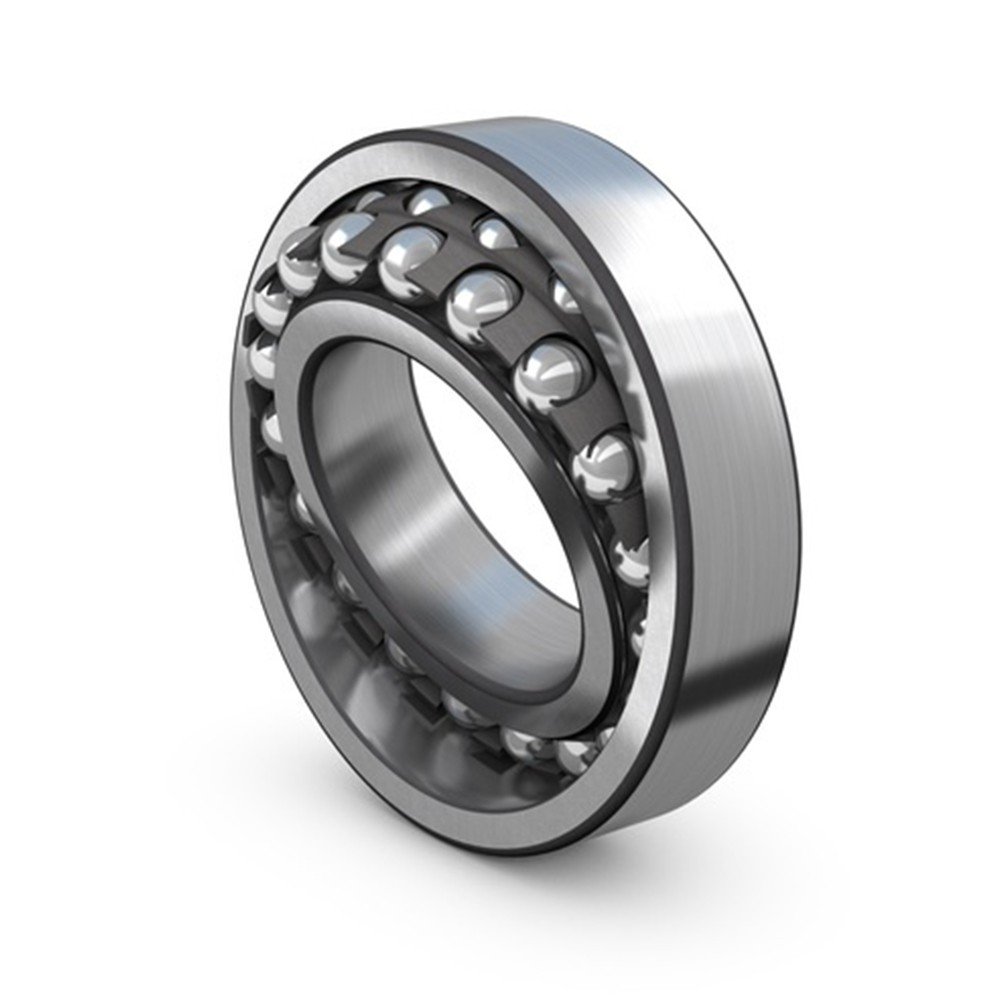
Are there specific considerations for choosing self-aligning bearings in applications with challenging operating conditions or varying misalignment requirements?
Yes, there are specific considerations to take into account when choosing self-aligning bearings for applications with challenging operating conditions or varying misalignment requirements. Here’s a detailed explanation:
- Operating Conditions:
When selecting self-aligning bearings for challenging operating conditions, it’s important to consider factors such as temperature, speed, load, and environmental conditions. High temperatures, extreme speeds, heavy loads, and harsh environments can all impact the performance and durability of the bearing. In such cases, it may be necessary to choose self-aligning bearings with special heat-resistant materials, high-speed capabilities, increased load-carrying capacity, or enhanced corrosion resistance. Additionally, proper lubrication selection and maintenance practices become crucial to ensure optimal performance and longevity of the bearings.
- Misalignment Requirements:
Self-aligning bearings are specifically designed to accommodate misalignment between the shaft and the housing. However, different applications may have varying misalignment requirements. It’s important to consider the magnitude and type of misalignment that the bearing will experience. Some self-aligning bearings can accommodate larger misalignments, while others are designed for smaller or specific types of misalignments, such as angular or parallel misalignment. Understanding the misalignment characteristics of the application is essential to select the appropriate self-aligning bearings that can effectively handle the expected misalignment conditions.
- Load Capacity and Dynamic Performance:
In applications with challenging operating conditions, it’s crucial to assess the load capacity and dynamic performance requirements of the self-aligning bearings. Heavy loads, shock loads, or vibrations can significantly affect the bearing’s performance and service life. It’s important to choose self-aligning bearings with adequate load-carrying capacity, high shock resistance, and robust construction to withstand the demanding conditions. Additionally, the dynamic performance of the bearing, including factors such as rotational speed, acceleration, and deceleration, should be carefully evaluated to ensure that the selected bearings can meet the application’s performance requirements.
- Sealing and Contamination Prevention:
In challenging operating conditions, effective sealing and contamination prevention become crucial for self-aligning bearings. Dust, dirt, moisture, and other contaminants can significantly impact the bearing’s performance and service life. It’s important to select self-aligning bearings with appropriate sealing solutions, such as contact seals, non-contact seals, or hybrid seals, depending on the specific application requirements. These seals help prevent the ingress of contaminants and maintain the integrity of the bearing’s internal components, ensuring reliable operation even in harsh environments.
- Lubrication and Maintenance:
Lubrication and maintenance practices are critical considerations for self-aligning bearings in challenging operating conditions. Proper lubrication selection, including the choice of lubricant type, viscosity, and replenishment frequency, is essential to ensure optimal bearing performance and minimize the risk of premature wear or failure. Additionally, adhering to appropriate maintenance practices, such as regular inspections, re-lubrication, and monitoring of operating conditions, can help identify any potential issues early on and prevent costly downtime or unexpected failures.
By considering these specific factors and requirements, engineers can choose the most suitable self-aligning bearings for applications with challenging operating conditions or varying misalignment requirements. Taking into account the unique demands of the application ensures optimal performance, durability, and reliability of the self-aligning bearings in even the most demanding environments.
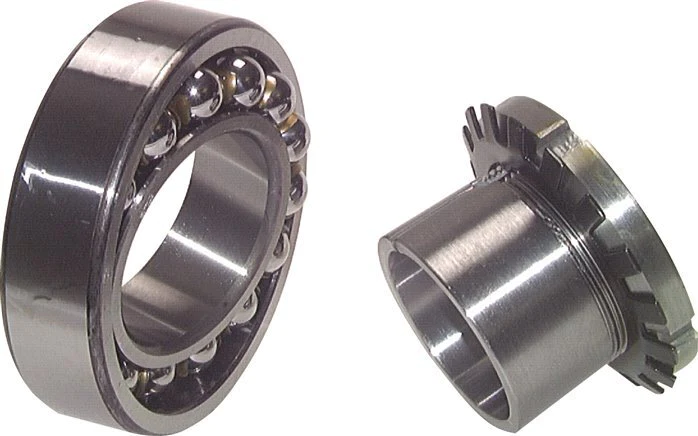
Can you provide examples of machinery or equipment that rely on self-aligning bearings for reliable operation?
Self-aligning bearings play a crucial role in ensuring the reliable operation of various types of machinery and equipment. Here are some examples of machinery and equipment that rely on self-aligning bearings:
- Mining Equipment: Self-aligning bearings are used in mining equipment such as crushers, vibrating screens, and conveyor systems. These bearings help compensate for misalignment caused by heavy loads, vibrations, and uneven terrain, ensuring smooth operation and minimizing downtime in the mining industry.
- Construction Machinery: Construction machinery, including excavators, loaders, and concrete mixers, rely on self-aligning bearings. These bearings accommodate misalignment caused by heavy loads, shock loads, and dynamic forces, enabling reliable performance and durability in demanding construction sites.
- Paper Machines: Self-aligning bearings are essential components in paper machines, including the dryer section, press section, and calender rolls. These bearings compensate for misalignment caused by thermal expansion, high speeds, and varying loads, ensuring precise alignment and smooth operation throughout the paper manufacturing process.
- Steel Rolling Mills: Self-aligning bearings are critical in steel rolling mills, where they support the heavy loads and high temperatures involved in the rolling process. These bearings accommodate misalignment caused by thermal expansion, roll deflection, and varying loads, ensuring the accuracy and efficiency of the rolling operations.
- Printing Presses: Printing presses rely on self-aligning bearings in their rollers, cylinders, and other moving parts. These bearings compensate for misalignment caused by high-speed rotations, vibrations, and thermal effects, ensuring precise alignment and reliable operation in the printing industry.
- Wind Turbines: Self-aligning bearings are crucial components in wind turbines, supporting the main shaft and rotor assembly. These bearings accommodate misalignment caused by wind gusts, turbine movements, and varying loads, enabling efficient power generation and prolonged service life of the wind turbine.
- Automotive Wheel Hubs: Self-aligning bearings are used in automotive wheel hub assemblies, providing reliable rotation and supporting the vehicle’s weight. These bearings compensate for misalignment caused by uneven road surfaces, cornering forces, and thermal effects, ensuring safe and smooth operation of automotive vehicles.
- Food Processing Equipment: Self-aligning bearings are employed in food processing equipment such as mixers, blenders, and conveyors. These bearings accommodate misalignment caused by varying loads, thermal effects, and sanitation processes, ensuring hygienic operation and reliability in food manufacturing facilities.
These are just a few examples of the machinery and equipment that rely on self-aligning bearings for reliable operation. Self-aligning bearings are utilized in a wide range of industries, including mining, construction, paper manufacturing, steel production, printing, renewable energy, automotive, and food processing, among others. Their ability to compensate for misalignment, handle high loads, and ensure smooth operation makes them indispensable components in numerous applications.
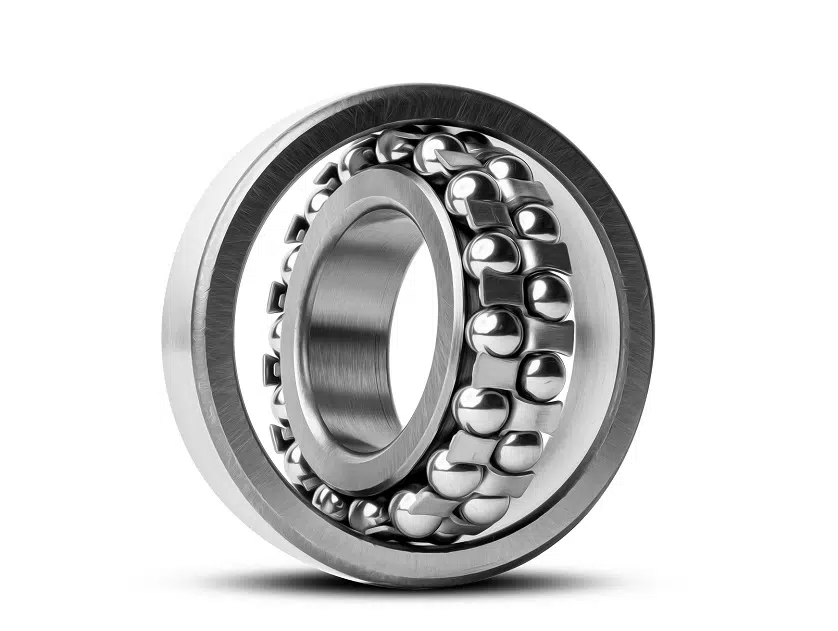
How do self-aligning bearings compensate for misalignment in machinery?
Self-aligning bearings are designed to compensate for misalignment in machinery, allowing them to accommodate angular misalignment, axial misalignment, and shaft deflection. Here’s a detailed explanation of how self-aligning bearings achieve misalignment compensation:
- Spherical Outer Ring Raceway:
The key feature of self-aligning bearings is their spherical outer ring raceway. This raceway is designed to have a curvature that matches the spherical shape of the rolling elements, such as balls or rollers. The spherical outer ring raceway allows the bearing to tilt or swivel in response to misalignment, enabling it to self-align with the mating components.
- Rolling Element Design:
The rolling elements in self-aligning bearings are carefully designed to facilitate misalignment compensation. For example, spherical roller bearings have barrel-shaped rollers, while self-aligning ball bearings have two rows of balls. These rolling elements can adjust their positions within the bearing, redistributing the load and accommodating misalignment between the shaft and the housing.
- Internal Clearance:
Self-aligning bearings often have a larger internal clearance compared to fixed or non-self-aligning bearings. This additional clearance provides space for the bearing components to move and adjust their positions during misalignment. The internal clearance allows the bearing to properly distribute the load, reduce friction, and prevent excessive stress on the rolling elements and raceways.
- Flexible Mounting:
Self-aligning bearings offer flexibility in their mounting arrangements. They can tolerate slight misalignments during installation, which simplifies the alignment process. This flexibility is particularly beneficial in applications where thermal expansion, shaft deflection, or other dynamic factors may cause misalignment during operation.
- Load Distribution:
When misalignment occurs, self-aligning bearings distribute the load more evenly across the rolling elements and raceways. This even load distribution helps reduce localized stresses and minimizes the risk of premature failure. By accommodating misalignment, self-aligning bearings allow for smoother operation and improved reliability in machinery.
It’s important to note that while self-aligning bearings can compensate for certain degrees of misalignment, there are limits to their misalignment capability. Excessive misalignment beyond the bearing’s specified limits can lead to increased friction, reduced bearing life, and potential damage. Therefore, it is crucial to follow the manufacturer’s guidelines and recommendations regarding misalignment limits and operating conditions to ensure optimal performance and longevity of self-aligning bearings in machinery.


editor by CX 2024-04-09