Product Description
Features
Mainly bear radial load, and can bear small axial load at the same time.
It has self-aligning performance, can work normally when the inclination angle is not large.
Product Description
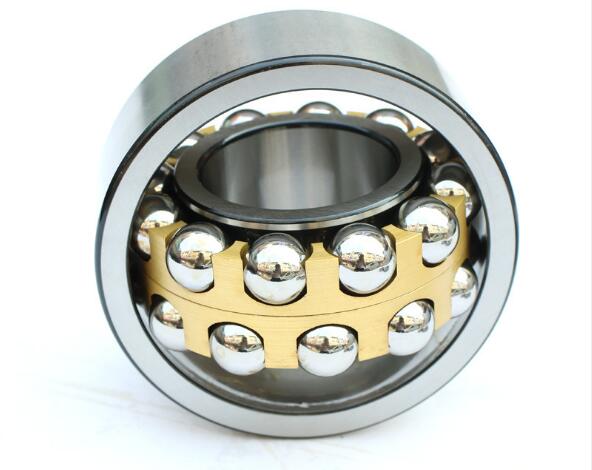
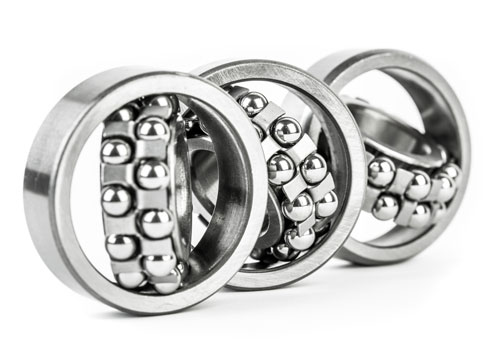
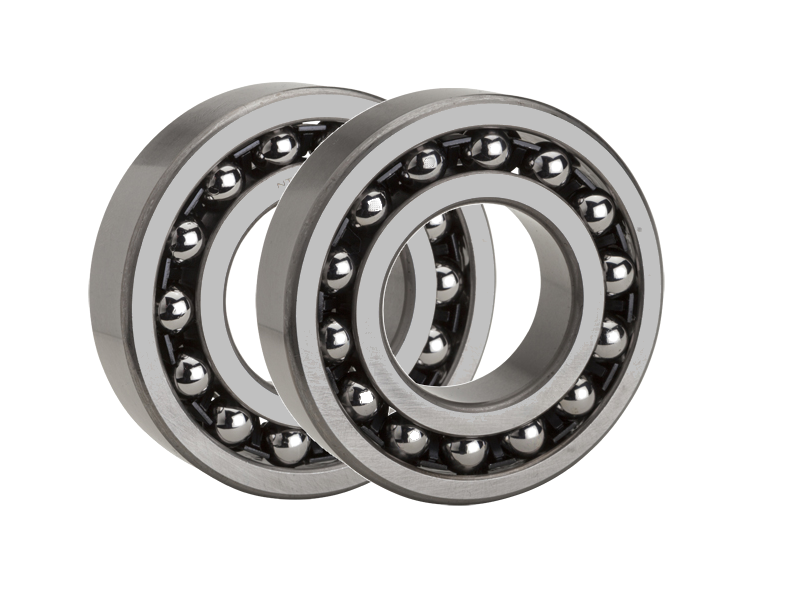
Self-aligning ball bearings are bearings with steel balls and cage assemblies between the 2 raceways inner ring and spherical raceways outer ring.
Self-aligning ball bearing has 2 structures of cylindrical hole and conical hole. The material of the cage is steel plate, synthetic resin, engineering plastic and so on.
The self-aligning ball bearing can have sealing structure similar to the deep groove ball bearing, but it will affect the self-alignment of the bearings.
Self-aligning ball bearings mainly bear radial load, and can bear small axial load at the same time. It can’t bear pure axial load. Due to the structure, the limit speed of self-aligning ball bearings is relatively low.
The characteristic of self-aligning ball bearing is that the outer ring raceway is spherical.Since the curvature center of the outer ring raceway surface is consistent with the bearing center, it has the self-aligning function, allowing the axis of the inner ring, balls and cage to deflect around the bearing center, which can compensate for the errors caused by the misalignment and the deflection of the shaft and the outer casing, but the relative inclination of the inner and outer rings should not exceed 3 degrees. This type of bearing is mostly used on double support shafts that are prone to bending under load, and in components where the housing seat hole cannot be strictly coaxial.
Main applications:
Metallurgy, rolling mill, mining, petroleum, paper, cement, textile, sugar extraction and other industries and general machinery.
Product Parameters
| Bearing No. | Dimensions(mm) | Weight | ||
| d | D | B | kg | |
| 1203 | 17 | 40 | 12 | 0.076 |
| 1204 | 20 | 47 | 14 | 0.12 |
| 1205 | 25 | 52 | 15 | 0.14 |
| 1206 | 30 | 62 | 16 | 0.23 |
| 1207 | 35 | 72 | 17 | 0.32 |
| 1208 | 40 | 80 | 18 | 0.42 |
| 1209 | 45 | 85 | 19 | 0.47 |
| 1210 | 50 | 90 | 20 | 0.525 |
| 1211 | 55 | 100 | 21 | 0.705 |
| 1212 | 60 | 110 | 22 | 0.9 |
| 1213 | 65 | 120 | 23 | 1.15 |
| 1214 | 70 | 125 | 24 | 1.26 |
| 1215 | 75 | 130 | 25 | 1.36 |
| 1216 | 80 | 140 | 26 | 1.67 |
| 1217 | 85 | 150 | 28 | 2.07 |
| 1303 | 17 | 47 | 14 | 0.13 |
| 1304 | 20 | 52 | 15 | 0.163 |
| 1305 | 25 | 62 | 17 | 0.257 |
| 1306 | 30 | 72 | 19 | 0.387 |
| 1307 | 35 | 80 | 21 | 0.51 |
| 1308 | 40 | 90 | 23 | 0.715 |
| 1309 | 45 | 100 | 25 | 0.957 |
| 1310 | 50 | 110 | 27 | 1.21 |
| 1311 | 55 | 120 | 29 | 1.58 |
| 1312 | 60 | 130 | 31 | 1.96 |
| 1313 | 65 | 140 | 33 | 2.45 |
| 1314 | 70 | 150 | 35 | 2.99 |
| 1315 | 75 | 160 | 37 | 3.56 |
| 1316 | 80 | 170 | 39 | 4.18 |
| 1317 | 85 | 180 | 41 | 4.98 |
| 2203 | 17 | 40 | 16 | 0.09 |
| 2204 | 20 | 47 | 18 | 0.14 |
| 2205 | 25 | 52 | 18 | 0.163 |
| 2203 | 17 | 40 | 16 | 0.09 |
| 2204 | 20 | 47 | 18 | 0.14 |
| 2205 | 25 | 52 | 18 | 0.163 |
| 2206 | 30 | 62 | 20 | 0.26 |
| 2207 | 35 | 72 | 23 | 0.403 |
| 2208 | 40 | 80 | 23 | 0.51 |
| 2209 | 45 | 85 | 23 | 0.55 |
| 2210 | 50 | 90 | 23 | 0.6 |
| 2211 | 55 | 100 | 25 | 0.81 |
| 2212 | 60 | 110 | 28 | 1.09 |
| 2213 | 65 | 120 | 31 | 1.46 |
| 2214 | 70 | 125 | 31 | 1.62 |
| 2215 | 75 | 130 | 31 | 1.62 |
| 2216 | 80 | 140 | 33 | 2.01 |
| 2217 | 85 | 150 | 36 | 2.52 |
| 2303 | 17 | 47 | 19 | 0.158 |
| 2304 | 20 | 52 | 21 | 0.209 |
| 2305 | 25 | 62 | 24 | 0.335 |
| 2306 | 30 | 72 | 27 | 0.5 |
| 2307 | 35 | 80 | 31 | 0.675 |
| 2308 | 40 | 90 | 33 | 0.925 |
| 2309 | 45 | 100 | 36 | 1.23 |
| 2310 | 50 | 110 | 40 | 1.64 |
| 2311 | 55 | 120 | 43 | 2.1 |
| 2312 | 60 | 130 | 46 | 2.6 |
| 2313 | 65 | 140 | 48 | 3.23 |
| 2314 | 70 | 150 | 51 | 4.23 |
| 2315 | 75 | 160 | 55 | 5.13 |
| 2316 | 80 | 170 | 58 | 6.1 |
| 2317 | 85 | 180 | 60 | 7.05 |
This parameter table is not complete, please contact us for details.
Company Profile
ZheJiang CZPT Machinery Co., Ltd, Xihu (West Lake) Dis. High-precision Bearings Co., Ltd belongs to CZPT group. It is located in Industrial Development Zone of Liao-cheng city, which is bearings manufacturing base in China. We have been specialized in the production of auto parts, bearings and retainers since year 1986.
Our factory covers an area of 120,000 sq.m, with a construction area of 66,000 sq.m. There are more than 600 employees, 50 management personnel, 80 technical engineers and 60 quality inspectors. We are famous manufacturer group for our strict quality control system and hard-working team.
There are more than 40 sets of high-precision mold processing equipment, 150 sets of various CNC lathes, 200 sets of white dynamic grinding machines, 120 sets of stamping equipment, 16 sets of special demagnetization machines, 10 sets of high-pressure spray cleaning machines, 6 sets ultrasonic cleaning machines and 6 automatic bearing grinding lines. They are also equipped with advanced hardness tester, length measuring instrument, sine instrument, spectrometer, infrared carbon and sulfur analyzer, CZPT hardness tester, roughness profiler, electronic tensile testing machine, metallographic microscope, projection coordinate instrument, roundness instrument, ABLT-2 life testing machine, three-coordinate testing machine and so on. We are ready to provide customers with high-quality precision bearing products.
Our company passed ISO9001, ISO/TS16949 and IATF16949 quality management system. Our products are CE / SGS certified. Through introducing world-leading technology and bring together domestic high-tech talents, it ensures our rapid growth and competitive advantages.
Sincerely wish you visit our factory!
FAQ
Q1: Do you provide samples? Is it free or extra?
Yes, we can provide a small amount of free samples. Do you mind paying the freight?
Q2: Can you accept OEM or non-standard Bearings ?
Any requirement for non-standard roller bearings is easily fulfilled by us due to our engineers’ rich experience.
Q3: What is your latest delivery time?
Most orders will be shipped within 7-15 days of payment received.
Q4:Does your company have quality assurance?
Yes, for 2 years.
Q5:Which payment method does your company support?
T/T is best, but we can also accept L/C.
Q6:How to contact us quickly?
Please send us an inquiry or message and leave your other contact information, such as phone number, or account, we will contact you as soon as possible and provide the detailed information.
/* January 22, 2571 19:08:37 */!function(){function s(e,r){var a,o={};try{e&&e.split(“,”).forEach(function(e,t){e&&(a=e.match(/(.*?):(.*)$/))&&1
| Contact Angle: | 0° |
|---|---|
| Aligning: | Aligning Bearing |
| Separated: | Unseparated |
| Rows Number: | Double |
| Load Direction: | Radial Bearing |
| Material: | Bearing Steel |
| Samples: |
US$ 2/Piece
1 Piece(Min.Order) | |
|---|
| Customization: |
Available
| Customized Request |
|---|
How do innovations and advancements in self-aligning bearing technology impact their use?
Advancements and innovations in self-aligning bearing technology have a significant impact on their use in various industries. Here’s a detailed explanation:
- Improved Performance:
Innovations in self-aligning bearing technology often result in improved performance characteristics. These advancements can include:
- Load Capacity: New bearing designs and materials can enhance the load-carrying capacity of self-aligning bearings, allowing them to withstand higher loads or operate under more demanding conditions.
- Speed Capability: Advancements in bearing manufacturing techniques and materials can increase the maximum rotational speed at which self-aligning bearings can operate effectively, enabling their use in high-speed applications.
- Friction Reduction: Innovations in bearing design, lubrication, and surface treatments contribute to reducing friction and energy losses, resulting in improved efficiency and reduced operating costs.
- Sealing and Contamination Resistance: New sealing technologies and materials can enhance the sealing performance of self-aligning bearings, providing better protection against contaminants, moisture, and harsh environmental conditions.
- Temperature and Corrosion Resistance: Advances in bearing materials and coatings enable self-aligning bearings to withstand extreme temperatures, aggressive chemicals, and corrosive environments, expanding their range of applications.
- Extended Service Life:
Innovations in self-aligning bearing technology often result in improved durability and longevity. These advancements can include:
- Materials: The development of new bearing materials, such as advanced steels, ceramics, or composites, can significantly enhance the bearing’s resistance to wear, fatigue, and surface damage, leading to extended service life.
- Lubrication: Advancements in lubrication technologies, such as the use of solid lubricants or advanced grease formulations, can provide better film formation, reduce friction, and minimize wear, thereby increasing the bearing’s operating life.
- Surface Treatments: Innovative surface treatments, such as coatings or finishes, can improve the bearing’s resistance to corrosion, wear, and fretting, contributing to longer service intervals and reduced maintenance requirements.
- Condition Monitoring: The integration of sensor technologies and data analytics in self-aligning bearings enables real-time monitoring of operating conditions, allowing for proactive maintenance and early detection of potential failures, thus maximizing the bearing’s service life.
- Application Expansion:
Advancements in self-aligning bearing technology often lead to an expansion of their application range. These advancements can include:
- New Industries: Innovations in self-aligning bearing technology can enable their use in industries or applications where they were previously not feasible. This opens up opportunities in emerging sectors, such as renewable energy, electric vehicles, robotics, or medical devices.
- Challenging Environments: Improved performance characteristics, such as enhanced sealing, temperature resistance, or contamination resistance, allow self-aligning bearings to be deployed in challenging environments, including offshore installations, high-temperature processes, or chemically aggressive applications.
- Specialized Applications: Advancements in self-aligning bearing technology can lead to the development of specialized bearing variants tailored for specific applications, such as high-speed machining, precision equipment, or demanding industrial automation systems.
Overall, innovations and advancements in self-aligning bearing technology bring about enhanced performance, extended service life, and expanded application possibilities. These advancements drive improvements in industrial productivity, reliability, and efficiency, making self-aligning bearings a valuable component in a wide range of industries and applications.
Can self-aligning bearings be customized or modified for unique industrial needs?
Yes, self-aligning bearings can be customized or modified to meet unique industrial needs. Here’s a detailed explanation:
- Customized Designs:
Manufacturers of self-aligning bearings often offer customization options to accommodate specific industrial requirements. These customization options can include:
- Size and Dimensions: Self-aligning bearings can be customized to different sizes and dimensions, allowing them to fit specific equipment or space constraints within an industrial setting.
- Load Capacity: Manufacturers can modify self-aligning bearings to handle higher or lower load capacities based on the unique demands of an application. This can involve altering the bearing’s internal geometry, material selection, or heat treatment processes.
- Operating Conditions: Customizations can be madeto enhance the performance of self-aligning bearings in specific operating conditions. For example, the bearing’s materials, lubrication, or sealing arrangements can be tailored to withstand extreme temperatures, corrosive environments, or high levels of contamination.
- Mounting Configurations: Self-aligning bearings can be customized to meet specific mounting requirements. This may involve modifying the bearing’s outer ring, inner ring, or flange configurations to ensure proper fit and alignment within a particular industrial setup.
- Sealing and Protection: Manufacturers can provide customized sealing arrangements to prevent the ingress of contaminants or protect the bearing from harsh external conditions. This can include adding specialized seals, shields, or coatings to enhance the bearing’s durability and longevity.
- Lubrication: The lubrication requirements of self-aligning bearings can be customized based on the application’s specific needs. Manufacturers can offer different lubrication options, such as solid lubricants or specialized greases, to optimize performance and minimize maintenance requirements.
- Collaboration with Manufacturers:
When unique industrial needs arise, it is advisable to collaborate closely with the bearing manufacturer or consult with bearing experts. They can provide technical expertise and guidance to assess the specific requirements and propose suitable customizations or modifications to the self-aligning bearings.
It is important to note that customization or modification of self-aligning bearings may involve additional costs and lead time for manufacturing. Therefore, a thorough evaluation of the application’s needs, cost-benefit analysis, and discussions with the manufacturer are essential to determine the feasibility and effectiveness of the customization process.
By leveraging the customization options offered by bearing manufacturers and working in collaboration with experts, self-aligning bearings can be tailored to meet the unique demands of various industries, ensuring optimal performance, reliability, and longevity in specific industrial applications.
Can you describe the load-carrying capacity and load ratings of self-aligning bearings?
Self-aligning bearings are designed to carry both radial and axial loads, and their load-carrying capacity is an essential consideration for their proper selection and application. Here’s a detailed description of the load-carrying capacity and load ratings of self-aligning bearings:
- Radial Load Capacity:
The radial load capacity of a self-aligning bearing refers to its ability to carry loads that act perpendicular to the axis of rotation. It is influenced by factors such as bearing geometry, material properties, and internal design. Self-aligning bearings, particularly spherical roller bearings, are known for their high radial load-carrying capacity. This is due to their construction that includes multiple rows of robust rolling elements and optimized raceway profiles. The larger contact area between the rolling elements and raceways allows for efficient load distribution, enabling the bearing to handle substantial radial loads.
- Axial Load Capacity:
The axial load capacity of a self-aligning bearing refers to its ability to carry loads that act parallel to the axis of rotation. The axial load-carrying capacity depends on the bearing type and design, as well as the arrangement of rolling elements. Self-aligning thrust roller bearings, for example, are specifically designed to handle significant axial loads. They utilize cylindrical or tapered rolling elements arranged in a specific orientation to withstand axial forces. Self-aligning ball bearings can also carry moderate axial loads in addition to their primary radial load-carrying capacity.
- Dynamic Load Rating:
The dynamic load rating of a self-aligning bearing is a standardized value that indicates the maximum load that the bearing can sustain for a specified number of rotations or operating hours without experiencing premature fatigue failure. It is expressed in terms of the calculated dynamic equivalent radial or axial load, which takes into account the actual load distribution within the bearing. The dynamic load rating is typically provided by the manufacturer and allows engineers to compare and select bearings based on their expected performance under dynamic operating conditions.
- Static Load Rating:
The static load rating of a self-aligning bearing represents the maximum load that the bearing can sustain without permanent deformation or excessive stress when the bearing is stationary or subjected to very slow rotations. It is typically higher than the dynamic load rating. The static load rating is an important consideration for applications where the bearing may be subjected to prolonged static or slow-speed conditions, such as in machinery that operates with intermittent or intermittent rotational motion.
It is important to note that the load-carrying capacity and load ratings provided by manufacturers are based on standardized testing methods and assumptions about operating conditions. Actual load capacity can be influenced by factors such as temperature, lubrication, misalignment, and operating speed. Therefore, it is crucial to consider the specific application requirements and consult the manufacturer’s technical data and guidelines when selecting a self-aligning bearing to ensure its suitability and optimal performance.


editor by CX 2024-04-23