Product Description
Different type:
| Designation | Dimensions | Basic Load Ratings | Limiting Speed | Mass | ||||||||||||||
| d | D | T | B | C | r1 | r | Cr | Cor | ||||||||||
| min. | min. | Dynamic | Static | |||||||||||||||
| SFT | mm | kN | Rpm | g | ||||||||||||||
| 35713 | 17 | 40 | 13.25 | 12 | 11 | 1 | 1 | 20.7 | 21.9 | 9 |
546467 576467 |
BAHB445539 |
FC12571 GB4571 FC12784S03 |
IR-2220 |
C525 L29 |
|||
| DAC2552 | HB-3080C/SBR | 513116 | ||||||||||||||||
| DAC306E1 AU 0571 -4LL | BAH/SBR | IR-8622 | ||||||||||||||||
| DAC3564 | GB12807S03 GB40706 | IR-8066 | 770309571 | |||||||||||||||
| DAC37725717 | 527631 | BA2B 633571CB | ||||||||||||||||
| DAC3772571 | 562398A | BAHB633531B BAHBC 439622C 540360 | 4TCRI-0868 De571 | BA2B 309692 BA2B 35716 BAHB 35711 BAHB 311315BD | 39BWD02 39BWD03CA69 | IR-8052 IR-8111 | ||||||||||||
| DAC3968 BAHB 311396B BAHB | BAHB311443B | GB12320 S02 | IR-8095 | Fw130 | ||||||||||||||
| DAC40720637 | 51 | |||||||||||||||||
| DAC4074A | GB12399 S01 | IR-8530 | 328723 | |||||||||||||||
| DAC4571033 | 55580 539166 | 40BWD08AC55 | 51D 521771 | BA2B633457 BAHB311424A BAHB309245 BAHB603694A BAHB633196 BAHB633791 | GB12571 | IR-8061 IR-8509 | 513102 513112 LR571 | |||||||||
| DAC4276 | BA2B35718 BA2B309609 | IR-8515 | 513154 | |||||||||||||
| DAC4282 | BA2B446047 BAHB446097 GB4571 | GB12163S04 GB12875 GB4571 | IR-8086 IR-8642 | 513073 | ||||||||||||
| DAC4282 | ||||||||||||||||
| DAC458A | BAHB633960 | |||||||||||||||
| DAC4587
Do you prefer that we remind you ? Immediate and free call/email back 2nd step: the outside diameter of the bearing
3rd step: the thickness of the bearing
Conclusion :You now have 3 measuring elements that will allow you to identify your bearing: the inside diameter (or bore), the outside diameter, and the thickness. You can postpone these measurements in our bearing search tool on our website FAQ
1.How many is the MOQ of your company? 2.Could you accept OEM and customize?
3.How do you guaranee the quality?
4.Do you have stocks?
5.Do you have only Hubs Wheel Auto Bearing? YES,we have more others types bearings,ANY BEARING YOU CAN THINK OF NOW,WE HAVE!
Are there specific considerations for choosing self-aligning bearings in applications with challenging operating conditions or varying misalignment requirements?Yes, there are specific considerations to take into account when choosing self-aligning bearings for applications with challenging operating conditions or varying misalignment requirements. Here’s a detailed explanation:
When selecting self-aligning bearings for challenging operating conditions, it’s important to consider factors such as temperature, speed, load, and environmental conditions. High temperatures, extreme speeds, heavy loads, and harsh environments can all impact the performance and durability of the bearing. In such cases, it may be necessary to choose self-aligning bearings with special heat-resistant materials, high-speed capabilities, increased load-carrying capacity, or enhanced corrosion resistance. Additionally, proper lubrication selection and maintenance practices become crucial to ensure optimal performance and longevity of the bearings.
Self-aligning bearings are specifically designed to accommodate misalignment between the shaft and the housing. However, different applications may have varying misalignment requirements. It’s important to consider the magnitude and type of misalignment that the bearing will experience. Some self-aligning bearings can accommodate larger misalignments, while others are designed for smaller or specific types of misalignments, such as angular or parallel misalignment. Understanding the misalignment characteristics of the application is essential to select the appropriate self-aligning bearings that can effectively handle the expected misalignment conditions.
In applications with challenging operating conditions, it’s crucial to assess the load capacity and dynamic performance requirements of the self-aligning bearings. Heavy loads, shock loads, or vibrations can significantly affect the bearing’s performance and service life. It’s important to choose self-aligning bearings with adequate load-carrying capacity, high shock resistance, and robust construction to withstand the demanding conditions. Additionally, the dynamic performance of the bearing, including factors such as rotational speed, acceleration, and deceleration, should be carefully evaluated to ensure that the selected bearings can meet the application’s performance requirements.
In challenging operating conditions, effective sealing and contamination prevention become crucial for self-aligning bearings. Dust, dirt, moisture, and other contaminants can significantly impact the bearing’s performance and service life. It’s important to select self-aligning bearings with appropriate sealing solutions, such as contact seals, non-contact seals, or hybrid seals, depending on the specific application requirements. These seals help prevent the ingress of contaminants and maintain the integrity of the bearing’s internal components, ensuring reliable operation even in harsh environments.
Lubrication and maintenance practices are critical considerations for self-aligning bearings in challenging operating conditions. Proper lubrication selection, including the choice of lubricant type, viscosity, and replenishment frequency, is essential to ensure optimal bearing performance and minimize the risk of premature wear or failure. Additionally, adhering to appropriate maintenance practices, such as regular inspections, re-lubrication, and monitoring of operating conditions, can help identify any potential issues early on and prevent costly downtime or unexpected failures. By considering these specific factors and requirements, engineers can choose the most suitable self-aligning bearings for applications with challenging operating conditions or varying misalignment requirements. Taking into account the unique demands of the application ensures optimal performance, durability, and reliability of the self-aligning bearings in even the most demanding environments.
Can self-aligning bearings be customized or modified for unique industrial needs?Yes, self-aligning bearings can be customized or modified to meet unique industrial needs. Here’s a detailed explanation:
Manufacturers of self-aligning bearings often offer customization options to accommodate specific industrial requirements. These customization options can include:
When unique industrial needs arise, it is advisable to collaborate closely with the bearing manufacturer or consult with bearing experts. They can provide technical expertise and guidance to assess the specific requirements and propose suitable customizations or modifications to the self-aligning bearings. It is important to note that customization or modification of self-aligning bearings may involve additional costs and lead time for manufacturing. Therefore, a thorough evaluation of the application’s needs, cost-benefit analysis, and discussions with the manufacturer are essential to determine the feasibility and effectiveness of the customization process. By leveraging the customization options offered by bearing manufacturers and working in collaboration with experts, self-aligning bearings can be tailored to meet the unique demands of various industries, ensuring optimal performance, reliability, and longevity in specific industrial applications.
What are the common types of self-aligning bearings, such as spherical or barrel roller bearings?There are several common types of self-aligning bearings, each offering unique features and advantages. Here’s a detailed explanation of some of the common types:
Spherical roller bearings are one of the most common types of self-aligning bearings. They have a spherical outer ring raceway and two rows of barrel-shaped rollers positioned between the inner and outer rings. This design allows for the accommodation of misalignment and provides high radial load-carrying capacity. Spherical roller bearings are commonly used in heavy-duty applications, such as mining equipment, paper mills, and crushers.
Barrel roller bearings, also known as toroidal roller bearings, have a barrel-shaped roller arrangement with a concave outer ring raceway and a convex inner ring raceway. This design enables the bearing to accommodate misalignment and axial displacement. Barrel roller bearings are suitable for applications with high radial loads and moderate axial loads, such as in conveyor systems, printing presses, and industrial gearboxes.
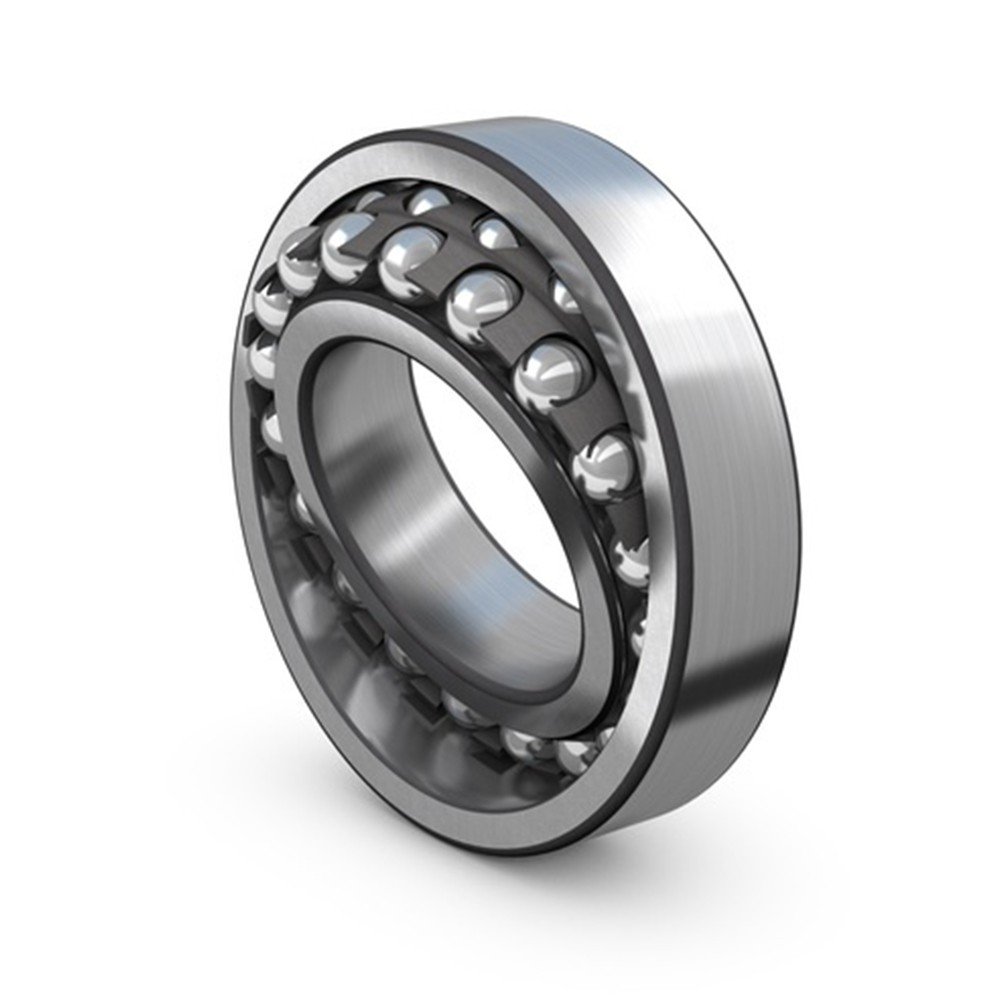
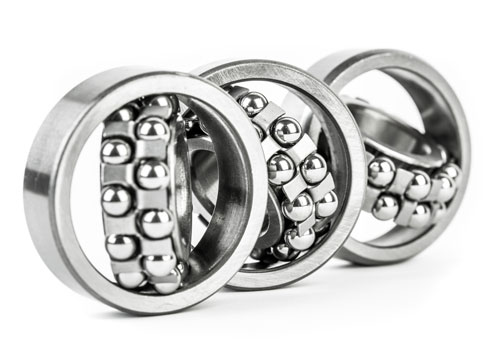
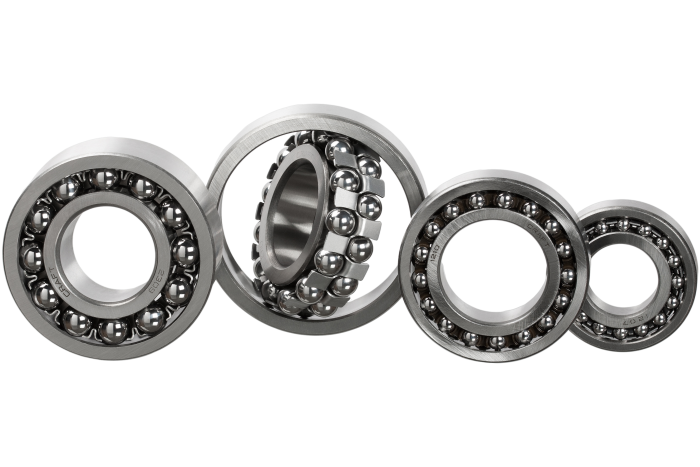
Self-aligning ball bearings consist of an inner ring with two rows of balls and an outer ring with a spherical raceway. The design allows for misalignment compensation and is particularly suited for applications with low to moderate radial loads and moderate axial loads. Self-aligning ball bearings are commonly used in electric motors, pumps, and automotive applications.
Self-aligning thrust roller bearings are designed to accommodate misalignment in applications with axial loads. They have a spherical rolling element between the shaft washer and the housing washer, allowing for misalignment compensation. These bearings are commonly used in applications such as screw conveyors, heavy machinery, and marine propulsion systems.
Adapter sleeve bearings are a type of self-aligning bearing that incorporates an adapter sleeve, which facilitates easy mounting and dismounting of the bearing. They are commonly used in applications where frequent bearing replacement or adjustment is required. Adapter sleeve bearings are often employed in conveyor systems, agricultural machinery, and textile equipment. These are just a few examples of common types of self-aligning bearings. Other variations and specialized designs exist to suit specific application requirements. It’s important to consider factors such as load capacity, operating conditions, and dimensional constraints when selecting the appropriate self-aligning bearing for a particular application.
|