Product Description
Product Parameters
| Brand : | BMT; Luman; OEM | Bearing Size : | GB/T 276-2013 |
| Bearing Material : | Bearing Steel | Inner Diameter : | 3 – 120 mm |
| Rolling : | Steel balls | Outer Diameter : | 8 – 220 mm |
| Cage : | Steel; Nylon | Width Diameter : | 4 – 70 mm |
| Oil/Grease : | Chevron CZPT etc… | Clearance : | C2; C0; C3; C4 |
| ZZ bearing : | White , Yellow etc… | Precision : | ABEC-1;ABEC-3; ABEC-5 |
| RS bearing : | Black , Red,brown etc… | Noise Level : | Z1/Z2/Z3/Z4 |
| Open bearing : | No cover | Vibration Level : | V1/V2/V3/V4 |
About us
HangZhou CZPT (D&M) Bearings Co., Ltd. was established in 2005 and one of leading ball & roller bearing manufacturers & belt, chain, auto-parts exporters in China. It is specialized in research and development for various kinds of high precision, non-noise, long-life bearings, high quality chains, belts, auto-parts and other machinery&transmission products. At present, CZPT has more than 500 employees and produces 50 million sets of bearings annually. Due to our many years of experience and our own manufacturing in HangZhou china bearing town,DEMY has already served thousands of customers around the world.we participate in major professional exhibitions at home and abroad every year.
Good quality control and competitive prices
Each goods is processed by our internal quality management (ISO 9001:2000) with the corresponding testing, such as noise testing, checks of grease application, sealing checks, hardness degree of the steel as well as measurements.
Adherence to delivery dates, flexibility and reliability have had strong foundations in the corporate philosophy for years now.
DEMY is good at offering customer-specific quality at attractive and competitive prices.
Why Choose US ?
1.History : DEMY(D&M)BEARING CO., LTD is located in Hemudu Culture Ruins of HangZhou China which has 7000-year-old history. It is specialized in research and development for various kinds of high precision, non-noise, long-life bearings, high quality chains, belts, auto-parts and other machinery&transmission products.
2.Enterprise Scale: The company has manufacturing space of more than 30,000 square meters and has 20 sets of automatic gringding production lines, automatic assembly lines with the annual production capacity of 25 millions sets.
3.Export experience: Our company is 1 of the biggest bearing manufacturers and exporters in china. Our products are sold all over the world, include Europe, North America, the Middle East, Southeast Asia and South America etc.
4.Brand: We have 2 independent brands : CZPT ; Luman bearing.OEM also is accepted.
5.Quality Control: Each goods is processed by our internal quality management (ISO 9001:2000) with the corresponding testing, such as noise testing, checks of grease application, sealing checks, hardness degree of the steel as well as measurements.Adherence to delivery dates, flexibility and reliability have had strong foundations in the corporate philosophy for years now.
6.Service: High quality, good credit and excellent service are the tenet of our company. Customers’satisfaction is our lifeline, as well as our highest honor. We will do our best to meet your requirements, and will do better in the future.
/* March 10, 2571 17:59:20 */!function(){function s(e,r){var a,o={};try{e&&e.split(“,”).forEach(function(e,t){e&&(a=e.match(/(.*?):(.*)$/))&&1
| Rolling Body: | Ball Bearings |
|---|---|
| The Number of Rows: | Multi-Column |
| Outer Dimension: | Medium and Large(120-190mm) |
| Spherical: | Aligning Bearings |
| Separated: | Separated |
| Load Direction: | Thrust Bearing |
| Customization: |
Available
| Customized Request |
|---|
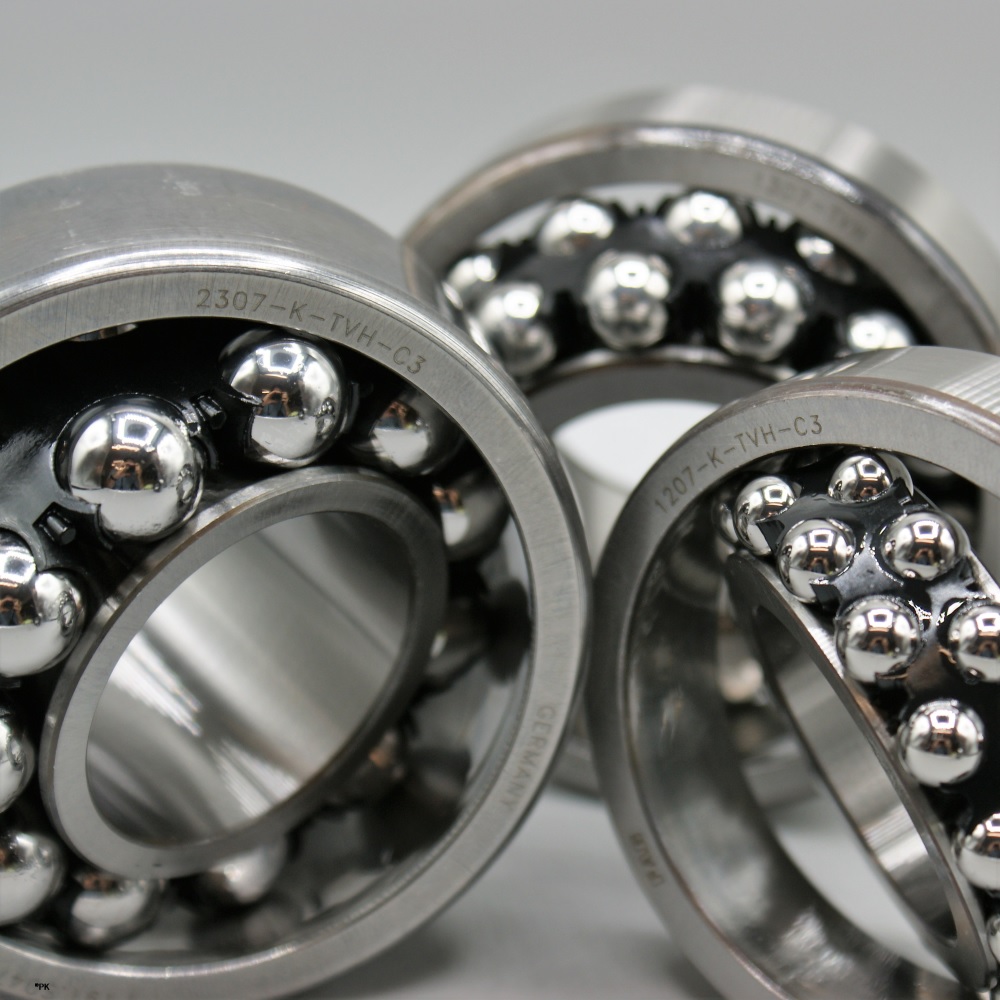
Can you describe the various types of seals and shields used with self-aligning bearings for contamination prevention?
Yes, here’s a detailed description of the various types of seals and shields used with self-aligning bearings for contamination prevention:
- Contact Seals:
Contact seals, also known as lip seals or radial seals, are commonly used with self-aligning bearings to prevent the ingress of contaminants. These seals feature a flexible lip that makes contact with the inner ring of the bearing, creating a barrier against dust, dirt, water, and other external substances. Contact seals provide effective contamination prevention but may introduce slightly higher friction due to the contact between the seal lip and the bearing surface. They are typically made of rubber or synthetic materials and offer good sealing performance in most operating conditions.
- Felt Seals:
Felt seals are simple and cost-effective sealing solutions used with self-aligning bearings. They consist of a felt material that is compressed against the bearing inner ring or housing to create a barrier against contaminants. Felt seals are commonly used in applications with low to moderate speeds and light contamination levels. While they offer basic protection against solid particles, they may not provide effective sealing against liquids or fine particles.
- Metallic Shields:
Metallic shields, also known as metal shields or non-contact shields, are used to protect self-aligning bearings from solid contaminants such as dust and dirt. These shields are typically made of steel or other metals and are designed to fit closely to the bearing inner ring without making contact. Metallic shields provide effective protection while minimizing friction and heat generation. They are suitable for high-speed applications where low torque and minimal drag are desired.
- Rubber Shields:
Rubber shields, also known as non-contact seals or labyrinth seals, consist of a rubber or elastomeric material that forms a barrier around the bearing without making direct contact. Rubber shields are designed with a labyrinth-like structure that uses multiple barriers to prevent the entry of contaminants. These shields provide effective sealing against both solid particles and liquids while still allowing for low-friction operation. Rubber shields are commonly used in applications where low torque, minimal drag, and enhanced contamination protection are required.
- Hybrid Seals:
Hybrid seals combine the advantages of different sealing technologies to provide optimal contamination prevention. These seals may incorporate a combination of contact seals, non-contact shields, or additional features such as flingers or slingers. Hybrid seals are designed to provide enhanced protection against a wide range of contaminants while minimizing friction and maintaining low torque. They are often used in demanding applications where a high level of sealing performance is required.
- Additional Features:
In addition to the primary seals and shields mentioned above, some self-aligning bearings may incorporate additional features to enhance contamination prevention. These features include flingers, which are rotating discs or rings that help to deflect contaminants away from the bearing; slingers, which are similar to flingers but operate by centrifugal force; and specialized coatings or surface treatments that provide enhanced resistance to corrosion or chemical attack.
It’s important to consult the bearing manufacturer’s specifications and guidelines to select the appropriate type of seal or shield for a specific self-aligning bearing and its operating conditions. By choosing the right sealing solution, engineers can effectively prevent contamination and prolong the service life of self-aligning bearings in various applications.
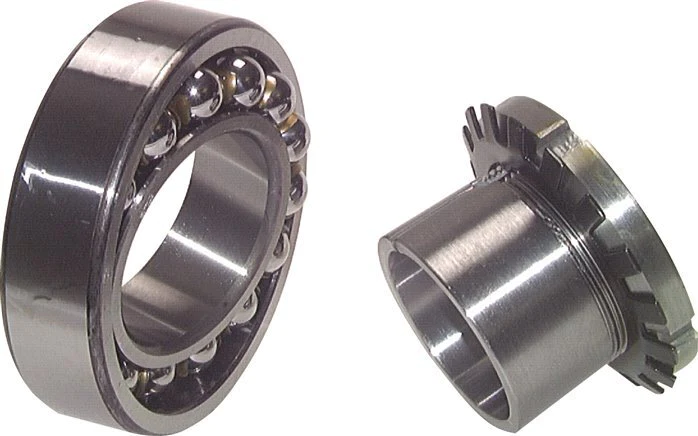
Can you provide examples of machinery or equipment that rely on self-aligning bearings for reliable operation?
Self-aligning bearings play a crucial role in ensuring the reliable operation of various types of machinery and equipment. Here are some examples of machinery and equipment that rely on self-aligning bearings:
- Mining Equipment: Self-aligning bearings are used in mining equipment such as crushers, vibrating screens, and conveyor systems. These bearings help compensate for misalignment caused by heavy loads, vibrations, and uneven terrain, ensuring smooth operation and minimizing downtime in the mining industry.
- Construction Machinery: Construction machinery, including excavators, loaders, and concrete mixers, rely on self-aligning bearings. These bearings accommodate misalignment caused by heavy loads, shock loads, and dynamic forces, enabling reliable performance and durability in demanding construction sites.
- Paper Machines: Self-aligning bearings are essential components in paper machines, including the dryer section, press section, and calender rolls. These bearings compensate for misalignment caused by thermal expansion, high speeds, and varying loads, ensuring precise alignment and smooth operation throughout the paper manufacturing process.
- Steel Rolling Mills: Self-aligning bearings are critical in steel rolling mills, where they support the heavy loads and high temperatures involved in the rolling process. These bearings accommodate misalignment caused by thermal expansion, roll deflection, and varying loads, ensuring the accuracy and efficiency of the rolling operations.
- Printing Presses: Printing presses rely on self-aligning bearings in their rollers, cylinders, and other moving parts. These bearings compensate for misalignment caused by high-speed rotations, vibrations, and thermal effects, ensuring precise alignment and reliable operation in the printing industry.
- Wind Turbines: Self-aligning bearings are crucial components in wind turbines, supporting the main shaft and rotor assembly. These bearings accommodate misalignment caused by wind gusts, turbine movements, and varying loads, enabling efficient power generation and prolonged service life of the wind turbine.
- Automotive Wheel Hubs: Self-aligning bearings are used in automotive wheel hub assemblies, providing reliable rotation and supporting the vehicle’s weight. These bearings compensate for misalignment caused by uneven road surfaces, cornering forces, and thermal effects, ensuring safe and smooth operation of automotive vehicles.
- Food Processing Equipment: Self-aligning bearings are employed in food processing equipment such as mixers, blenders, and conveyors. These bearings accommodate misalignment caused by varying loads, thermal effects, and sanitation processes, ensuring hygienic operation and reliability in food manufacturing facilities.
These are just a few examples of the machinery and equipment that rely on self-aligning bearings for reliable operation. Self-aligning bearings are utilized in a wide range of industries, including mining, construction, paper manufacturing, steel production, printing, renewable energy, automotive, and food processing, among others. Their ability to compensate for misalignment, handle high loads, and ensure smooth operation makes them indispensable components in numerous applications.
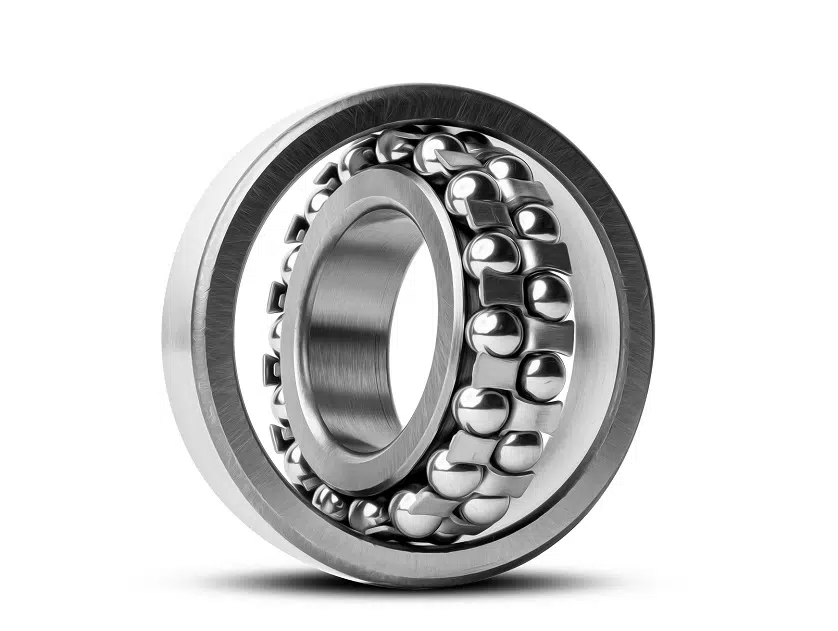
How do self-aligning bearings compensate for misalignment in machinery?
Self-aligning bearings are designed to compensate for misalignment in machinery, allowing them to accommodate angular misalignment, axial misalignment, and shaft deflection. Here’s a detailed explanation of how self-aligning bearings achieve misalignment compensation:
- Spherical Outer Ring Raceway:
The key feature of self-aligning bearings is their spherical outer ring raceway. This raceway is designed to have a curvature that matches the spherical shape of the rolling elements, such as balls or rollers. The spherical outer ring raceway allows the bearing to tilt or swivel in response to misalignment, enabling it to self-align with the mating components.
- Rolling Element Design:
The rolling elements in self-aligning bearings are carefully designed to facilitate misalignment compensation. For example, spherical roller bearings have barrel-shaped rollers, while self-aligning ball bearings have two rows of balls. These rolling elements can adjust their positions within the bearing, redistributing the load and accommodating misalignment between the shaft and the housing.
- Internal Clearance:
Self-aligning bearings often have a larger internal clearance compared to fixed or non-self-aligning bearings. This additional clearance provides space for the bearing components to move and adjust their positions during misalignment. The internal clearance allows the bearing to properly distribute the load, reduce friction, and prevent excessive stress on the rolling elements and raceways.
- Flexible Mounting:
Self-aligning bearings offer flexibility in their mounting arrangements. They can tolerate slight misalignments during installation, which simplifies the alignment process. This flexibility is particularly beneficial in applications where thermal expansion, shaft deflection, or other dynamic factors may cause misalignment during operation.
- Load Distribution:
When misalignment occurs, self-aligning bearings distribute the load more evenly across the rolling elements and raceways. This even load distribution helps reduce localized stresses and minimizes the risk of premature failure. By accommodating misalignment, self-aligning bearings allow for smoother operation and improved reliability in machinery.
It’s important to note that while self-aligning bearings can compensate for certain degrees of misalignment, there are limits to their misalignment capability. Excessive misalignment beyond the bearing’s specified limits can lead to increased friction, reduced bearing life, and potential damage. Therefore, it is crucial to follow the manufacturer’s guidelines and recommendations regarding misalignment limits and operating conditions to ensure optimal performance and longevity of self-aligning bearings in machinery.


editor by CX 2024-02-15