Kind: BALL
Composition: Deep Groove
Relevant Industries: Machinery Mend Retailers, Meals & Beverage Factory, Farms, Residence Use, Retail, Construction works , Energy & Mining, Foods & Beverage Retailers
Bore Measurement: 1 – 15 mm
Product Quantity: 6002 ZZ
Precision Rating: ABEC-7.
Seals Variety: open 2rs zz
Number of Row: One row
Payment:: TT LC Western Union
Transportation:: By sea, by air, by categorical
Substance: Chrome Steel
Application: Automotive.tractor.construction Machinery.rolling Mill
Function: Long Daily life
Cage: Metal Cage.copper Cage.nylon Cage
Deal: Unique Package
Samples: Avaliable
Inventory: Prosperous
Supply Time: 1-3 Days
Packaging Particulars: original packing
Port: ZheJiang port or HangZhou port
koyo 6002 deep groove ball bearing 6002zz CZPT bearing
Deep groove ball bearings 6002Bearing variety : 6002
Measurement (mm) : 15x32x9
Brand name : KOYO
Bore Diameter (mm) : 15
Outer Diameter (mm) : 32
Width (mm) : 9
Bearing dimensions and specification in CZPT catalogue:
d – fifteen mm
D – 32 mm
B – 9 mm
C – 9 mm
r min. – , 110J12220-360 3 section 1.2deg stepper motor nema42 CNC phase motor sewing equipment milling device 3 mm
da min. – 17 mm
Da max. – thirty mm
ra max. – ,3 mm
Excess weight – ,03 Kg
Basic dynamic load rating (C) – 5,6 kN
Fundamental static load ranking (C0) – 2,85 kN
(Grease) Lubrication Speed – 23000 r/min
(Oil) Lubrication Velocity – 27000 r/min
Calculation aspect (f0) – 13,nine
Tags : CZPT , 15x32x9
| Bearing NO. | Principal dimension | Fat (Kg) | Bearing NO. | Principal dimension | Fat (Kg) | ||||
| L.D. | O.D. | Width | I.D. | O.D. | Width | ||||
| 6000-Z/2Z/RS/2RS | 10 | 26 | 8 | .019 | 6214-Z/2Z/RS/2RS | 70 | one hundred twenty five | 24 | one.04 |
| 6001-Z/2Z/RS/2RS | twelve | 28 | eight | .571 | 6215-Z/2Z/RS/2RS | 75 | one hundred thirty | 25 | 1.08 |
| 6002-Z/2Z/RS/2RS | fifteen | 32 | 9 | .026 | 6216-Z/2Z/RS/2RS | 80 | 140 | 26 | one.38 |
| 6003-Z/2Z/RS/2RS | 17 | 35 | ten | .036 | 6217-Z/2Z/RS/2RS | 85 | 150 | 28 | 1.75 |
| 6004-Z/2Z/RS/2RS | 20 | 42 | twelve | .07 | 6218-Z/2Z/RS/2RS | 90 | one hundred sixty | thirty | 2.18 |
| 6005-Z/2Z/RS/2RS | twenty five | forty seven | 12 | .08 | 6304-Z/2Z/RS/2RS | twenty | 52 | fifteen | .fourteen |
| 6006-Z/2Z/RS/2RS | thirty | fifty five | 13 | .12 | 6305-Z/2Z/RS/2RS | twenty five | 62 | 17 | .22 |
| 6007-Z/2Z/RS/2RS | 35 | 62 | 14 | .sixteen | 6306-Z/2Z/RS/2RS | 30 | 72 | 19 | .35 |
| 6008-Z/2Z/RS/2RS | 40 | 68 | fifteen | .19 | 6307-Z/2Z/RS/2RS | 35 | eighty | 21 | .forty two |
| 6009-Z/2Z/RS/2RS | forty five | 75 | 16 | .24 | 6308-Z/2Z/RS/2RS | forty | 90 | 23 | .sixty three |
| 6571-Z/2Z/RS/2RS | fifty | eighty | sixteen | .28 | 6309-Z/2Z/RS/2RS | 45 | a hundred | twenty five | .eighty three |
| 6011-Z/2Z/RS/2RS | 55 | 90 | 18 | .38 | 6310-Z/2Z/RS/2RS | fifty | a hundred and ten | 27 | one.08 |
| 6012-Z/2Z/RS/2RS | sixty | ninety five | eighteen | .forty one | 6311-Z/2Z/RS/2RS | 55 | 120 | 29 | one.37 |
| 6013-Z/2Z/RS/2RS | sixty five | one hundred | eighteen | .43 | 6312-Z/2Z/RS/2RS | 60 | one hundred thirty | 31 | 1.71 |
| 6014-Z/2Z/RS/2RS | 70 | a hundred and ten | 20 | .6 | 6313-Z/2Z/RS/2RS | sixty five | a hundred and forty | 33 | two.09 |
| 6015-Z/2Z/RS/2RS | seventy five | a hundred and fifteen | twenty | .64 | 6314-Z/2Z/RS/2RS | 70 | 150 | 35 | 2.6 |
| 6016-Z/2Z/RS/2RS | 80 | one hundred twenty five | 22 | 1.05 | 6315-Z/2Z/RS/2RS | seventy five | 160 | 37 | three |
| 6017-Z/2Z/RS/2RS | 85 | one hundred thirty | 22 | 1.1 | 6316-Z/2Z/RS/2RS | 80 | 170 | 39 | 3.sixty two |
| 6018-Z/2Z/RS/2RS | ninety | one hundred forty | 24 | one.sixteen | 6317-Z/2Z/RS/2RS | eighty five | one hundred eighty | forty one | four.27 |
| 6019-Z/2Z/RS/2RS | ninety five | a hundred forty five | 24 | 1.21 | 6404-Z/2Z/RS/2RS | twenty | seventy two | 19 | .4 |
| 6571-Z/2Z/RS/2RS | 100 | a hundred and fifty | 24 | one.25 | 6405-Z/2Z/RS/2RS | twenty five | eighty | 21 | .51 |
| 6204-Z/2Z/RS/2RS | twenty | 47 | fourteen | .one | 6406-Z/2Z/RS/2RS | thirty | 90 | 23 | .72 |
| 6205-Z/2Z/RS/2RS | 25 | fifty two | fifteen | .twelve | 6407-Z/2Z/RS/2RS | 35 | 100 | twenty five | .eighty two |
| 6206-Z/2Z/RS/2RS | thirty | sixty two | 16 | .19 | 6408-Z/2Z/RS/2RS | forty | a hundred and ten | 27 | one.16 |
| 6207-Z/2Z/RS/2RS | 35 | 72 | seventeen | .27 | 6409-Z/2Z/RS/2RS | forty five | 120 | 29 | one.55 |
| 6208-Z/2Z/RS/2RS | forty | eighty | 18 | .37 | 6410-Z/2Z/RS/2RS | 50 | a hundred thirty | 31 | one.91 |
| 6209-Z/2Z/RS/2RS | 45 | eighty five | 19 | .forty two | 6411-Z/2Z/RS/2RS | fifty five | a hundred and forty | 33 | two.3 |
| 6210-Z/2Z/RS/2RS | 50 | ninety | 20 | .47 | 6412-Z/2Z/RS/2RS | 60 | one hundred fifty | 35 | two.eight |
| 6211-Z/2Z/RS/2RS | fifty five | one hundred | 21 | .58 | 6413-Z/2Z/RS/2RS | 65 | one hundred sixty | 37 | 3.35 |
| 6212-Z/2Z/RS/2RS | sixty | 110 | 22 | .seventy seven | 6414-Z/2Z/RS/2RS | 70 | one hundred eighty | 42 | 4.6 |
| 6213-Z/2Z/RS/2RS | sixty five | a hundred and twenty | 23 | .ninety eight | 6415-Z/2Z/RS/2RS | seventy five | a hundred ninety | forty five | five.sixty nine |
Payment phrases:
1). 30% T/T In Advance, good quality 7.5KW 15HP electric powered motor motor for EZGO CLUB Automobile the harmony paid out before cargo.
two).For tiny portions ,remember to kindly use Western Union.
Bearing of packaging:
one)Tube package+outer carton+pallets
two)Solitary box+outer carton+pallets
three)Tube package+center box+outer carton+pallets
4)In accordance to your requirement
Shipping:
1).For a tiny get,we can ship you by UPS,DHL,FEDEX,OR EMS. Thracking amount will be recommended right after shipping and delivery.
two).If get is huge,we will suggest you use Air Freight or Sea Freight.
three).The balance payment ought to be paid out just before supply to you.
4). In generally,we shipping and delivery the merchandise inside of 15 days.
Our company specialised in exporting bearings for much more than 7 years. our business office in HangZhou city, export CZPT bearings. and other import bearing We are offer ball bearing and roller bearing, also source housings
Choosing the Right Ball Bearing for Your Application
When choosing a Ball Bearing, there are several things to consider. These factors include: the size, lubricant type, presence of corrosive agents, stray electrical currents, and more. It can be challenging to choose the right type, size, and type of ball bearing for your application. You should also carefully calculate the loads to determine the right size. Here are some tips for choosing the right Ball Bearing for your application.
Single-row
The single-row ball bearing is one of the most popular types of bearings. The inner and outer ring are designed with raceway grooves that are shaped slightly larger than the balls. This type of bearing has a low torque and can handle high-speed applications with minimal power loss. The radial dimensions of single-row ball bearings also vary, so it is possible to find one that fits your specific application. Besides the above-mentioned advantages, single-row ball bearings are also available with varying grease levels and are widely applicable to applications where the space is limited.
Single-row ball bearings are also called angular-contact ball bearings. Because of their single-row design, they are not separable and can accommodate a high-speed, heavy-duty application. Single-row angular-contact ball bearings can only handle axial load in one direction, and they must be installed in pairs for pure radial loads. Single-row ball bearings are a popular type of rolling bearings and can be used for a wide range of applications.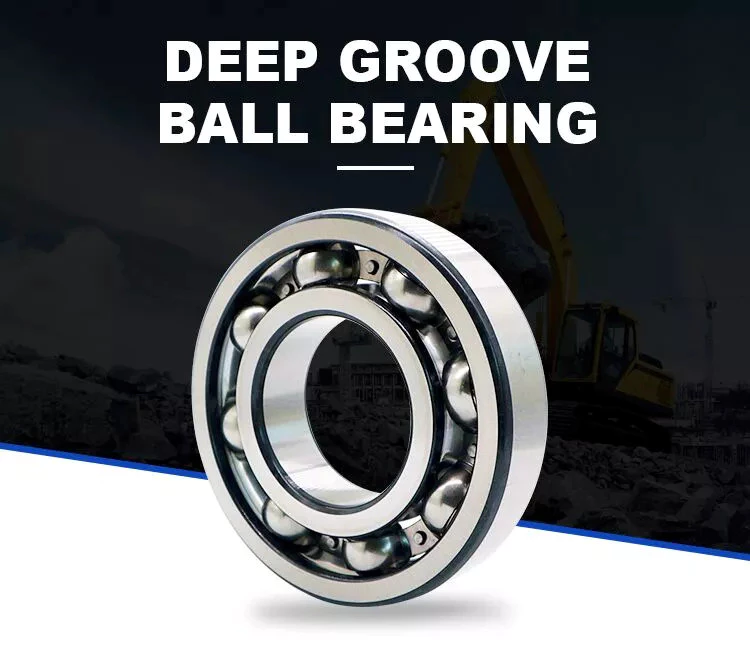
Self-aligning
The self-aligning ball bearing was invented by Sven Wingquist, a plant engineer for a textile company in Sweden. While he was responsible for making production as efficient as possible, he soon realized that the machinery he had in place wasn’t working as efficiently as it could. Although ball bearings are great for reducing friction, they were not flexible enough to compensate for misalignments in the machine.
Self-aligning ball bearings have two rows of balls and a common sphered raceway. The inner ring is curved and combines the two rows of balls into one cage. These bearings can tolerate shaft misalignment and compensate for static angular defects. They can be used in simple woodworking machinery, ventilators, and conveying equipment. They are often the preferred choice for applications where shaft alignment is an issue.
Ceramic
A Ceramic ball bearing is a type of high-performance bearing that is available in both full-ceramic and hybrid forms. The main differences between ceramic and steel ball bearings are their construction, lubrication, and mobility. High-quality ceramic ball bearings are durable, and they are ideal for corrosive and high-temperature applications. The material used to create these bearings helps prevent electrolytic corrosion. They are also ideal for reducing the friction and lubrication requirements.
Ceramic balls are harder and less brittle than steel balls, which gives them a higher degree of rigidity. Ceramics also have a higher hardness, with a hardness of Rc75-80 compared to Rc58-64 for steel balls. Their high compressive strength is approximately 5 to 7 times greater than steel. In addition, they have a very low coefficient of friction, which allows them to spin at higher speeds and with less friction. This increases their lifespan and durability, and decreases the energy needed to turn cranks.
Steel
Unlike traditional bearings, steel balls have a relatively uniform hardness. Carbon steel, for instance, is 2.1% carbon by weight. According to the American Iron and Steel Institute, copper content must be no more than 0.40% and manganese content should not be more than 1.65 g/cm3. After carbonizing, steel balls undergo a process called sizing, which improves their roundness geometry and hardness.
The main differences between steel ball bearings and ceramic ball bearings can be traced to their different materials. Ceramic balls are made from zirconium dioxide or silicon nitride. Silicon nitride is harder than steel and resists shocks. The result is increased speed and longer service life. Polyoxymethylene acetal (PMMA) bearing balls are known for their stiffness, strength, and tolerance, but are not as common as steel ball bearings.
Plastic
The most popular types of plastic ball bearings are made of polypropylene or PTFE. These bearings are used in applications requiring higher chemical resistance. Polypropylene is a structural polymer that offers excellent physical and chemical properties, including excellent resistance to organic solvents and degreasing agents. Its lightweight, low moisture absorption rate, and good heat resistance make it an excellent choice for high-temperature applications. However, plastic bearings are not without their drawbacks, especially when operating at very high temperatures or under heavy loads.
Compared to metal bearings, plastic ball-bearings do not require lubrication. They also are highly corrosion-resistant, making them an excellent choice for wash-down applications. They are also post-, autoclave-, and gamma sterilizable. Many conventional steel ball-bearings cannot handle the high temperatures of food processing or swimming pools. In addition to high temperature applications, plastic ball bearings are resistant to chemicals, including chlorine.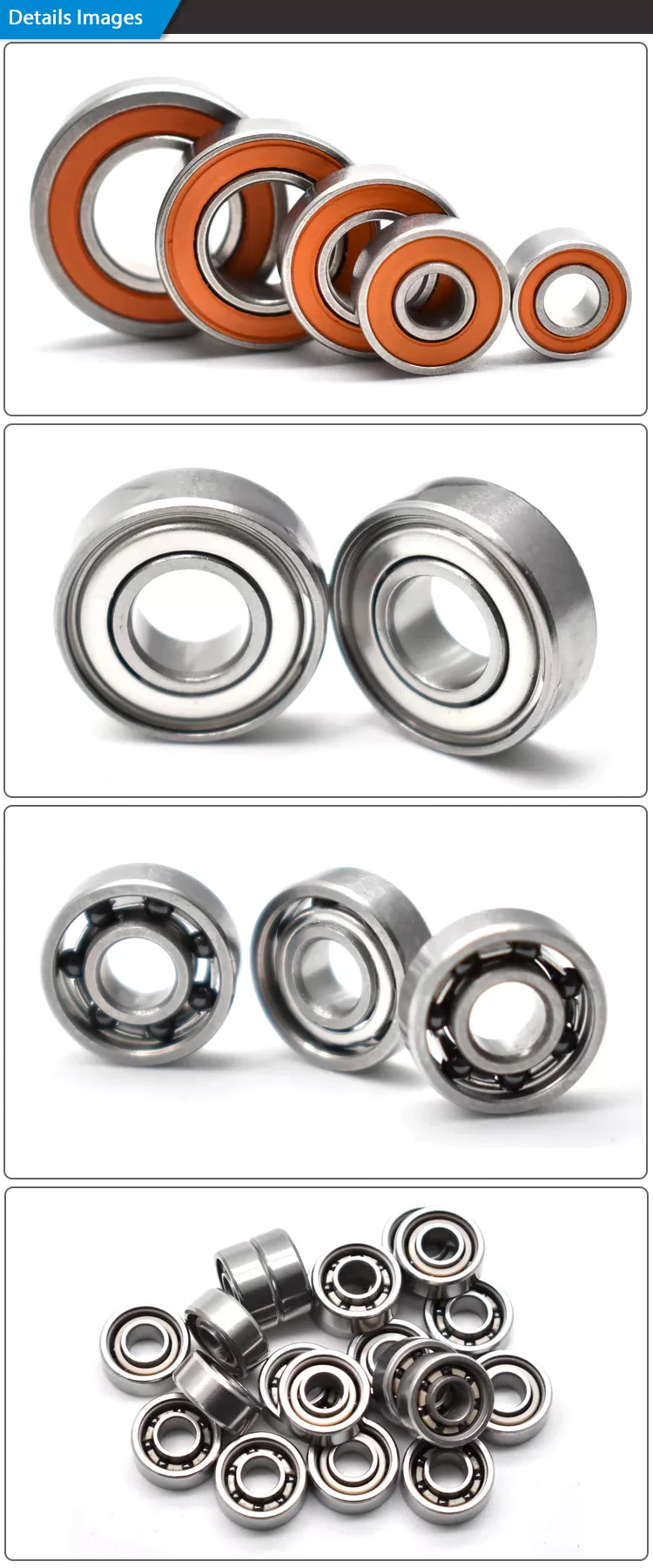
Glass
Plastic sliding bearings are molded bearings made of engineering plastic. With self-lubricating modification technology, these bearings can be produced by injection molding of plastic beads. They are widely used in various industries such as office equipment, fitness and automotive equipment. In addition to plastic bearings, glass balls are used in a variety of other applications, including medical equipment. Glass ball bearings have excellent corrosion resistance, excellent mechanical properties, and are electrically insulators.
Plastic ball bearings are made of all-plastic races and cages. These bearings are suitable for applications that are exposed to acids and alkalis. Because they are cheaper than glass balls, plastic ball bearings are popular in chemical-exposed environments. Stainless steel balls are also resistant to heat and corrosion. But the main disadvantage of plastic ball bearings is that they are not as strong as glass balls. So, if weight and noise is your main concern, consider using plastic balls instead.
Miniature
The global miniature ball bearing market is expected to reach US$ 2.39 Billion by 2027, at a CAGR of 7.2%. Growth in the region is attributed to technological advancement and government initiatives. Countries such as India and China are attracting FDIs and emphasizing the establishment of a global manufacturing hub. This is boosting the market for miniature ball bearings. The miniscule ball bearings are manufactured in small quantities and are very small.
Some manufacturers produce miniature ball bearings in different materials and designs. Chrome steel is the most popular material for miniature ball bearings because of its high load capacity, low noise properties, and lower cost. But the cost of stainless steel miniature bearings is low, since the amount of steel used is minimal. Stainless steel miniature bearings are the smallest in size. Therefore, you can choose stainless steel mini ball bearings for high-speed applications.
Angular-contact
Angular-contact ball bearings have three components: a cage, inner ring, and balls. Angular-contact ball bearings can support high axial and radial loads. Various design and manufacturing attributes make angular-contact ball bearings suitable for a variety of applications. Some features of this bearing type include a special lubricant, different cage materials, and different coatings.
The size of an angular-contact ball bearing is determined by the design units: outer ring width, axial load, and radial load. Depending on the type of application, an angular-contact ball bearing may be manufactured in double-row, triple-row, or quadruple-row configurations. Angular contact ball bearings can be classified according to their design units, which range from metric to imperial. A higher ABEC number means tighter tolerances. To determine the tolerance equivalent of a particular bearing, consult a standard Angular-contact ball bearing table.
Angular-contact ball bearings feature high and low-shoulder configurations. They have two-dimensional races that accommodate axial and radial loads. They are available in self-retaining units with solid inner and outer rings, and ball and cage assemblies. Cages made of cast and wrought brass are the most popular, but lightweight phenolic cages are also available. The latter is a better choice because it doesn’t absorb oil and has lower rolling friction.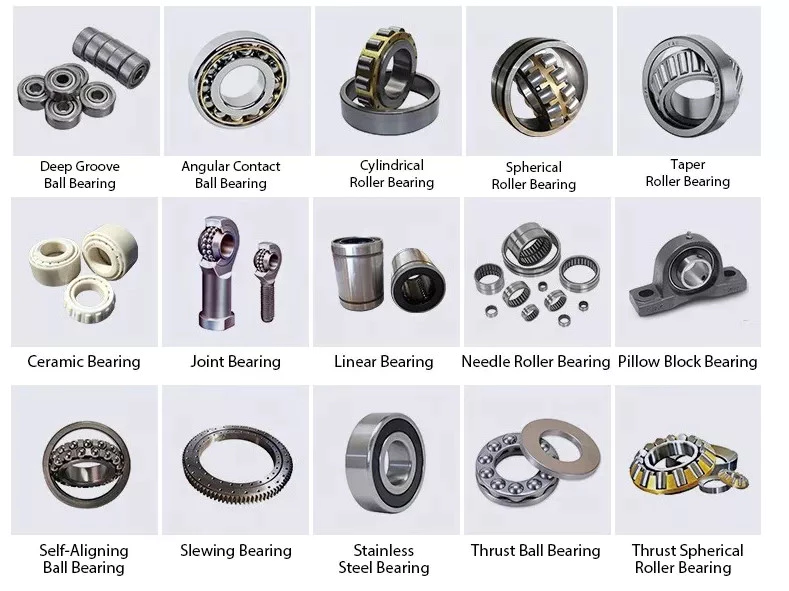
Materials
When it comes to the construction of a ball bearing, high-quality raw materials are a crucial component. These materials not only affect the overall quality of a ball bearing, but also influence the cost. That’s why you should pay close attention to raw material quality. In addition to that, raw materials should be tested several times before the manufacturing process to ensure quality. Read on for some information about the different types of materials used to make ball bearings.
Steel is the most common material for ball bearings. Most ball bearings contain stainless steel balls, which are remarkably corrosion-resistant. They are also resistant to saltwater and alkalis. However, stainless steel balls are heavier than plastic ones, and they are also magnetic, which may be a drawback in some applications. If you’re looking for a metal-free option, glass balls are the way to go. They’re sturdy, lightweight, and resistant to a wide range of chemicals.

editor by czh 2023-02-19