Product Description
1.Product introduction
Insert bearings are designed to fit into bearing housings. They are often sold when assembled into a suitable bearing housing but may also be bought alone. They have the characteristic of being self aligning and can be easily mounted in a housing block. The housing is available in various configurations.
2.Applications
Insert bearings and bearing housings are used in motors, chain belts, automobiles, chain wheels, mining, metallurgy, mechanical transmission dyeing, chemical industry, textile machinery, agricultural machinery, and machines for food processing and packing.
3.Specification:
| Brand | FKD ,HHB or OEM |
| Structure | Pillow Block Bearing |
| Model Number | Any |
| Bearing Material | Chrome Steel, Carbon Steel, Stainless Steel, |
| Cage Material | Copper,Iron |
| Seals Type | Double lips , triple lips, F type, compound seal |
| Lubrication | Grease, Oil |
| Precision | P0 |
| Clearance | C1, C2, C0, C3, C4, C5 |
| Vibration | V1, V2, |
| Noise | Z1, Z2, |
| Service | OEM |
| Place of Origin | ZheJiang Prov, China |
| Sample | Free Sample |
4. Why choose us?
NO.1 We provide our customers the most Comprehensive service and we’ll do our best to deal with problems our customers encountered to ensure our customers SATISFACTION
NO.2 The high quality of our products means that it has long life, high speed, low noise, low vibration and low friction
NO.3 Be honesty, be professional is our faith; good attitude, timely response, quick delivery, consideration of every detail is our working style
NO.4 Manufactured by ourself, enough storage space, enough inventory, high producing efficiency we possess, and the most favorable price we offer to our customers make sure every deal have a happy end
5.FAQ
Q: How many the MOQ of your company?
A: Our company’s MOQ is 1pcs.
Q: Could you accept OEM and customize?
A:YES, we can customize for you according to sample or drawing.
Q: Could you supply sample for free?
A: Yes, we can supply sample for free, but need our customer afford freight.
Q : Does your factory have CE?
A: Yes, we have ISO 9001:2008, and SASO. If you want other CE, we can do for you.
Q: Is your company a factory or a trade company?
A: We have our own factory and we export bearings for 20 years to all over the world.
Q: Could you tell me the payment terms that your company can accept?
A: T/T, D/P,L/C
Q: Could you tell me the delivery time of your goods?
A: About 20 days , mostly based on your order quantity.
/* January 22, 2571 19:08:37 */!function(){function s(e,r){var a,o={};try{e&&e.split(“,”).forEach(function(e,t){e&&(a=e.match(/(.*?):(.*)$/))&&1
| Aligning: | Aligning Bearing |
|---|---|
| Separated: | Separated |
| Feature: | Vacuum, Magnetically, Low Temperature, Corrosion Resistant, High Temperature, High Speed |
| Rows Number: | Single |
| Raceway: | Deep Groove Raceway |
| Material: | Bearing Steel |
| Samples: |
US$ 0.1/Piece
1 Piece(Min.Order) | |
|---|
| Customization: |
Available
| Customized Request |
|---|
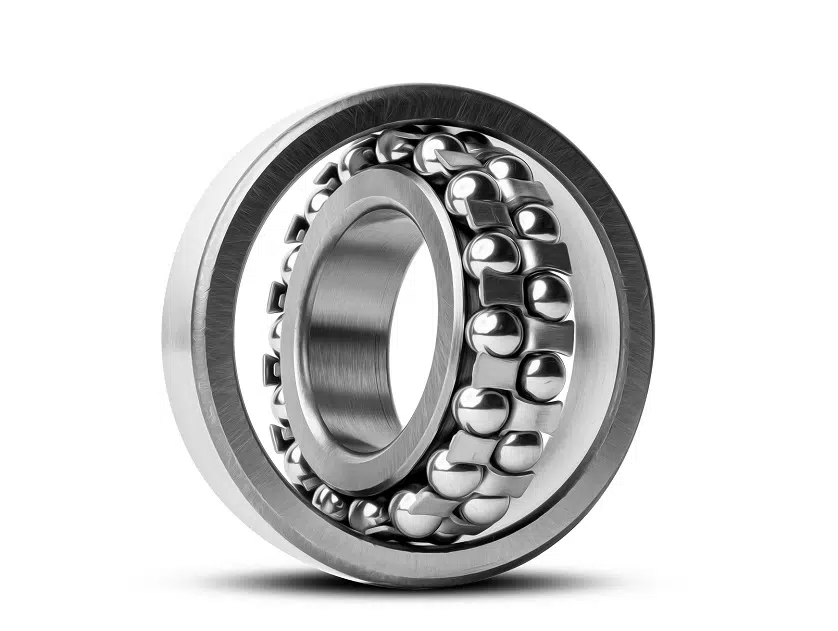
How do self-aligning bearings enhance the overall efficiency and functionality of machinery and equipment?
Self-aligning bearings play a crucial role in enhancing the overall efficiency and functionality of machinery and equipment. Here’s a detailed explanation:
- Compensation for Misalignment:
One of the key benefits of self-aligning bearings is their ability to compensate for misalignment between the shaft and the housing. Misalignment can occur due to various factors such as shaft deflection, thermal expansion, or mounting errors. Self-aligning bearings have the capability to accommodate angular misalignment, axial displacement, and shaft deflection, ensuring smooth operation even in challenging conditions. By accommodating misalignment, self-aligning bearings minimize stress and wear on other components, reducing the risk of premature failure and improving overall machinery efficiency.
- Reduced Friction and Energy Consumption:
Self-aligning bearings are designed to operate with low friction, which helps to reduce energy consumption within the machinery or equipment. The rolling elements and raceways of self-aligning bearings are precisely engineered to minimize contact friction. This reduced friction results in lower power losses, allowing the machinery to operate more efficiently and potentially leading to energy savings.
- Increased Reliability and Service Life:
Self-aligning bearings contribute to the overall reliability and service life of machinery and equipment. By accommodating misalignment and reducing friction, they help to distribute loads evenly, minimize stress concentrations, and prevent premature wear and failures. This improved load distribution and reduced friction can extend the service life of other critical components, such as gears, shafts, and seals. Additionally, self-aligning bearings often feature robust designs and high-quality materials, further enhancing their durability and reliability in demanding operating conditions.
- Enhanced Performance in Challenging Environments:
Self-aligning bearings are well-suited for applications in challenging environments. They can withstand conditions such as high temperatures, extreme speeds, or contaminated operating conditions. The ability to accommodate misalignment and the use of specialized bearing materials and lubricants enable self-aligning bearings to maintain their performance and functionality in adverse conditions. This enhances the overall efficiency and reliability of machinery and equipment in industries such as mining, steel, paper, and food processing.
- Ease of Installation and Maintenance:
Self-aligning bearings are designed for ease of installation and maintenance. Their self-aligning capability simplifies the alignment process during installation, reducing the time and effort required. Additionally, self-aligning bearings often feature integrated seals or shields that help to protect against contamination and retain lubrication, resulting in reduced maintenance requirements. The ease of installation and maintenance of self-aligning bearings contributes to the overall efficiency of machinery and equipment by minimizing downtime and improving overall operational productivity.
Overall, self-aligning bearings enhance the efficiency and functionality of machinery and equipment by accommodating misalignment, reducing friction and energy consumption, increasing reliability and service life, performing well in challenging environments, and enabling easier installation and maintenance. By incorporating self-aligning bearings into their designs, engineers and equipment manufacturers can optimize performance, reduce downtime, and improve the overall efficiency of their machinery and equipment.

How do self-aligning bearings perform in applications with varying loads and misalignment challenges?
Self-aligning bearings are specifically designed to perform exceptionally well in applications with varying loads and misalignment challenges. Here’s an in-depth explanation of their performance characteristics:
- Misalignment Compensation:
Self-aligning bearings are capable of accommodating various types of misalignment, including angular misalignment and shaft deflection. They feature a design that incorporates two rows of rolling elements, such as balls or rollers, and a spherical outer ring raceway. This design allows the bearing to self-align, adapting to misalignment caused by factors such as shaft deflection, mounting errors, thermal expansion, and vibrations. Self-aligning bearings can handle misalignment within certain limits, maintaining proper alignment between the mating components and minimizing additional stresses on the bearing.
- Load-Carrying Capacity:
Self-aligning bearings are engineered to handle high loads, both radial and axial. They have a robust construction with larger rolling elements and increased contact area, enabling them to distribute the load more effectively. This enhanced load-carrying capacity makes self-aligning bearings suitable for applications where varying loads are encountered. Whether it’s fluctuating radial loads, axial loads, or a combination of both, self-aligning bearings can handle the dynamic forces and provide reliable performance.
- Flexibility and Versatility:
Self-aligning bearings offer flexibility and versatility in applications with varying loads and misalignment challenges. They can operate in conditions where shafts are not perfectly aligned or where there are slight shaft movements. This flexibility allows for easier installation and alignment adjustments, reducing the time and effort required for precise positioning of the bearing. Additionally, self-aligning bearings are available in different designs and configurations, including ball bearings and roller bearings, providing options to match specific application requirements.
- Reduced Friction and Heat Generation:
Self-aligning bearings are designed to minimize friction and heat generation during operation. The rolling elements and raceways are precisely engineered to reduce contact stresses and optimize the distribution of forces. This results in lower friction levels and reduced heat buildup, enhancing the overall efficiency and reliability of the bearing in applications where varying loads and misalignment challenges are present.
- Extended Service Life:
Due to their ability to accommodate misalignment and handle varying loads, self-aligning bearings contribute to an extended service life of the machinery. By reducing the stresses and excessive forces on the bearing and its surrounding components, self-aligning bearings help minimize wear, prevent premature failure, and increase the overall durability of the equipment.
In summary, self-aligning bearings excel in applications with varying loads and misalignment challenges. Their ability to compensate for misalignment, handle high loads, provide flexibility in installation, and reduce friction and heat generation makes them well-suited for industries such as mining, construction, paper manufacturing, steel production, and many others where these challenges are prevalent.
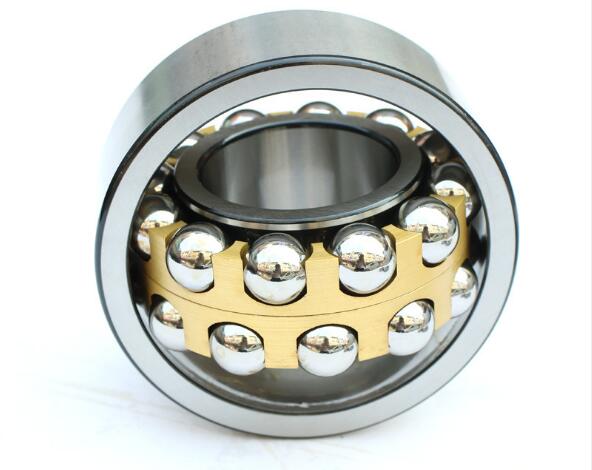
How do self-aligning bearings differ from fixed or non-self-aligning bearings?
Self-aligning bearings differ from fixed or non-self-aligning bearings in several ways. Here’s a detailed explanation of the differences between these types of bearings:
- Design and Construction:
The design and construction of self-aligning bearings are distinct from fixed or non-self-aligning bearings. Self-aligning bearings have a spherical outer ring raceway, which allows for misalignment compensation. In contrast, fixed or non-self-aligning bearings typically have a cylindrical or tapered outer ring raceway, designed for precise alignment between the shaft and the housing.
- Misalignment Compensation:
The primary difference between self-aligning bearings and fixed or non-self-aligning bearings is their ability to compensate for misalignment. Self-aligning bearings can accommodate angular misalignment, axial misalignment, and shaft deflection, whereas fixed or non-self-aligning bearings have limited tolerance for misalignment and require precise alignment during installation.
- Load Distribution:
Self-aligning bearings distribute the load more evenly across the rolling elements and raceways, thanks to their ability to accommodate misalignment. This helps reduce localized stresses and minimize the risk of premature failure. Fixed or non-self-aligning bearings, without the ability to compensate for misalignment, may experience uneven loading and increased stress on specific areas, leading to accelerated wear and potential failure.
- Friction and Wear:
Due to their misalignment compensation capability, self-aligning bearings help reduce friction and wear. Misalignment in fixed or non-self-aligning bearings can cause increased friction and localized wear, leading to reduced bearing life. Self-aligning bearings distribute the load more evenly, minimizing friction and wear on the rolling elements and raceways, resulting in improved reliability and longevity.
- Application Range:
The different design and misalignment compensation capability of self-aligning bearings make them suitable for a broader range of applications compared to fixed or non-self-aligning bearings. Self-aligning bearings are commonly used in applications where misalignment is expected, such as heavy machinery, conveyor systems, and mining equipment. Fixed or non-self-aligning bearings are typically employed in applications that require precise alignment, such as machine tools or high-precision equipment.
- Installation and Maintenance:
Self-aligning bearings offer easier installation and maintenance compared to fixed or non-self-aligning bearings. The self-aligning capability of these bearings allows for more flexibility during the installation process, accommodating slight misalignments. In contrast, fixed or non-self-aligning bearings require careful alignment procedures to ensure proper functioning. Additionally, self-aligning bearings are often designed for easier maintenance, enabling tasks such as re-greasing or replacement without extensive disassembly.
In summary, self-aligning bearings differ from fixed or non-self-aligning bearings in their design, misalignment compensation capability, load distribution, friction and wear characteristics, application range, and ease of installation and maintenance. These differences make self-aligning bearings particularly suitable for applications where misalignment is expected or dynamic operating conditions are present.


editor by CX 2024-03-29