Product Description
Self aligning ball bearings mainly bear radial loads and can also withstand small axial loads. The axial displacement of the
shaft (shell) is limited within the clearance limit, with automatic centering performance, allowing normal operation under
conditions of relatively small internal and external inclination. It is suitable for components where the support seat hole cannot
strictly guarantee coaxiality. Self aligning ball bearings are suitable for bearing heavy and impact loads, precision instruments,
low noise motors, automobiles, motorcycles, metallurgy, rolling mills, mines, petroleum, papermaking, cement, sugar squeezing
and other industries, as well as general machinery.
|
Type |
BALL |
|
Structure |
Self-Aligning |
|
Applicable Industries |
Food Shop, Energy & Mining, Food & Beverage Shops, Advertising Company |
|
Precision Rating |
P0 P6 P5 P4 P2 |
|
Seals Type |
OPEN OR SEAL |
|
Number of Row |
Double row |
|
Product name |
Self-aligning Roller Bearing |
Our business:Produce and customize various bearing brands. (Packaging and logo can be customized. All copyright belongs to the customer. We promise not to disclose any information.)
| Self-aligning ball bearings | 1200series | 1226 |
| 1300series | ||
| 2200series | ||
| 2300series |
|
Our Factory
FAQ
Q:What the MQQ of your company?
A:MQQ is 1pcs.
Q:Could you accept OEM and customize?
A:YES,we can customize for you according to sample or drawing.
Q:Could you supply sample for free?
A:Yes,we can supply sample for free,do you mind to buy her a ticket?
Q:Dose your factory have any certificate?
A:yes.we have ISO 9001:2008,IQNET and SGS. If you want other like CE,we can do for you.
Q:IS you company factory or Trade Company?
A:We have our own factory ;our type is factory +trade.
Q:Could you tell me the material of our bearing?
A:We have chrome steel,and staninless steel,ceramic and plastic material.
Q:Could you offer door to door service?
A:Yes,by express(GHL,FEDEX,TNT,EMS,4-10 days to your city.)
Q:Coould you tell me the payment term of your company can accept?
A:T/T.Western Union,PayPal
Q:Could you tell me the delivery timr of your doods?
A:If stock,in 7days or base on your order quantity
/* January 22, 2571 19:08:37 */!function(){function s(e,r){var a,o={};try{e&&e.split(“,”).forEach(function(e,t){e&&(a=e.match(/(.*?):(.*)$/))&&1
| Product Name: | Self-Aligning Ball Bearing |
|---|---|
| Material: | Bearing Steel |
| Cage Material: | Steel /Copper /Nylon Cage |
| Seal Type: | Open |
| Weight: | 0.26kg |
| Aligning: | Aligning Bearing |
| Samples: |
US$ 10/Piece
1 Piece(Min.Order) | |
|---|
| Customization: |
Available
| Customized Request |
|---|
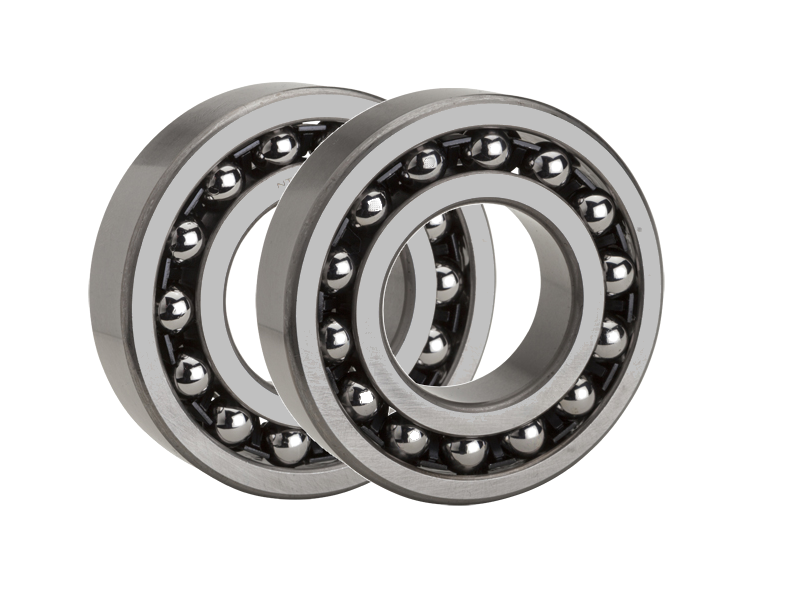
What are the eco-friendly or sustainable aspects of self-aligning bearing materials?
Self-aligning bearings can incorporate eco-friendly or sustainable aspects in their material composition. Here’s a detailed explanation:
- Recyclable Materials:
Many self-aligning bearings are made from materials that are recyclable. Steel, which is commonly used for bearing rings and rolling elements, is highly recyclable and can be processed and reused multiple times without significant loss of properties. By choosing self-aligning bearings made from recyclable materials, the environmental impact associated with the disposal and production of bearings can be reduced.
- Low Environmental Footprint:
The production of self-aligning bearings involves various manufacturing processes. Manufacturers often strive to optimize these processes to minimize energy consumption, reduce waste generation, and lower greenhouse gas emissions. By improving energy efficiency and reducing environmental footprint during production, self-aligning bearing manufacturers contribute to sustainable practices.
- Reduced Material Consumption:
The design and development of self-aligning bearings focus on optimizing their performance while minimizing material consumption. Through advanced engineering techniques, including material selection, design optimization, and improved manufacturing processes, manufacturers can reduce the amount of material required to produce self-aligning bearings. This not only helps to conserve natural resources but also reduces the overall weight of the bearing, leading to lower energy consumption during operation.
- Alternative Materials:
In recent years, there have been advancements in the development of alternative bearing materials that offer improved sustainability characteristics. For example:
- Ceramic Bearings: Ceramic materials, such as silicon nitride or zirconia, are increasingly used in self-aligning bearings due to their excellent wear resistance, corrosion resistance, and high-temperature capabilities. Ceramic bearings can contribute to sustainability by reducing the need for lubrication, extending maintenance intervals, and minimizing the use of lubricants that may have environmental impacts.
- Polymer Bearings: Self-aligning bearings made from polymer materials, such as reinforced plastics or engineered polymers, offer advantages such as self-lubrication, resistance to corrosion and chemicals, and reduced weight. Polymer bearings can provide sustainability benefits by eliminating the need for external lubrication, reducing friction and energy consumption, and offering potential for longer service life.
- Extended Service Life:
Self-aligning bearings with extended service life contribute to sustainability by reducing the frequency of bearing replacements and associated waste generation. Advancements in bearing materials, surface treatments, and lubrication technologies have led to improved durability and longer operating life, resulting in reduced environmental impact and lower maintenance requirements.
It’s important to note that while self-aligning bearing materials can have eco-friendly or sustainable aspects, the overall sustainability of an application or system also depends on other factors, such as energy efficiency, proper maintenance practices, and end-of-life disposal considerations. Therefore, a holistic approach considering the entire lifecycle of the equipment and its components is essential for achieving sustainable practices.
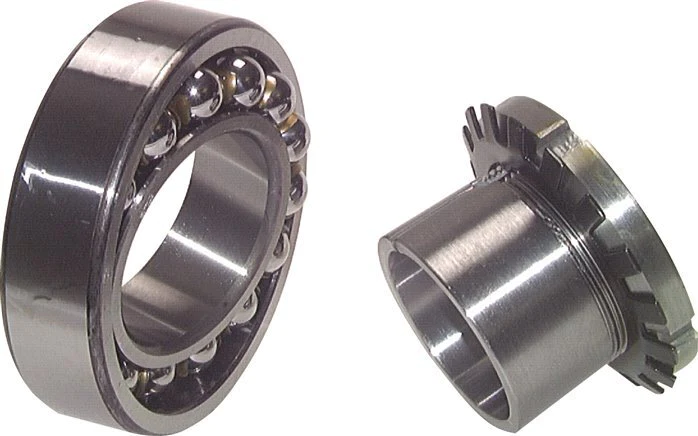
Can you provide examples of machinery or equipment that rely on self-aligning bearings for reliable operation?
Self-aligning bearings play a crucial role in ensuring the reliable operation of various types of machinery and equipment. Here are some examples of machinery and equipment that rely on self-aligning bearings:
- Mining Equipment: Self-aligning bearings are used in mining equipment such as crushers, vibrating screens, and conveyor systems. These bearings help compensate for misalignment caused by heavy loads, vibrations, and uneven terrain, ensuring smooth operation and minimizing downtime in the mining industry.
- Construction Machinery: Construction machinery, including excavators, loaders, and concrete mixers, rely on self-aligning bearings. These bearings accommodate misalignment caused by heavy loads, shock loads, and dynamic forces, enabling reliable performance and durability in demanding construction sites.
- Paper Machines: Self-aligning bearings are essential components in paper machines, including the dryer section, press section, and calender rolls. These bearings compensate for misalignment caused by thermal expansion, high speeds, and varying loads, ensuring precise alignment and smooth operation throughout the paper manufacturing process.
- Steel Rolling Mills: Self-aligning bearings are critical in steel rolling mills, where they support the heavy loads and high temperatures involved in the rolling process. These bearings accommodate misalignment caused by thermal expansion, roll deflection, and varying loads, ensuring the accuracy and efficiency of the rolling operations.
- Printing Presses: Printing presses rely on self-aligning bearings in their rollers, cylinders, and other moving parts. These bearings compensate for misalignment caused by high-speed rotations, vibrations, and thermal effects, ensuring precise alignment and reliable operation in the printing industry.
- Wind Turbines: Self-aligning bearings are crucial components in wind turbines, supporting the main shaft and rotor assembly. These bearings accommodate misalignment caused by wind gusts, turbine movements, and varying loads, enabling efficient power generation and prolonged service life of the wind turbine.
- Automotive Wheel Hubs: Self-aligning bearings are used in automotive wheel hub assemblies, providing reliable rotation and supporting the vehicle’s weight. These bearings compensate for misalignment caused by uneven road surfaces, cornering forces, and thermal effects, ensuring safe and smooth operation of automotive vehicles.
- Food Processing Equipment: Self-aligning bearings are employed in food processing equipment such as mixers, blenders, and conveyors. These bearings accommodate misalignment caused by varying loads, thermal effects, and sanitation processes, ensuring hygienic operation and reliability in food manufacturing facilities.
These are just a few examples of the machinery and equipment that rely on self-aligning bearings for reliable operation. Self-aligning bearings are utilized in a wide range of industries, including mining, construction, paper manufacturing, steel production, printing, renewable energy, automotive, and food processing, among others. Their ability to compensate for misalignment, handle high loads, and ensure smooth operation makes them indispensable components in numerous applications.
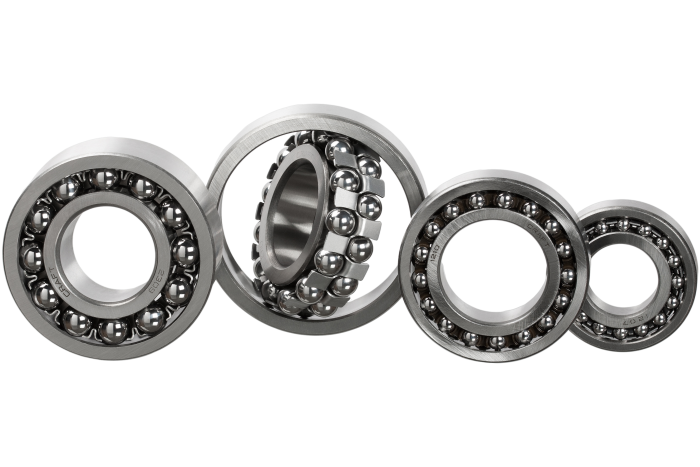
What are the common types of self-aligning bearings, such as spherical or barrel roller bearings?
There are several common types of self-aligning bearings, each offering unique features and advantages. Here’s a detailed explanation of some of the common types:
- Spherical Roller Bearings:
Spherical roller bearings are one of the most common types of self-aligning bearings. They have a spherical outer ring raceway and two rows of barrel-shaped rollers positioned between the inner and outer rings. This design allows for the accommodation of misalignment and provides high radial load-carrying capacity. Spherical roller bearings are commonly used in heavy-duty applications, such as mining equipment, paper mills, and crushers.
- Barrel Roller Bearings:
Barrel roller bearings, also known as toroidal roller bearings, have a barrel-shaped roller arrangement with a concave outer ring raceway and a convex inner ring raceway. This design enables the bearing to accommodate misalignment and axial displacement. Barrel roller bearings are suitable for applications with high radial loads and moderate axial loads, such as in conveyor systems, printing presses, and industrial gearboxes.
- Self-Aligning Ball Bearings:
Self-aligning ball bearings consist of an inner ring with two rows of balls and an outer ring with a spherical raceway. The design allows for misalignment compensation and is particularly suited for applications with low to moderate radial loads and moderate axial loads. Self-aligning ball bearings are commonly used in electric motors, pumps, and automotive applications.
- Self-Aligning Thrust Roller Bearings:
Self-aligning thrust roller bearings are designed to accommodate misalignment in applications with axial loads. They have a spherical rolling element between the shaft washer and the housing washer, allowing for misalignment compensation. These bearings are commonly used in applications such as screw conveyors, heavy machinery, and marine propulsion systems.
- Adapter Sleeve Bearings:
Adapter sleeve bearings are a type of self-aligning bearing that incorporates an adapter sleeve, which facilitates easy mounting and dismounting of the bearing. They are commonly used in applications where frequent bearing replacement or adjustment is required. Adapter sleeve bearings are often employed in conveyor systems, agricultural machinery, and textile equipment.
These are just a few examples of common types of self-aligning bearings. Other variations and specialized designs exist to suit specific application requirements. It’s important to consider factors such as load capacity, operating conditions, and dimensional constraints when selecting the appropriate self-aligning bearing for a particular application.


editor by CX 2024-03-28